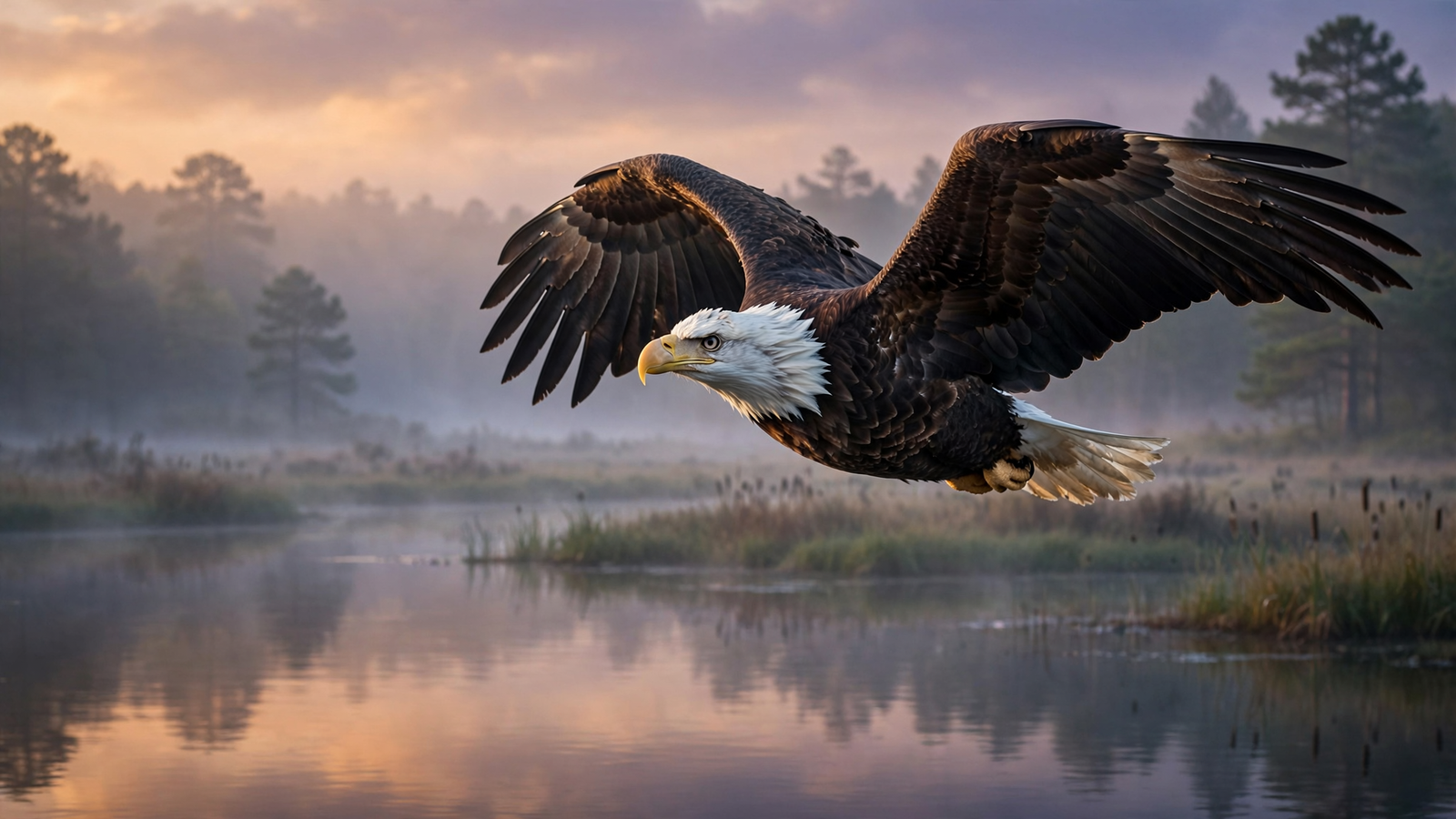
For much of the 20th century, the bald eagle seemed to be disappearing from the American landscape. The national bird was weakened by habitat loss, illegal shooting and the effects of DDT, a pesticide that made eagle eggshells so thin that many broke before the chicks could hatch.
Today, the bald eagle’s recovery stands as one of the clearest examples of what sustained conservation can accomplish.
A population transformed
According to the U.S. Fish and Wildlife Service’s most recent nationwide assessment, the lower 48 states were home to an estimated 316,700 individual bald eagles in 2020, including more than 71,400 nesting pairs. That was more than four times the population estimated in 2009.
The figures are striking because they measure more than a symbolic return. Bald eagles are now nesting in places where many Americans had grown used to seeing them only in photographs, on flags or on currency. Their recovery has brought the species back to rivers, lakes, reservoirs and coastlines across the country.
Alaska has long supported a large bald eagle population, but the lower 48 states tell a particularly important story. In 1963, federal officials estimated that only about 417 nesting pairs remained in the contiguous United States. The bird was listed as endangered or threatened under federal law for decades before being removed from the list in 2007.
What changed
The turnaround did not come from a single project. It grew from several policies working together.
The federal ban on DDT in 1972 removed one of the most serious threats to eagle reproduction. Protection under the Endangered Species Act restricted disturbance and destruction of nesting areas, while other laws targeted shooting, poisoning and the illegal possession of birds and their parts.
Wildlife managers also protected habitat and monitored nests. In many areas, conservationists worked with landowners, utilities and local communities to reduce disturbances near breeding sites. The bald eagle’s ability to use a wide variety of waterways helped the population expand once the most damaging pressures began to ease.
A recovery that still needs care
Being removed from the endangered-species list did not mean the bald eagle became immune to danger. The species remains protected under the Bald and Golden Eagle Protection Act and the Migratory Bird Treaty Act. Nest disturbance, habitat destruction, collisions, poisoning and exposure to contaminated prey can still harm individual birds and local populations.
That continuing protection is part of the lesson. Conservation success is not simply a moment when a species crosses a numerical threshold. It is a long-term commitment to keeping the conditions that made recovery possible.
The bald eagle’s return is therefore both a celebration and a reminder. A species that once appeared headed toward national disappearance now occupies hundreds of thousands of acres of American habitat. Its recovery shows that environmental damage is not always irreversible—and that strong laws, careful science and patient public investment can change the direction of a species’ future.