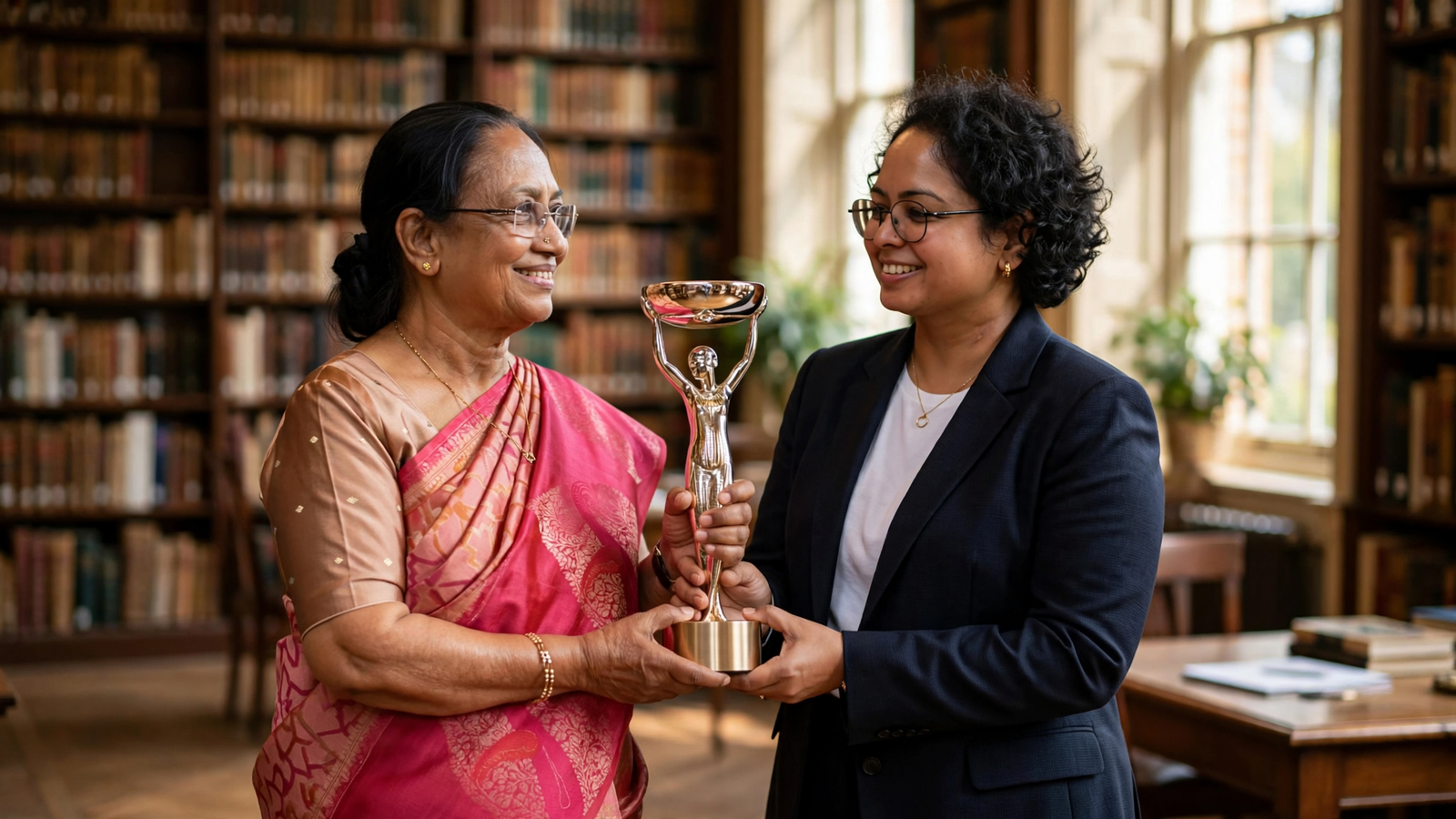
A collection of short stories rooted in the lives of Muslim women in southern India has made literary history. Heart Lamp, written by Indian author Banu Mushtaq and translated from Kannada by Deepa Bhasthi, won the 2025 International Booker Prize.
The award, announced in London on May 20, recognizes the finest single work of fiction translated into English and published in the United Kingdom or Ireland. The prize is shared equally between the author and translator, giving both Mushtaq and Bhasthi a £25,000 share of the £50,000 award.
A first for Kannada literature
Heart Lamp is the first work translated from Kannada to win the International Booker Prize. Kannada is one of India’s major literary languages, with a long history reaching back more than a thousand years, but relatively little Kannada fiction has traditionally reached international English-language readers.
The book also breaks new ground in the prize’s history as the first short-story collection to win. Its 12 stories, translated by Bhasthi, focus on women negotiating family expectations, religious authority, social pressure and economic limits. The settings are often domestic and local, but the questions—who gets heard, who carries responsibility and who is allowed independence—travel far beyond them.
Stories that widen the frame
Mushtaq’s fiction draws on the everyday experiences of Muslim communities in Karnataka, the Indian state where she was born and lives. Rather than presenting a single, simplified portrait of religious or cultural life, the collection brings together different voices and situations. Some stories are intimate and wry; others confront coercion, inequality and the consequences of decisions made by powerful people.
That range was central to the judges’ response. The 2025 panel described the collection as a work of “great originality” and praised its ability to bring readers into a world that is specific in its language and social detail while remaining emotionally accessible.
Bhasthi’s role is equally important. Translation is not simply a matter of transferring vocabulary from one language to another. It requires recreating rhythm, humor, cultural references and the social force of speech. In Heart Lamp, the translation gives English-language readers access to the distinct textures of Kannada storytelling without removing the stories from their original setting.
A larger audience for translated fiction
The prize arrives during a period of growing interest in fiction that crosses linguistic borders. International awards have helped readers discover writers whose work might otherwise remain confined to a single language market. They have also made translators more visible as creative partners rather than background contributors.
For Mushtaq, the recognition places a substantial body of Kannada writing before a global audience. For Bhasthi, it demonstrates how translation can open a path between a regional literary tradition and readers elsewhere. And for readers, Heart Lamp offers a reminder that world literature is not a single canon but a conversation continually being enlarged.
The book’s breakthrough is therefore larger than one prize. It is an invitation to look beyond the most frequently translated languages—and to discover how much modern fiction remains waiting in the world’s many literary traditions.