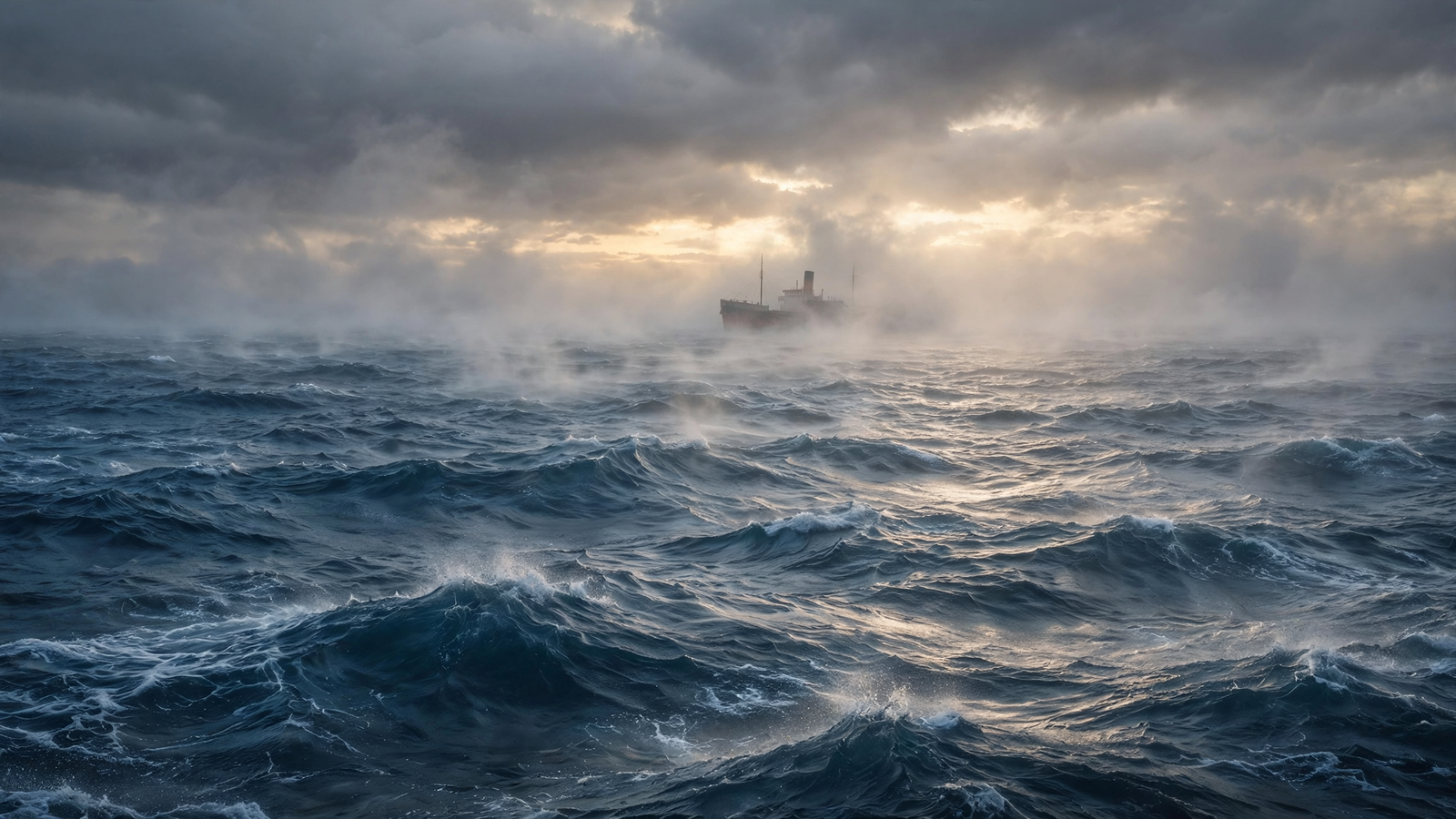
Few places have been given a reputation as strange as the Bermuda Triangle. In popular stories, ships disappear, aircraft vanish, and compasses behave impossibly somewhere between Florida, Bermuda, and Puerto Rico.
There is one immediate complication: the Bermuda Triangle has no officially recognized boundaries. Different maps draw it differently, and the name does not identify an official geographic region. What does exist is a busy stretch of the western North Atlantic, crossed by commercial shipping, military flights, cruise routes, fishing boats, and powerful weather systems.
A mystery assembled from real disappearances
The legend grew from genuine accidents and disappearances. Among the best-known cases are the loss of the USS Cyclops in 1918 and the disappearance of five U.S. Navy aircraft, known as Flight 19, during a training mission in 1945. These events remain intriguing partly because investigators could not establish a complete explanation from the evidence available.
But an unexplained incident is not automatically evidence of an unusual force. At sea, wreckage can be difficult to locate, storms can destroy or scatter evidence, and a vessel may sink in deep water far from its last known position. Early reports were also sometimes repeated, shortened, or embellished as they moved through newspapers and popular books.
What the ocean can explain
The National Oceanic and Atmospheric Administration says the area experiences many of the ordinary hazards that can make maritime travel dangerous. Tropical storms and hurricanes form or pass through the region. The Gulf Stream can change conditions quickly and carry floating debris away from an accident site. Shallow waters, reefs, and rapidly shifting weather add further risks around islands and coastal areas.
Navigation can also become difficult when crews are working with incomplete information or older equipment. A compass does not always point directly toward geographic north, and the difference between magnetic and true north changes over time and from place to place. That is a normal feature of Earth’s magnetic field—not proof that the triangle has a special power.
Human factors matter, too. Fatigue, poor visibility, mechanical failure, miscalculated fuel requirements, and limited communication can turn a manageable problem into an emergency. In the middle of the ocean, rescue teams may have very little evidence to work with.
Why the legend lasted
The Bermuda Triangle became especially famous in the twentieth century, when magazine articles and paperback books presented separate incidents as parts of one grand pattern. The idea was memorable because it offered a single dramatic explanation for events that were otherwise disconnected, uncertain, or simply tragic.
That storytelling pattern is common. Once a place receives a mysterious label, new events are more likely to be noticed, remembered, and attached to it. Ordinary journeys that end safely do not become part of the legend, even though they are vastly more common.
NOAA’s conclusion is cautious but clear: there is no evidence that mysterious disappearances occur in the Bermuda Triangle more often than in any other large, heavily traveled area of ocean. The U.S. Coast Guard does not recognize the triangle as a specific geographic danger zone, either.
That does not make the region uninteresting. It is a place where powerful currents, severe weather, navigation, and human judgment meet. The enduring lesson may be less about supernatural forces than about how easily uncertainty can become a story—and how much more complicated the real ocean usually is.