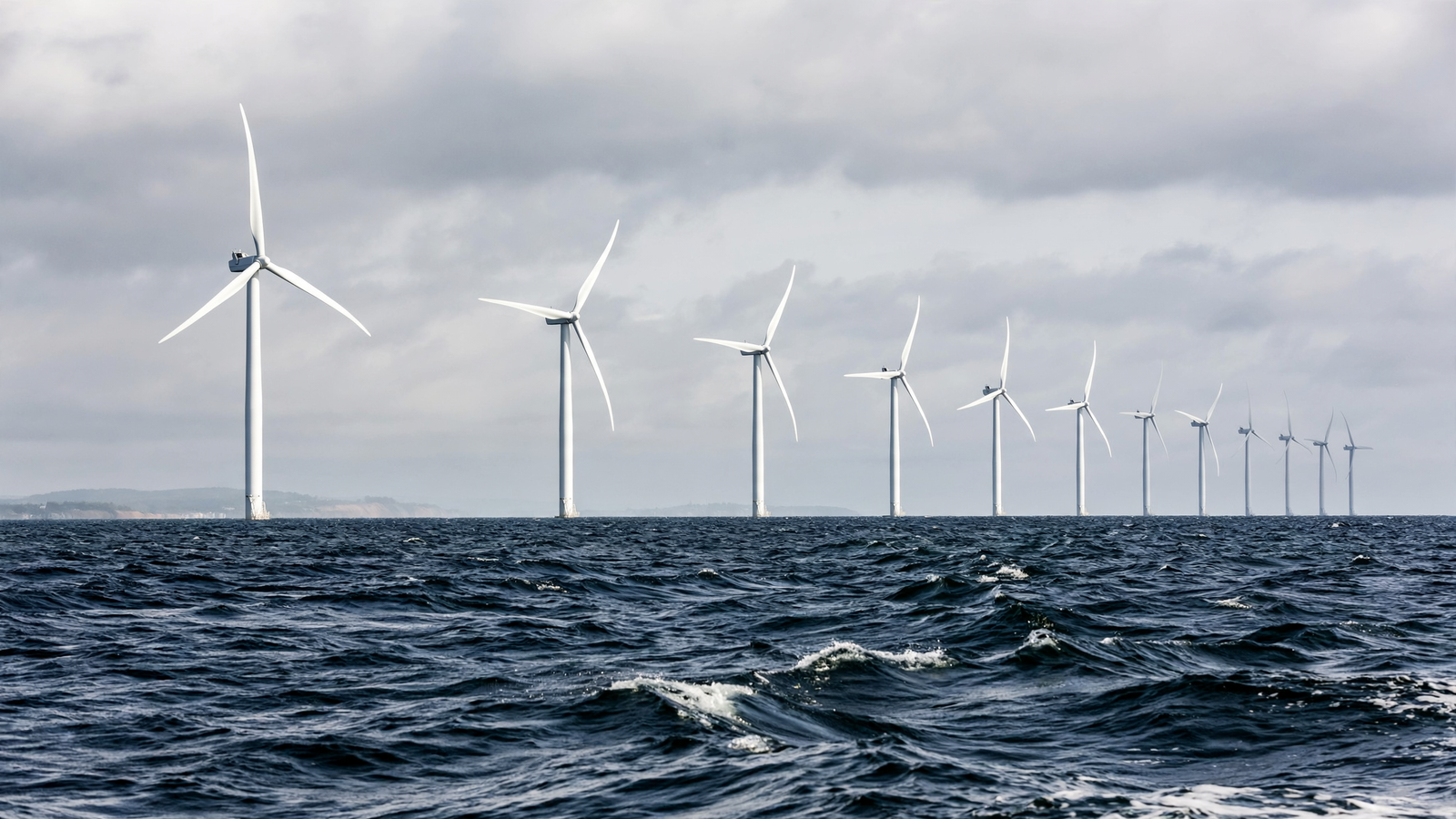
For the first time, a utility-scale offshore wind farm in the United States is operating as a working part of the electric grid.
South Fork Wind, a 12-turbine project built in the Atlantic Ocean off the eastern end of Long Island, reached full operation in March 2024. Its 132 megawatts of generating capacity are enough to supply electricity for roughly 70,000 homes, according to the U.S. Department of Energy.
A first for American energy
The project sits about 35 miles east of Montauk, New York. Undersea cables carry the electricity back to Long Island, where it enters the local power system serving communities that have historically depended heavily on fossil-fuel generation and electricity imported through the regional grid.
South Fork Wind is modest compared with the enormous offshore wind farms operating in parts of Europe and Asia. That is part of what makes its completion significant. The United States has a vast coastline and strong offshore wind resources, but building turbines in federal waters requires new supply chains, specialized vessels, ocean planning, environmental review and coordination with coastal communities.
The project became the country’s first commercial-scale offshore wind farm to deliver electricity when it began sending power to Long Island in late 2023. By the following spring, all 12 turbines were operating. The achievement turned offshore wind from a planned industry in the United States into a visible source of electricity.
Why wind at sea matters
Offshore wind has several advantages over many land-based energy projects. Winds over the ocean are often stronger and more consistent, and turbines can be placed close to heavily populated coastal regions where electricity demand is high. Building generation near those communities can also reduce the need for some long-distance transmission.
South Fork Wind was developed to help meet the electricity needs of eastern Long Island, a fast-growing region where adding new transmission and generation can be difficult. Its output is expected to reduce reliance on power produced by conventional fuel sources, although one wind farm cannot replace the broader electric system or solve every reliability challenge.
The project also created a practical test case for an industry that is still developing in the United States. Lessons from its construction and operation can inform larger projects planned along the Atlantic coast, where states have set goals for adding offshore wind to their energy mixes.
A small beginning with a wide horizon
South Fork Wind does not represent the finish line. It is a beginning: a working example that engineers, regulators, utility planners and coastal communities can study in real time.
That matters because major energy transitions rarely arrive as a single dramatic switch. They are built through projects that prove equipment, infrastructure and planning systems can work together. Twelve turbines turning offshore may be a small sight on the horizon, but they show that American electricity can increasingly come from places that were once unused for power generation.