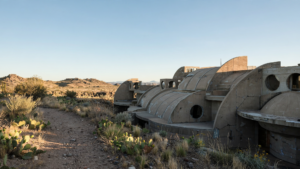
On the northern edge of Prescott, where the city gives way to the open country of Yavapai County, a low adobe-colored building gathers many versions of the American West under one roof.
The Phippen Museum is known for paintings of riders, ranches, wildlife and dramatic Western landscapes. But its larger purpose is more interesting than a single visual style. The museum gives artists, historians, residents and visitors a place to examine how the West has been imagined—and how those images continue to change.
That makes the museum more than a gallery. It is a regional institution rooted in Prescott’s history, but open to questions that reach far beyond Arizona: Who gets represented in Western art? Which stories become symbols? What happens when an old mythology meets the everyday realities of Native communities, working ranches, conservation and modern life?
A museum shaped by an Arizona setting
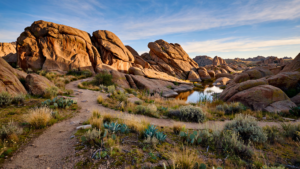
Prescott has long occupied a distinctive place in the cultural geography of Arizona. The former territorial capital sits among ponderosa pine forests, granite formations and high-desert valleys. It is close enough to the Verde Valley, ranch country and the central Arizona mining towns to function as a crossroads, but it also has its own strong civic identity.
The Phippen Museum grew from that setting. It was established in the 1970s as a memorial to Prescott artist George Phippen, whose work helped define a modern tradition of Western painting and sculpture. Phippen was also the founding president of the Cowboy Artists of America, an organization created in 1965 to promote high-quality art about the American West.
Although Phippen died in 1966, the museum that bears his name opened in Prescott in 1975. Its creation reflected an idea that still guides the institution: Western art deserved a permanent home in the region where many of its subjects, landscapes and working traditions could be encountered directly.
The choice of Prescott mattered. A museum devoted to the West could have been placed almost anywhere, but here it became part of a community where rodeo, ranching, forest work, tourism, public lands and historic preservation all exist alongside one another. The surrounding landscape is not merely a backdrop for the collections. It is part of the museum’s argument about why these stories belong together.
More than a gallery of cowboy images
Visitors arriving with a familiar picture of Western art may expect horses, cowboys and sweeping sunsets. Those subjects are certainly present, but the museum’s exhibitions and collections are broader than that shorthand suggests.
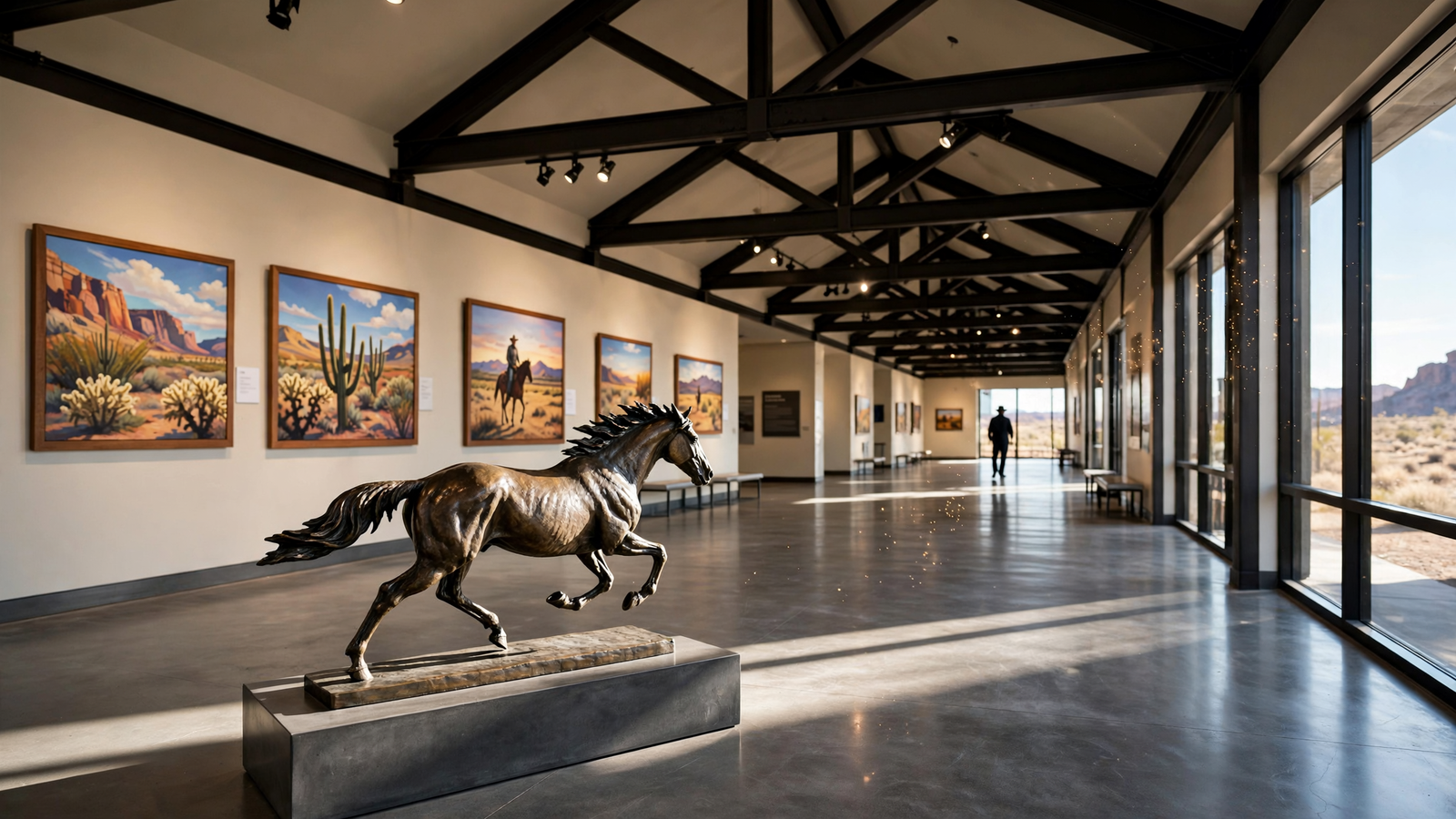
Its programming has included historic and contemporary paintings, sculpture, photography, Native American art, firearms and other objects connected to the region’s material culture. The museum also presents changing exhibitions, giving artists and curators room to look at the West from different periods and perspectives.
That variety is important because “the West” is not one fixed subject. It can mean a working landscape, a political region, a family memory, an Indigenous homeland, a place of migration or an imagined frontier. A historical painting can preserve a way of seeing while also revealing the assumptions of its time. A contemporary artist can use similar subjects to ask entirely different questions.
The museum’s value lies partly in allowing those approaches to sit beside one another. A bronze sculpture, a landscape painting and a historic object do not tell the same story. Together, however, they can show how people have used art to record work, place, identity and belonging.
The landscape outside the walls
The Phippen Museum’s setting makes the connection between art and place unusually visible. Its campus sits along Arizona State Route 89 north of Prescott, near the roads that lead toward Granite Dells, Chino Valley and the broader high-country landscape.
Inside, visitors encounter constructed images of the West. Outside, they can see some of the physical conditions that made those images possible: dry grasslands, distant mountains, open skies and the changing light of central Arizona. The contrast is useful. It reminds visitors that Western art is never only about scenery. It is also about movement through that scenery, work performed there, resources extracted from it and communities that have lived there for generations.
The museum’s sculpture garden extends that conversation outdoors. Large works can be viewed against the Arizona landscape rather than a neutral indoor wall, changing the way scale and distance are perceived. A sculpture that seems self-contained in a gallery becomes part of a wider visual field when it is placed among sky, trees and desert light.
That outdoor experience also makes the museum approachable for people who may not think of themselves as regular art visitors. A sculpture garden offers a reason to pause, walk and look before or after entering the galleries. It turns the museum into a place of orientation as well as interpretation.
A civic institution, not just a collection
Museums often become important to their communities through the activities that happen around the objects. At Phippen, education is part of the institution’s identity. School programs, lectures, demonstrations, workshops and family activities connect the collection to different ages and levels of experience.
Those programs matter in a region where art education can be a practical bridge between local history and contemporary creativity. A student may begin with a painting of a familiar landscape and move toward questions about observation, technique or historical context. An adult visitor may come for a temporary exhibition and discover a new interest in sculpture, conservation or Western photography.
The museum’s annual Western Art Show and Sale is another way it connects the historic idea of the Western art gathering with the present-day art world. The event brings artists and collectors to Prescott and gives the public a chance to see contemporary work in conversation with the museum’s broader mission.
That relationship between collecting and community can be complicated. Art connected to the West has sometimes reduced a diverse region to a narrow set of heroic characters and familiar legends. A responsible museum cannot simply repeat those images without context. It must also make space for the people, cultures and working realities that the traditional frontier story left out.
Phippen’s changing exhibitions provide one avenue for that work. By presenting artists from different backgrounds and periods, the museum can show that Western art is not a finished category. It is an ongoing field shaped by new voices, new research and new ways of looking at the land.
Why the place still matters
In a large city, a museum may be one cultural destination among many. In a smaller regional community, it can serve several roles at once: archive, classroom, meeting place, tourist stop and point of civic pride.
That combination helps explain the Phippen Museum’s staying power. Its subject is specific enough to give the institution a clear identity, but broad enough to keep producing new questions. The West can be approached through painting, sculpture, history, ecology, Indigenous studies, ranching, photography and design. Each angle changes the meaning of the others.
The museum also offers a useful reminder that cultural preservation is not the same as freezing the past. Preserving a tradition means keeping it available for examination, disagreement and renewal. A museum that only repeats a familiar story becomes a monument. A museum that keeps adding context becomes a conversation.
At Phippen, that conversation begins with the visual language of the American West but does not have to end there. It can lead to the history of Prescott, the experience of artists working today, the responsibilities of collecting, or the changing relationship between people and the Arizona landscape.
That is the museum’s quiet achievement. It gives Yavapai County a place where regional identity can be displayed without being treated as simple, and where the West can be appreciated without pretending it has only one story.