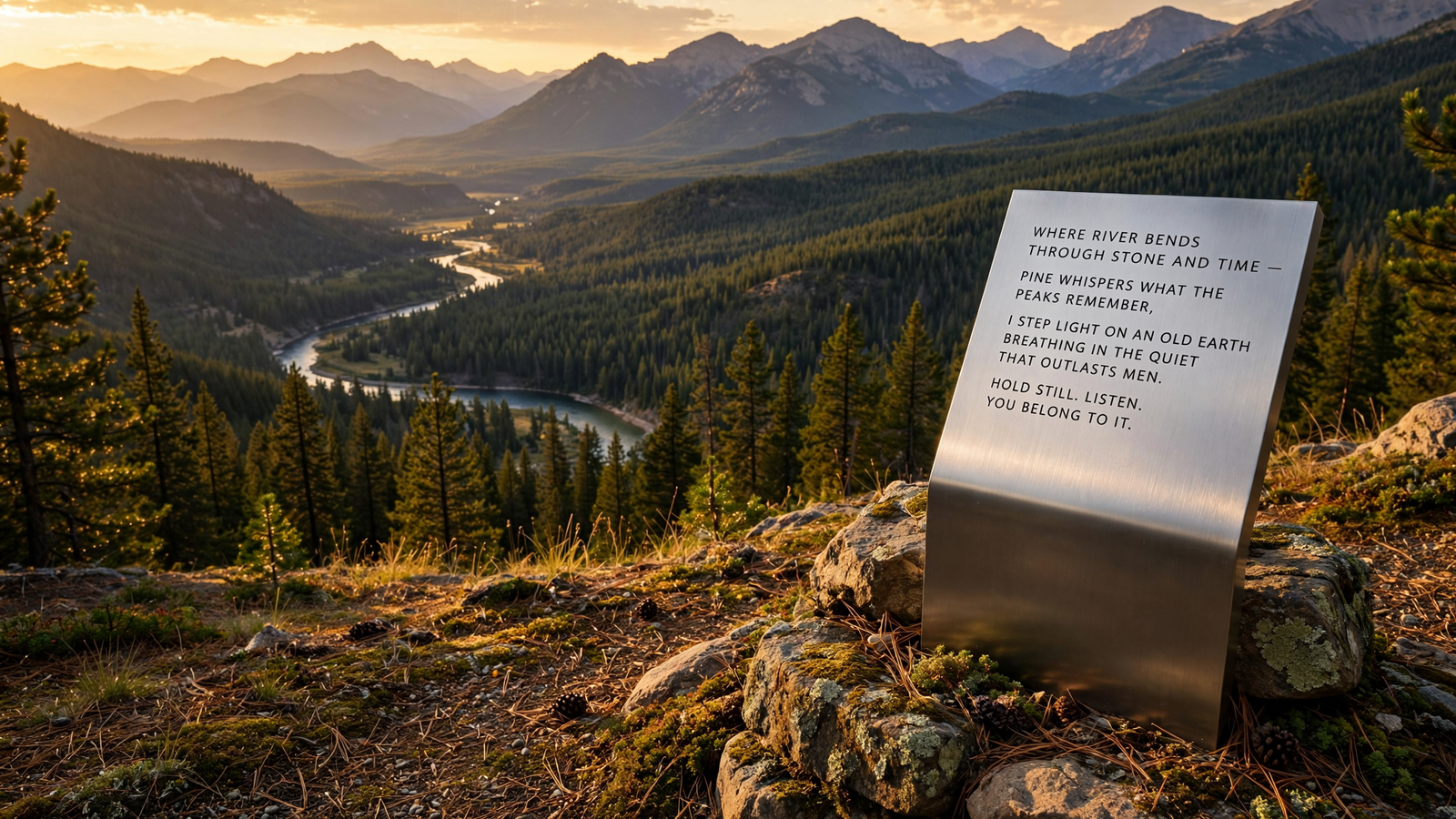
In a national park, attention usually moves toward the large things: a canyon opening beneath the sky, a forest stretching beyond the trail, or a shoreline shaped by wind and water. Ada Limón’s You Are Here: Poetry in the Parks asks visitors to pause over something smaller and more intimate—the language that helps a place become memorable.
The project, created during Limón’s tenure as the 24th Poet Laureate Consultant in Poetry, brings contemporary poetry into public landscapes through installations, readings, educational programs, and a collection of poems. It is a collaboration involving the Library of Congress, the National Park Service, and the Poetry Society of America.
Poems Outside the Book
Limón’s initiative begins with a simple idea: poetry does not have to be encountered only in a classroom, a library, or a bookstore. In a park, a poem can become part of a walk. A visitor might come across lines while waiting for a ferry, resting beside a trail, or looking across a landscape that has existed long before the words were placed there.
The poems selected for You Are Here respond to particular parks and environments. Some attend to animals and plants; others consider memory, migration, weather, family, or the complicated history of the land. Together, they broaden the meaning of a national park. These places are not only scenic destinations. They are also cultural spaces, shaped by Indigenous histories, local communities, scientific work, labor, recreation, and stories carried from one generation to another.
That approach gives the project a purpose beyond decoration. A poem can slow down the experience of a popular park and encourage visitors to notice what a hurried trip might miss. It can also invite people who do not think of themselves as poetry readers to encounter the form without needing to choose a book or understand a particular literary tradition first.
A National Collection of Local Attention
The project’s digital presence extends the experience beyond the parks themselves. Readers can explore the poems online, learn about the places that inspired them, and encounter work by poets with different backgrounds and styles. The result is not a single official voice for the landscape, but a gathering of perspectives.
That variety matters. American parks are often presented through photographs and familiar descriptions, while poetry can make room for uncertainty and personal response. One poem may focus on a bird’s movement; another may ask who has been welcomed into a place, who has been excluded, and what responsibilities come with preserving it. The form allows beauty and complexity to exist together.
For the National Park Service, the partnership also connects conservation with interpretation. Protecting a landscape involves more than maintaining trails and habitats. It includes helping people form durable relationships with the places they visit. A poem cannot replace ecological knowledge or historical interpretation, but it can create the stillness in which those subjects become more personally meaningful.
You Are Here offers a modest but powerful change in scale. National parks are vast, yet the project asks visitors to stand in one particular place and pay attention to one particular group of words. In doing so, it turns poetry into a form of wayfinding—not a direction to a destination, but an invitation to become more fully present wherever you are.