For decades, malaria researchers faced a problem that seemed almost impossibly difficult: creating a vaccine against a parasite that changes throughout its life cycle and has evolved alongside humans for thousands of years.
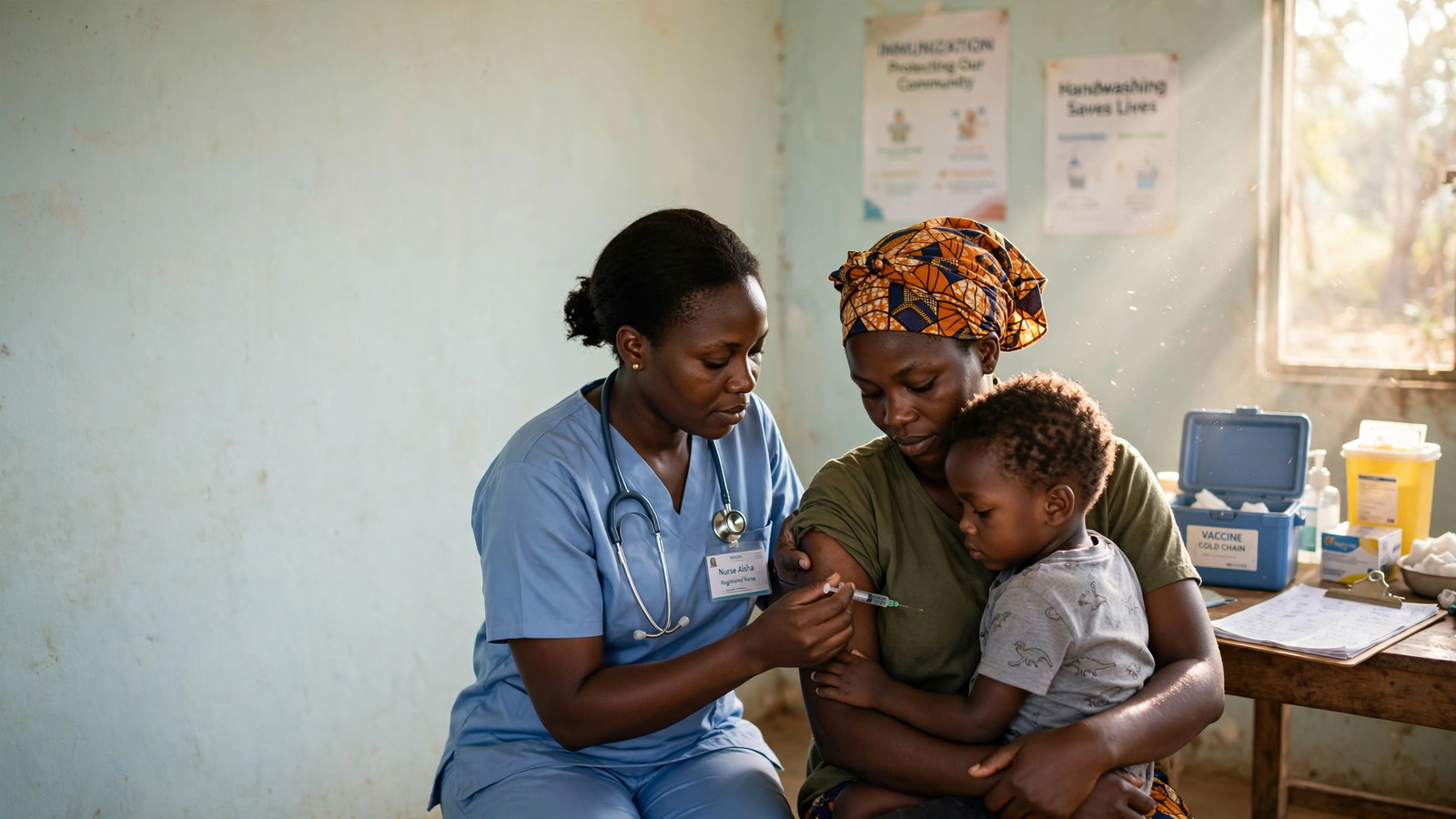
That long scientific effort is now producing something tangible. Malaria vaccination has moved from laboratory research and clinical trials into national childhood immunization programs, giving countries a new tool to protect children in regions where the disease is most dangerous.
The development is not a single dramatic cure. It is a public-health advance built around prevention: fewer infections, fewer severe cases and fewer families forced to navigate a potentially life-threatening illness.
Two vaccines have cleared a historic hurdle
In 2021, the World Health Organization recommended the RTS,S/AS01 malaria vaccine for children living in areas with moderate to high transmission of Plasmodium falciparum, the deadliest malaria parasite. The recommendation followed a large pilot program in Ghana, Kenya and Malawi that reached hundreds of thousands of children and provided evidence about safety, delivery and real-world use.
RTS,S became the first malaria vaccine to receive a WHO recommendation. Its arrival was important not only because of the vaccine itself, but because the pilot program showed that malaria vaccination could be integrated into routine child-health services alongside established tools such as insecticide-treated bed nets, diagnostic testing and antimalarial medicines.
A second vaccine soon followed. In October 2023, WHO recommended the R21/Matrix-M vaccine for children in areas where malaria is transmitted. The decision was based on clinical evidence showing that the vaccine can reduce malaria cases, with protection varying according to transmission patterns, timing and the number of doses received.
Having two recommended products matters. It creates a larger supply base and gives countries and international procurement organizations more flexibility as they build vaccination programs. It also represents an important scientific milestone: researchers have demonstrated that vaccination can contribute meaningfully to malaria control even though it is not expected to prevent every infection.
From a recommendation to a routine service
The next challenge is logistical. A vaccine recommendation only becomes meaningful when doses reach children at the right ages and families can return for the complete schedule.
Cameroon became the first country to introduce malaria vaccination into its routine immunization program nationwide in January 2024. The rollout began in areas with high malaria burdens and was designed to reach young children through the same health-system structures used for other routine vaccines.
Other African countries have since begun or prepared their own introductions. The process involves more than shipping vials. Health ministries must decide which regions will receive doses first, train health workers, communicate with parents, monitor safety and coordinate vaccination with seasonal malaria prevention campaigns.
Those practical details are a sign of progress. They show that malaria vaccines are no longer being discussed only as a future possibility. They are now part of the operating plans of national health systems.
A useful layer of protection, not a replacement for everything else
Malaria control has always depended on several defenses working together. Bed nets reduce nighttime mosquito bites. Indoor residual spraying can lower transmission in homes. Rapid tests help health workers identify infections, while effective medicines prevent many cases from becoming severe.
The vaccines add another layer by preparing a child’s immune system to respond to the parasite. That makes them especially valuable in places where transmission is intense, health facilities are far away or seasonal outbreaks can quickly overwhelm local services.
WHO describes malaria vaccination as part of a broader strategy rather than a standalone solution. The vaccines do not eliminate the need for mosquito control, prompt diagnosis or treatment. Their role is to reduce the number of illnesses that health systems and families must confront in the first place.
That distinction is important because it gives the achievement a realistic shape. The advance is not that malaria has disappeared. It is that prevention now includes a tool that did not exist for routine use only a few years ago.
Why the achievement reaches beyond malaria
Developing a malaria vaccine has required researchers to solve unusually difficult problems in immunology, clinical-trial design and vaccine manufacturing. The parasite is biologically complex, and immunity from natural infection is incomplete and often temporary. Progress against malaria therefore provides knowledge that can help guide research into other diseases caused by complicated pathogens.
The rollout also demonstrates the value of long-term investment. The RTS,S vaccine was developed through decades of research involving public institutions, universities, nonprofit organizations and industry partners. R21 emerged from another large international research effort involving scientists in Africa and elsewhere.
Equitable access will remain essential. Countries will need predictable financing, reliable cold chains, trained workers and systems that can track children through multiple doses. But global health organizations have already begun building those structures, supported by vaccine manufacturers and international purchasing mechanisms.
For families, the significance is straightforward. A child who receives malaria vaccination still needs protection from mosquito bites and access to medical care if illness develops. Yet that child now has an additional, scientifically tested defense against one of the world’s oldest and most persistent infectious diseases.
That is the hopeful part of the story: a challenge once considered too complex for a vaccine has entered the era of routine prevention. The work ahead is substantial, but the world is no longer waiting for the first breakthrough. It is learning how to deliver it.