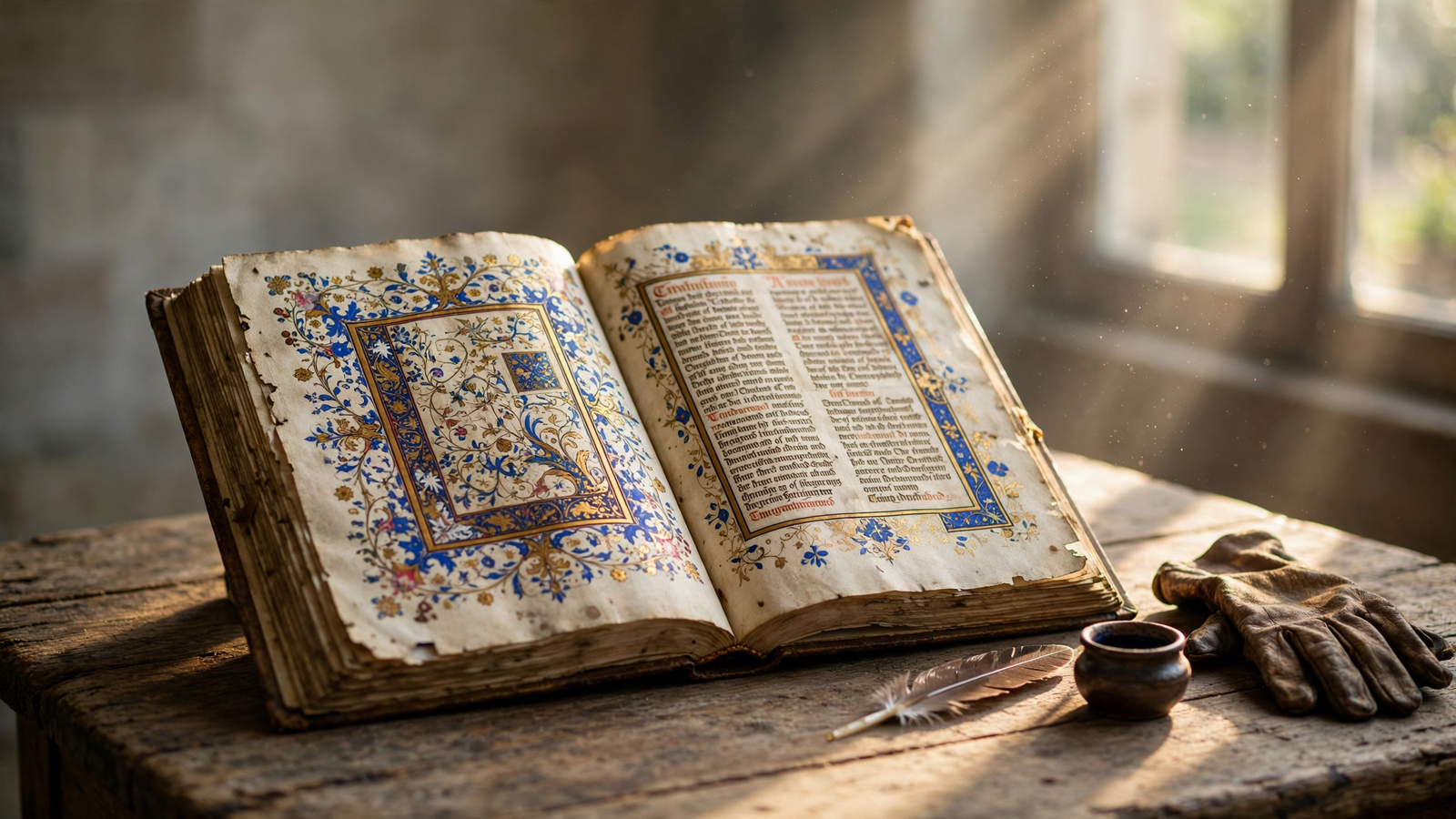
For many medieval Europeans, the day was measured less by minutes than by bells, daylight and prayer. A book known as a Book of Hours helped bring that rhythm into the home.
These small, richly decorated manuscripts were created primarily for laypeople rather than monks. They contained prayers arranged around the canonical hours of the day: morning, midday, evening and night. A typical volume might also include a calendar, psalms, prayers to the Virgin Mary, a record of saints’ feast days and passages intended for personal devotion.
A private schedule in a public world
The title refers to the “hours” of the Virgin, a cycle of prayers that could be recited at particular points in the day. The system did not function like a modern timetable. Most people did not own mechanical clocks, and the precise timing of prayer varied with the season and local custom. Church bells, however, provided a shared framework for daily life.
A Book of Hours translated that communal rhythm into something personal. Its owner could keep it at home, carry it while traveling or use it during quiet moments. The books were often small enough to hold in two hands, although their decoration and materials could make them expensive luxury objects.
More than a prayer book
The manuscripts also preserved clues about how people understood the passing year. Many opened with a calendar listing saints’ days and religious festivals. Illuminations sometimes showed the “labors of the months”: plowing, harvesting grapes, cutting wood or enjoying winter indoors. Zodiac signs and seasonal scenes connected religious observance with agriculture, weather and household work.
Those images are valuable because they show medieval life through more than the activities of kings and soldiers. A miniature might depict cooks preparing food, farmers guiding animals or people gathering around a fire. The pictures were not documentary photographs, and artists used familiar visual conventions, but they still reveal which kinds of work and seasonal behavior were considered recognizable to contemporary viewers.
Books made for particular people
Owners could personalize their books with portraits, family prayers, coats of arms and images of favored saints. Some manuscripts were commissioned for queens and aristocrats, while more modest examples were produced for a wider market. Women were important owners and users, and surviving books sometimes contain later notes, ownership marks or family records that extend their stories beyond the original commission.
One famous example, the Book of Hours of Jeanne d’Evreux, was made in fourteenth-century France for a queen. Its tiny scale and elaborate decoration show how a devotional object could also serve as a display of status and artistic achievement. By the fifteenth century, lavish volumes such as the Très Riches Heures had turned the calendar itself into a gallery of courtly and rural scenes.
From manuscript to printed page
The arrival of printing did not immediately end the tradition. Printed Books of Hours appeared in large numbers from the late fifteenth century onward, making the format available beyond the wealthiest manuscript patrons. Printers reused familiar prayers and images, while customers could still choose editions suited to their language, region and devotional preferences.
Today, these books are often admired for their gold leaf and miniature paintings. Their deeper importance is more intimate. They show people trying to organize ordinary life around recurring moments: waking, working, resting, remembering the dead and marking the seasons. Before the calendar hung on every wall, a Book of Hours made time something a person could hold.