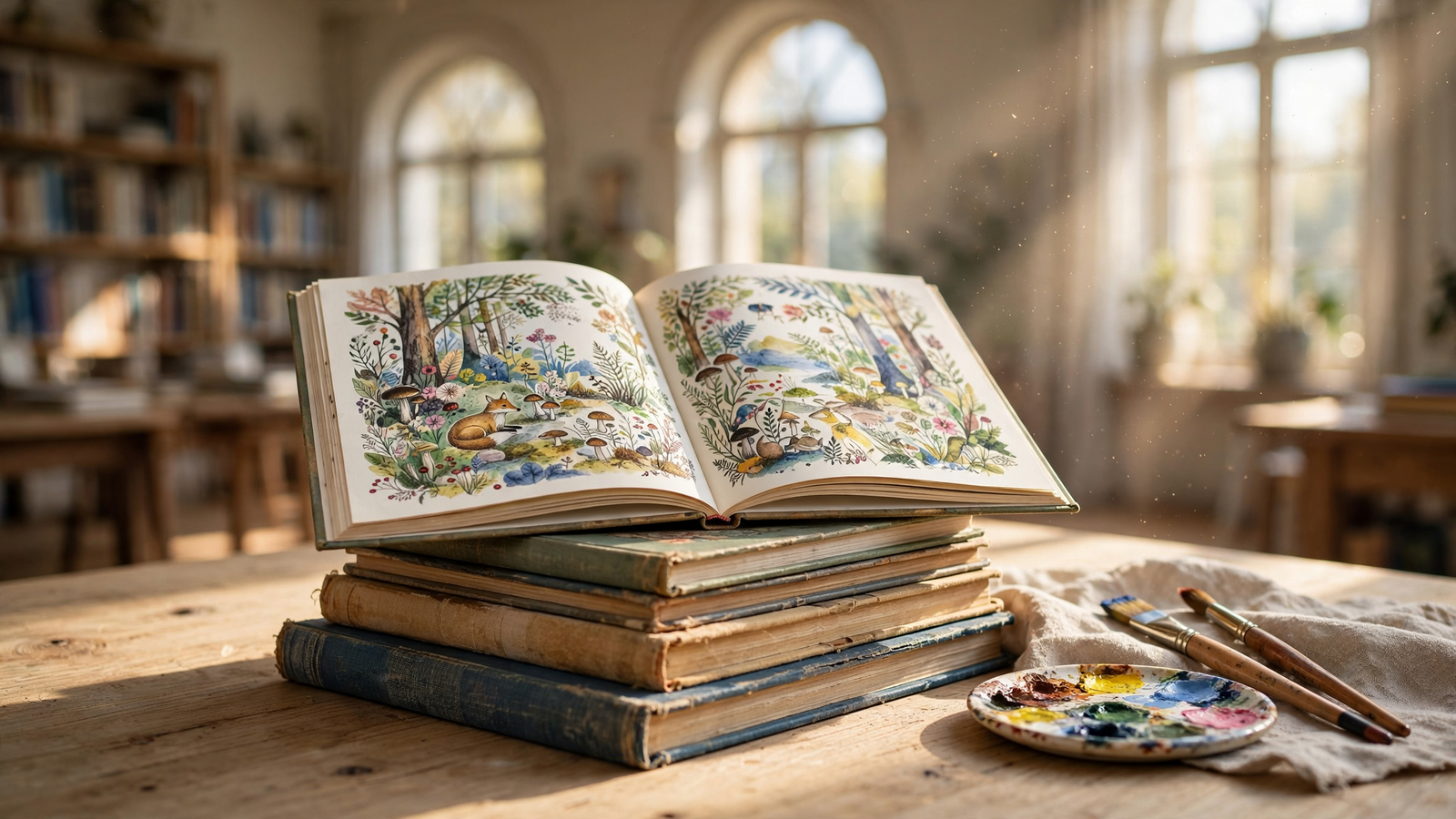
A picture book can be small enough for a child’s hands and still contain an entire visual world. A page may show a crowded city, a silent forest, or a single character’s changing expression. Since 1938, one American award has helped audiences recognize the skill behind that work: the Randolph Caldecott Medal.
Presented by the Association for Library Service to Children, the medal honors the artist of the most distinguished American picture book for children published during the previous year. It is part of the American Library Association’s annual youth media awards, alongside honors such as the Newbery Medal.
A medal named for a picture-book pioneer
The award takes its name from Randolph Caldecott, a 19th-century English illustrator whose lively pictures changed the relationship between words and images in children’s books. His illustrations often added visual jokes, movement, and details that were not stated in the text. The result was a form of storytelling in which readers had to study both the words and the pictures.
Caldecott died in 1886, but his influence remained visible in later picture books. When the American Library Association created a medal in his honor, it gave the field a way to celebrate illustration not as decoration, but as a central part of narrative art.
The first winner set the tone
The first Caldecott Medal went to Dorothy Lathrop for Animals of the Bible, published in 1937. Lathrop’s finely detailed black-and-white drawings and color plates presented familiar biblical animals with a strong sense of observation and atmosphere.
The choice signaled that the award would look closely at the artist’s craft. Line, composition, use of color, visual rhythm, and the way pictures interpret a story all became part of the conversation. A Caldecott book did not need to look like another Caldecott book. It needed to use its particular artistic language with distinction.
Why the pictures matter so much
In a strong picture book, illustrations do more than repeat a sentence. They can reveal what a character is feeling, show a detail the narrator has missed, stretch a moment across several pages, or create a visual pattern that children notice before they can explain it.
That makes picture-book reading an active experience. Children learn to follow visual clues, compare one page with another, and notice how size, color, perspective, and placement affect meaning. Adults may read the words aloud, but children often become the experts on what is happening in the pictures.
The medal also helped bring public attention to the people who create those pictures. Authors are often the most visible names on a book, while illustrators work through a quieter combination of drawing, design, research, editing, and visual storytelling. The Caldecott placed the illustrator’s contribution at the center of the book’s identity.
A continuing invitation to look closely
Each year’s selections create a record of changing artistic possibilities. Some winners use exuberant color; others rely on spare lines, collage, printmaking, or digitally assisted techniques. Some tell large adventures, while others focus on a gesture, a memory, or an ordinary day.
The lasting achievement of the Caldecott Medal is not simply that it identifies acclaimed books. It teaches generations of readers that pictures deserve careful attention. A child who learns to linger over a page is already learning an important lesson about art: meaning can be drawn, arranged, hidden, and discovered.