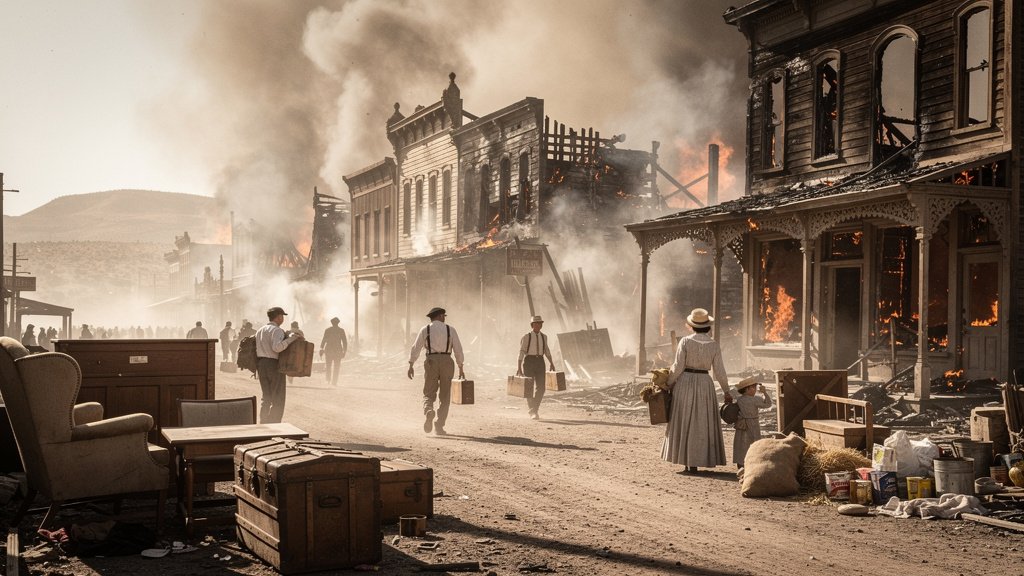
On July 14, 1900, Prescott faced one of the worst disasters in its history. A fire swept through the business district and destroyed much of the downtown community in a matter of hours. The fire changed Prescott permanently, but it also helped create the downtown we recognize today.
A Dry Summer and a Fast-Moving Fire
Prescott in 1900 was a busy territorial town surrounded by forest and dry grass. Buildings in the business district were crowded together, and many were constructed of wood. Once the fire gained a foothold, flames could move rapidly from one building to the next.
Contemporary accounts describe residents, business owners and firefighters fighting desperately to save what they could. People carried merchandise and household possessions away from the flames while others formed bucket brigades and worked to stop the fire’s spread.
Downtown Was Transformed
The destruction was enormous. A large portion of the commercial center was lost, including many buildings along and near what is now Whiskey Row. The disaster forced Prescott to rebuild rather than simply repair the town it had known.
The rebuilt downtown used more substantial masonry construction in many locations. That rebuilding is one reason historic Prescott still contains so many brick and stone commercial buildings.
A Disaster That Became Part of Prescott’s Identity
The 1900 fire is remembered not only because of what was lost, but because of what followed. Prescott rebuilt its business district and continued to grow. The surviving historic buildings and the later structures that replaced those destroyed by the fire became part of the architectural character of downtown.
From the Archives
Old photographs, newspapers, maps and city records allow us to reconstruct what happened and compare Prescott before and after the fire. They show how a single day could alter the physical appearance of an American town for generations.
Discover: The history of Prescott is often easiest to understand by looking at the original photographs, maps and documents left behind by the people who lived through it.