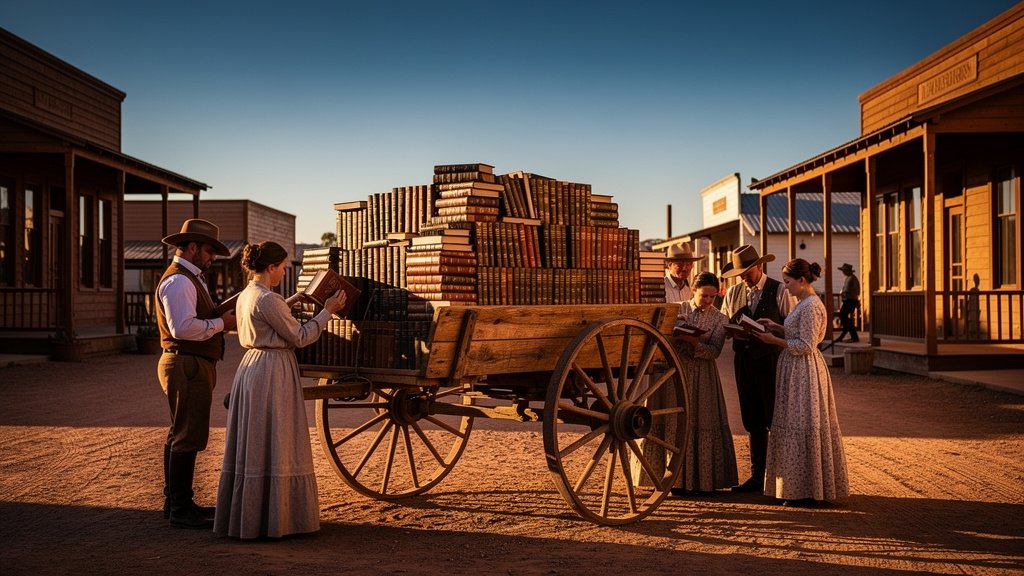
It Started With a Wagon
Prescott’s public library story began long before the city had a permanent library building. According to the Prescott Public Library’s local-history account, the community’s first library was a wagon carrying about 300 books. In the years that followed, residents organized the Prescott Library Association and worked to make books available to the growing town.
Prescott Wanted a Real Library
By the 1870s, Prescott was still a young frontier community, but local residents were already arguing that a public library was important. The Prescott Library Association was formed around 1875, and the library moved from place to place, including private homes, as residents tried to keep the collection available.
Julia Goldwater and Andrew Carnegie
A major turning point came in 1895. Julia Goldwater, working on behalf of the Monday Club, approached Andrew Carnegie about helping Prescott build a permanent library. Carnegie offered matching funds: if the community could raise $4,000, he would provide another $4,000.
More Than Books
The effort shows something important about Prescott at the end of the 19th century. The community was moving beyond its frontier beginnings and investing in institutions that could serve residents for generations. A library was not simply a place to borrow books. It represented education, civic pride and the idea that information should be available to the community.
A Local Story With a Larger Meaning
The history of the Prescott Public Library is easy to overlook because it does not involve a famous gunfight, a gold strike or a spectacular fire. But stories like this show how a frontier town became a permanent community. Prescott’s residents were building schools, libraries, businesses and civic institutions while the town was changing around them.
The next time you walk through downtown Prescott, it is worth remembering that the community’s library tradition began with something remarkably simple: a wagon filled with books and people who believed those books belonged in the hands of their neighbors.