A Different Kind of American Life
After World War II, millions of Americans moved into newly built suburban neighborhoods. The change was driven by housing demand, highway construction, automobile ownership and a growing desire for private homes.
The House, the Car and the Commute
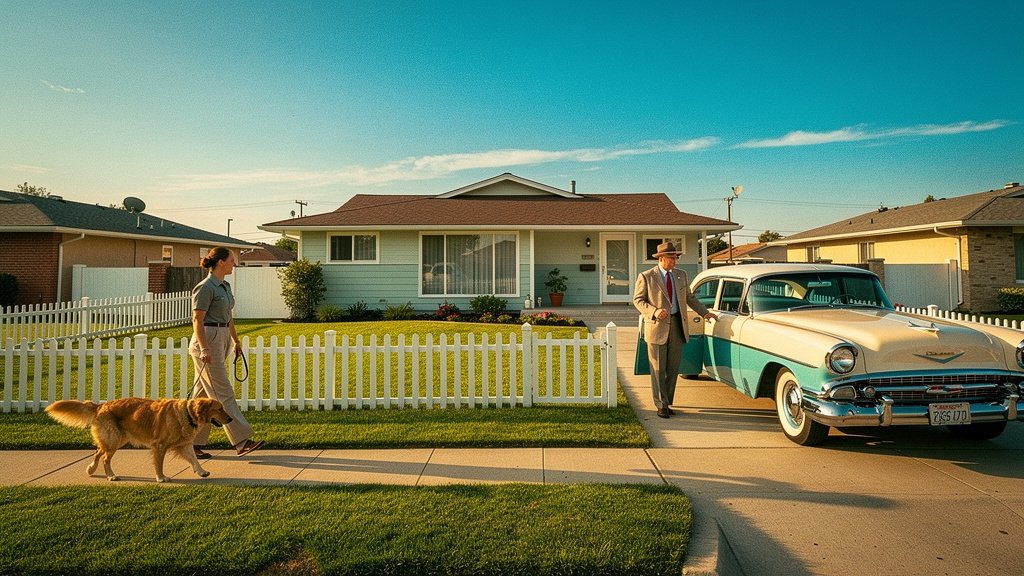
Suburban life often centered on a detached house, a yard and a family car. Shopping centers and schools followed the new neighborhoods, while commuting connected suburbs to older cities.
A Lasting Transformation
The suburban boom changed architecture, transportation, retail and even the rhythm of daily life. It also produced debates about land use, segregation, infrastructure and the cost of maintaining sprawling communities. The suburb remains one of the most influential features of modern American life.