For more than two decades, supersonic passenger travel has existed mainly as a memory. Concorde’s retirement in 2003 ended scheduled commercial flights faster than sound, leaving the technology in museums, flight-test programs and ambitious proposals.
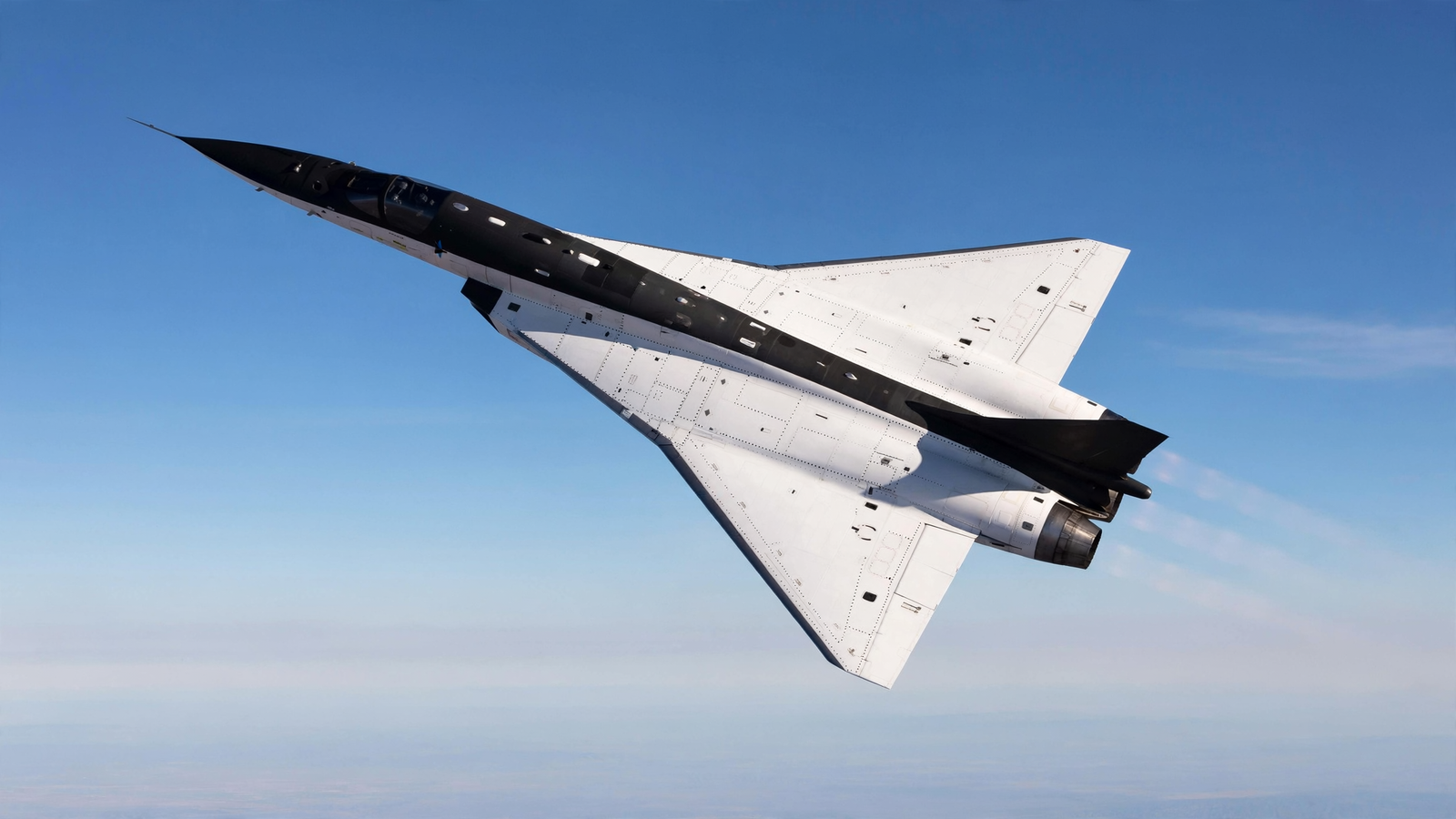
That changed in a small but important way in March 2025, when Boom Supersonic’s XB-1 test aircraft completed a supersonic flight over California’s Mojave Desert. The aircraft, developed by the Colorado-based company, became the first independently developed civil supersonic jet to break the sound barrier.
XB-1 is not an airliner, and its flight does not mean that passengers will soon be crossing the Atlantic in a new supersonic cabin. It is a technology demonstrator: a comparatively small aircraft intended to test the aerodynamic, propulsion and operational ideas that Boom hopes to use in its planned Overture passenger aircraft.
A careful return to Mach 1
Breaking the sound barrier is technically demanding because an aircraft encounters a sharp rise in aerodynamic drag as it approaches the speed of sound. Designers must manage heat, stability, fuel consumption and the powerful shock waves that form around the aircraft.
XB-1 uses three jet engines and a long, narrow fuselage shaped for high-speed flight. Its test program began with slower flights, allowing engineers to examine handling and systems before gradually increasing speed. That step-by-step process matters: supersonic flight is not simply ordinary flight with a larger engine.
The aircraft’s achievement also reflects a broader change in aerospace development. Advances in digital design, simulation and lightweight materials have allowed a private company to attempt a project that once would have required the resources of a national government or a major established manufacturer.
The hard part is not only speed
The central challenge for a future passenger aircraft is making supersonic travel practical. Concorde could cross the Atlantic in roughly half the time of conventional jets, but it consumed large amounts of fuel and was expensive to operate. Its sonic boom also limited where it could fly at supersonic speed over land.
Those issues remain. Boom says its planned Overture aircraft is being designed around lower operating costs, sustainable aviation fuel and a quieter sonic signature. Those are goals, not yet demonstrated commercial results. XB-1 can provide useful flight data, but a prototype cannot by itself prove that a full-size airliner will be economical, environmentally competitive or accepted by regulators.
United States rules generally prohibit civil aircraft from creating a sonic boom over the country’s land areas unless the Federal Aviation Administration grants specific authorization. NASA’s X-59 research aircraft is pursuing a different piece of the puzzle: reducing the boom to a quieter “thump” that could help regulators consider new approaches to overland supersonic flight.
Why the test still matters
XB-1’s flight is significant because it turns civil supersonic travel from a purely conceptual conversation into an active flight-test program. Engineers now have a working aircraft from which to learn about supersonic stability, engine operation and the realities of repeated high-speed flights.
The path from a successful demonstrator to a certified passenger aircraft remains long. Overture would need new engines, extensive testing, regulatory approval and an airline market willing to pay for speed. Still, XB-1 offers aviation something it has lacked since Concorde: a visible, flying experiment aimed at discovering whether the next generation of supersonic travel can be faster without being as costly, noisy and restrictive.