Few American places feel as instantly familiar as the diner: a polished counter, a row of stools, coffee poured from a bottomless pot and a menu that seems to promise breakfast at nearly any hour. The diner has become a shorthand for Americana, but it began as something more practical—a mobile solution to the problem of feeding people during the working day.
From lunch wagon to permanent restaurant
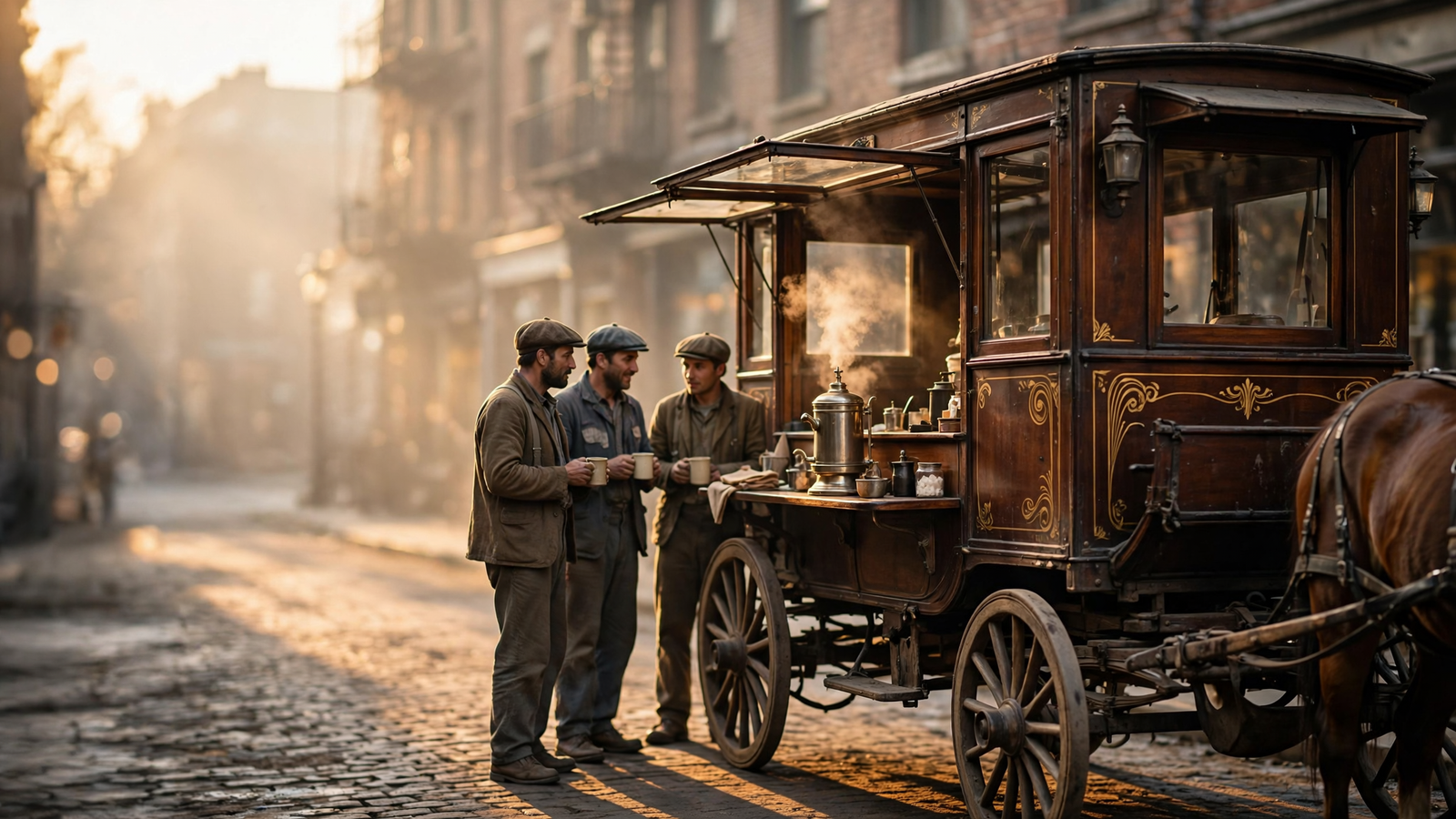
The diner’s early ancestor was the lunch wagon. In the late 19th century, entrepreneurs adapted horse-drawn wagons into compact kitchens that could be moved near factories, offices and busy streets. These businesses served workers who needed an affordable meal without the time or cost of a formal restaurant.
The concept was especially associated with New England, where industrial towns provided a ready supply of customers. According to the National Park Service, the first lunch wagons were small, mobile operations, but many eventually settled in one location as their businesses grew. Once stationary, they could be enlarged, remodeled and connected to local neighborhoods in a way a passing food cart could not.
The word “diner” became common in the early 20th century. Manufacturers began producing prefabricated restaurant buildings, often using durable materials and streamlined designs that could be delivered and installed relatively quickly. Companies such as the Worcester Lunch Car Company helped establish a recognizable diner form, with narrow interiors, stainless-steel surfaces and a long service counter.
A restaurant built around access
Diners were not defined only by their architecture. Their importance came from the way they made eating out more accessible. A customer could order a simple meal, sit at the counter and leave without spending much money or time. The format worked for factory employees, travelers, students, families and people working late shifts.
The diner also blurred social boundaries. Its small size placed strangers close together, while the counter created a shared public space rather than a collection of private tables. In many towns, the diner became a place where people encountered one another across differences of age, occupation and background.
That openness was never universal. Like many American businesses, diners operated within the racial and social inequalities of their time, and some excluded or segregated customers. Still, the basic model—an affordable, informal restaurant serving a broad public—helped make the diner one of the country’s most durable everyday institutions.
Why the form endured
Diners survived changes in transportation, shopping and restaurant culture because they were adaptable. Some moved from downtown streets to highways. Others expanded their menus, added booths or adopted newer architectural styles. Yet the essential promise remained familiar: quick food, a welcoming seat and a place open when many other restaurants were not.
That combination explains why diners appear so often in American photographs, films and paintings. They are visually distinctive, but their deeper significance is less glamorous. A diner records ordinary life—morning coffee before work, a late-night conversation, a family meal after a long drive or a solitary breakfast at the counter.
The American diner was never merely a building or a menu. It was a flexible piece of social infrastructure, created by small businesses and sustained by repeated daily use. Its story shows how a modest invention can become part of a nation’s cultural memory simply by giving people a reliable place to meet, eat and keep moving.