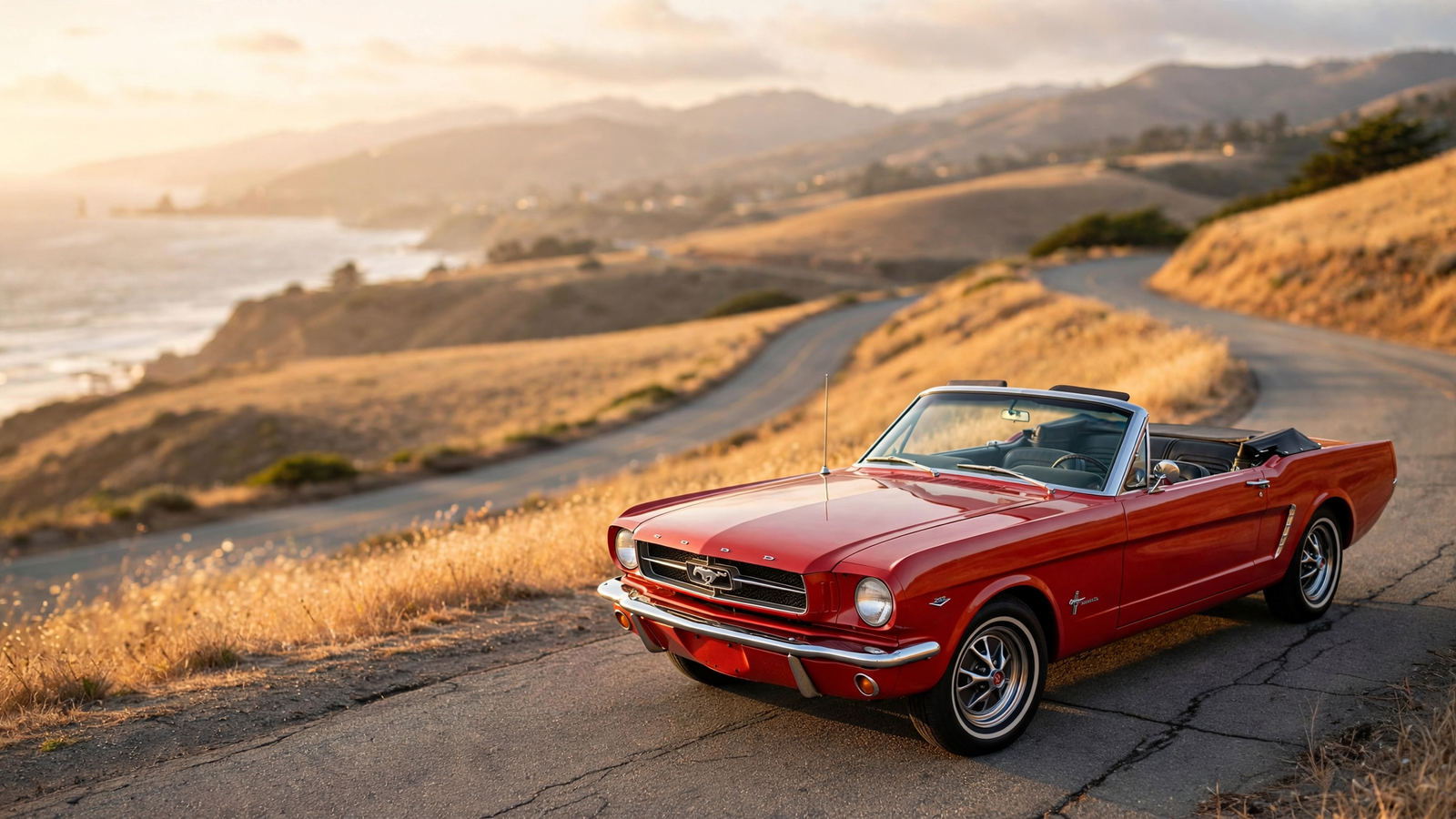
When Ford introduced the Mustang on April 17, 1964, it was not presenting another large, powerful American car. The new model was smaller, less expensive and easier to personalize than the performance automobiles that had defined the market. It was a carefully calculated invitation: a sporty car that ordinary buyers could imagine owning.
That idea helped create one of the most recognizable forms in American automotive history.
A Car Designed for a Changing America
The Mustang emerged as American buyers were becoming younger and more interested in cars that expressed personality as well as status. Ford executive Lee Iacocca and his team believed the company needed something fresh—an automobile with a low price, attractive styling and enough options to serve different kinds of drivers.
Underneath, the Mustang shared much of its engineering with the compact Ford Falcon. That decision helped keep development and production costs under control. On the outside, however, it looked distinctly different: a long hood, short rear deck and a crisp, sporty profile that made the car appear more expensive and powerful than it was.
Buyers could choose a coupe or convertible at launch, with a fastback joining the range soon afterward. Engines, transmissions, colors and equipment could be mixed in numerous combinations. The result was not one fixed personality but a car that could be economical, stylish, practical or quick, depending on how it was ordered.
The Launch That Became a Cultural Event
Ford unveiled the Mustang at the 1964 New York World’s Fair, but the company treated the introduction as a national occasion. Advertisements ran simultaneously across major television networks, and dealerships prepared for crowds. The car’s base price was about $2,368—within reach of many middle-class households and considerably less than most traditional sports cars.
The response was immediate. Ford sold more than 22,000 Mustangs on the first day, and first-year sales exceeded 400,000. The company had expected strong interest, but the scale of the demand transformed the Mustang from a new product into a national phenomenon.
Its success also gave the industry a new vocabulary. Automakers began developing “pony cars,” a category generally associated with compact dimensions, long-hood styling, affordable performance and extensive personalization. Chevrolet’s Camaro, Pontiac’s Firebird and other rivals followed, but the Mustang remained the model that defined the formula.
More Than a Sales Success
The Mustang mattered because it changed what an American car could represent. It was not primarily a family sedan, a luxury vehicle or an expensive sports machine. It was a personal choice—an automobile that could mark independence, youth and ambition without requiring extraordinary wealth.
That flexibility helped the Mustang move through generations of American life. It appeared in driveways, college parking lots, films and popular music. Some owners valued its performance; others loved its shape or the freedom associated with owning a car built around their preferences.
The Mustang’s first triumph was therefore larger than a successful launch. It showed that an automobile could become a cultural platform: practical enough for everyday use, exciting enough to inspire dreams and open-ended enough for millions of people to make it their own.