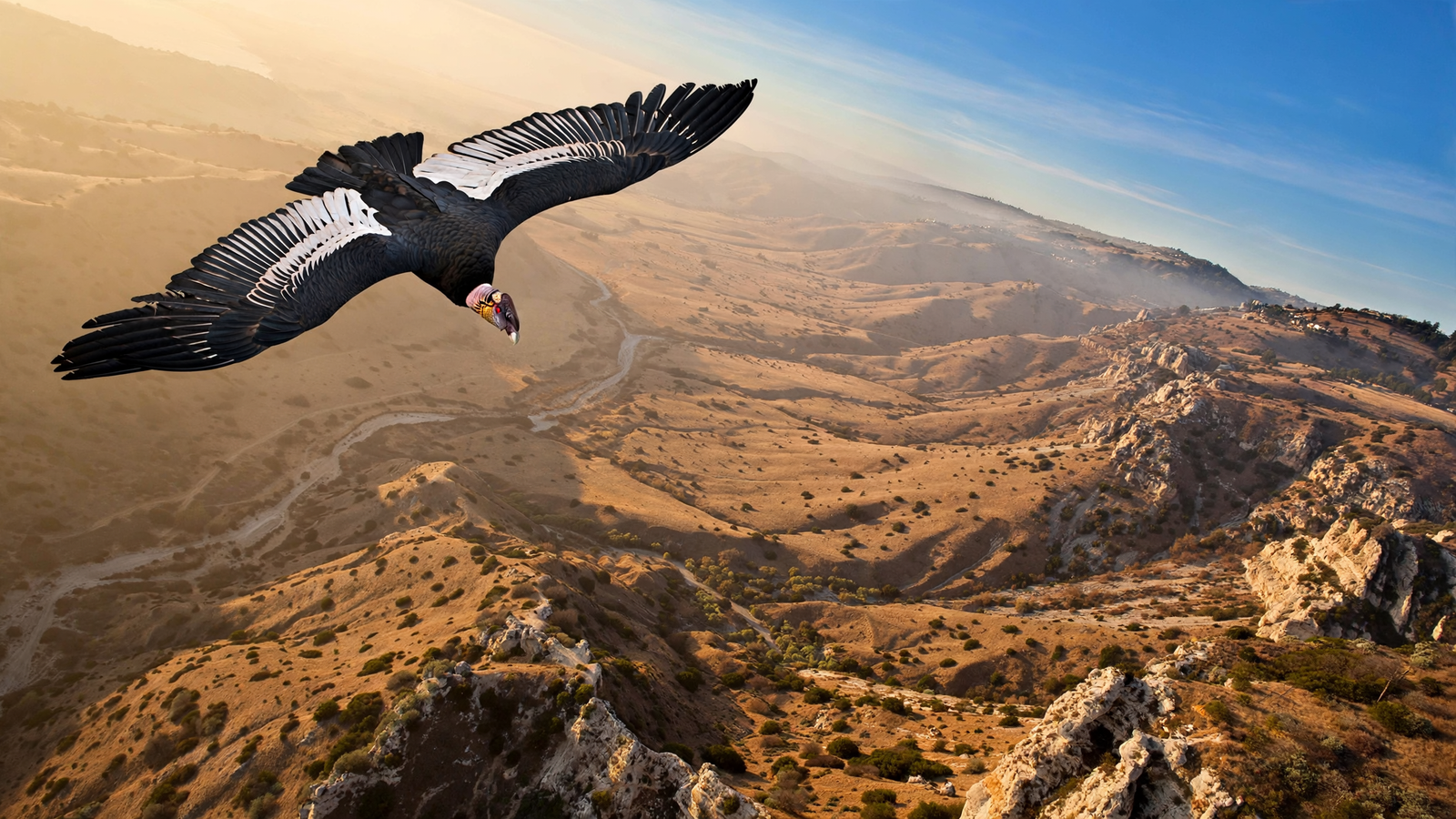
High above the cliffs and canyons of the American West, a bird with a nearly 10-foot wingspan is beginning to look less like a last survivor and more like a returning part of the landscape.
The California condor remains one of North America’s most endangered birds. But its recovery is also one of the clearest examples of what sustained conservation can accomplish. A species that fell to just 22 individuals in the early 1980s now numbers in the hundreds, with growing wild populations in California, Arizona and Utah, as well as a population in Baja California, Mexico.
From the edge of extinction
For thousands of years, condors moved across much of western North America. They are scavengers, using their powerful bills to open carcasses and their enormous wings to travel long distances while searching for food.
By the 20th century, habitat loss, hunting, collisions with power lines and other pressures had pushed the species close to disappearing. Lead poisoning became especially damaging because condors can ingest fragments of lead ammunition when they feed on animals left in the landscape.
In 1987, the last free-flying condors were brought into captivity. That decision was controversial, but it created an opportunity to protect every remaining bird while biologists developed a breeding and release program.
A recovery built bird by bird
Captive breeding did not produce an instant solution. Condors mature slowly, lay only one egg at a time and require years of care before they can reproduce. Conservation teams had to learn how to raise young birds without allowing them to become too comfortable around people.
The first condors bred through the recovery program were released back into the wild in California in 1992. Releases followed in Arizona in 1996, creating a second U.S. recovery area around the Grand Canyon region. Today, field crews track the birds with radio and GPS transmitters, monitor nests and provide medical treatment when condors are exposed to lead.
According to the U.S. Fish and Wildlife Service’s 2023 population figures, 561 California condors were living worldwide at the end of that year. Of those, 344 were flying free. The numbers are still far below the species’ historic abundance, but the change from 22 birds represents a remarkable conservation achievement.
The work is not finished
Condor recovery is not simply a matter of releasing more birds. Young condors must learn where to find food and how to avoid dangers such as power lines. Wild birds are also tested regularly for lead exposure, and some require chelation therapy to remove the toxin from their bodies.
Reducing the use of lead ammunition is therefore central to the long-term recovery plan. California now requires nonlead ammunition for hunting statewide, while wildlife agencies and conservation groups continue outreach in other parts of the condor’s range.
The condor’s return is measured in careful steps rather than dramatic leaps: another chick hatching, another bird surviving its first year, another flock appearing over a canyon where the species once vanished. Those steps show that extinction is not always the final chapter. With patient science, habitat protection and public cooperation, even a species reduced to a few dozen birds can begin to reclaim the sky.