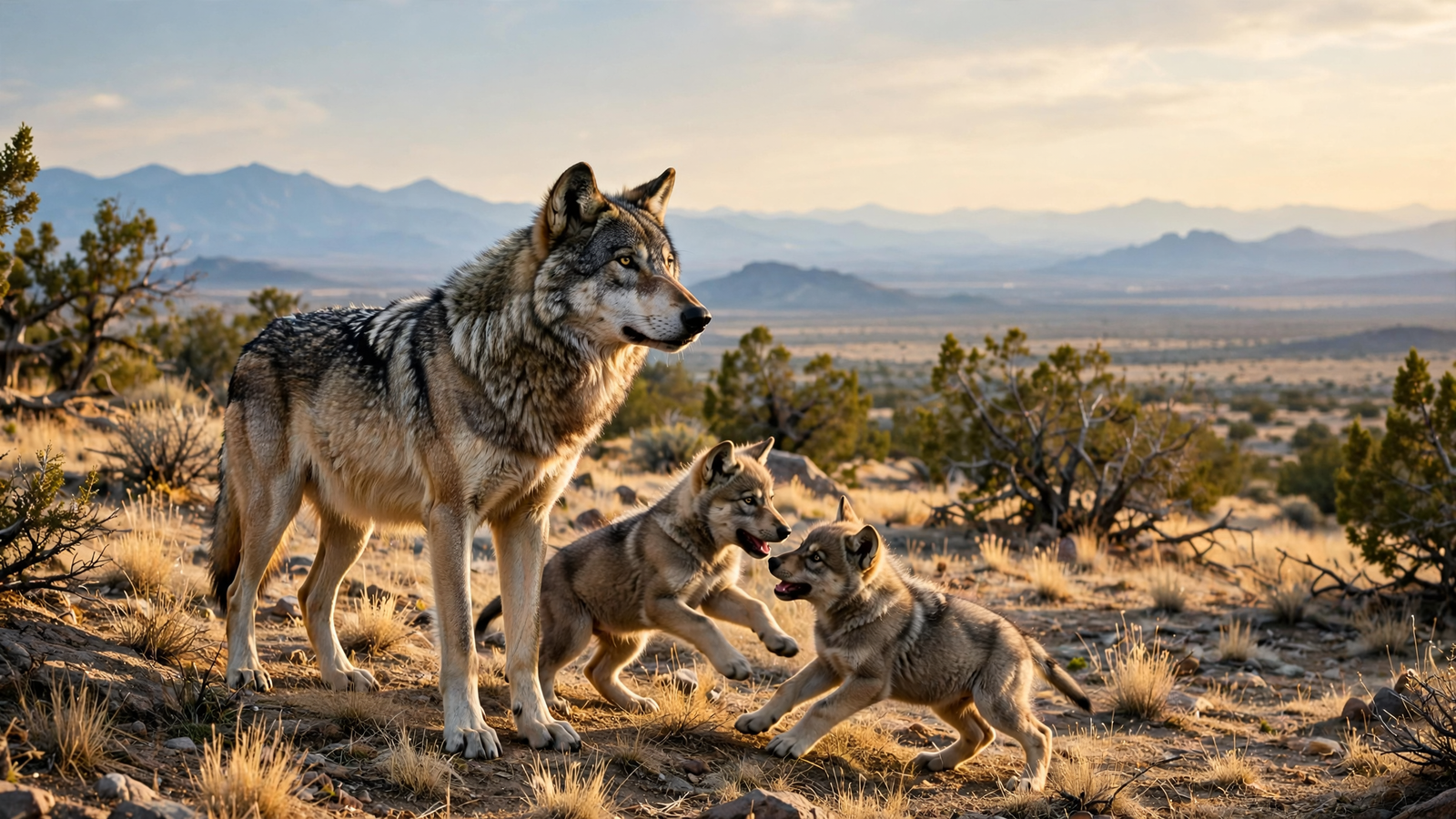
In the forests and mountains of Arizona and New Mexico, a rare American wolf is having a better year.
The Mexican gray wolf population reached at least 286 animals in the wild in 2024, according to the U.S. Fish and Wildlife Service and the Arizona Game and Fish Department. That was an increase of about 11 percent from the year before, when wildlife officials counted 257 wolves.
For a species that once came very close to disappearing from the wild, the number is an encouraging milestone. It also represents hundreds of individual stories: pups born in dens, parents teaching young wolves to travel, and family groups finding places to live across a large, challenging landscape.
A wolf with a small population and a big role
The Mexican gray wolf is the smallest and rarest subspecies of gray wolf in North America. It is sometimes called el lobo. These wolves are usually smaller than northern gray wolves, with coats that can include gray, brown, black and reddish coloring.
Like other wolves, Mexican gray wolves live in family groups called packs. A pack may include parents, young wolves and older offspring. Working together, the animals help keep prey populations in balance and carry nutrients through the ecosystem.
Mexican gray wolves once ranged across parts of Arizona, New Mexico, Texas and Mexico. By the middle of the 20th century, trapping, shooting and government predator-control programs had eliminated them from the wild in the United States. The last wild animals were captured in the 1970s for a carefully managed breeding program.
From seven wolves to hundreds
The modern recovery effort began with just seven founding wolves. Biologists bred their descendants in zoos and wildlife facilities, then gradually returned wolves to the wild beginning in 1998.
That work continues today. Wildlife teams track the wolves with radio collars, document new pups and move some animals between breeding facilities or wild areas when needed. These steps help maintain genetic diversity, which is important when a population has passed through such a small starting point.
Officials also work with ranchers and local communities. Mexican gray wolves sometimes travel through areas where livestock live, so conservation teams use tools such as range riders, livestock-protection methods and other nonlethal approaches to reduce conflicts.
Why the pups matter
Every new generation gives the population more stability. In 2024, wildlife workers documented dozens of wolf pups born in the wild. Not every pup survives—a natural reality for young animals—but those that do become part of the packs that may raise the next generation.
The recovery is not finished. Mexican gray wolves remain federally endangered, and their future depends on healthy habitat, careful monitoring and cooperation among scientists, landowners, tribes and communities in both the United States and Mexico.
Still, the rising count offers a powerful lesson for young conservationists: a species does not have to recover all at once. Sometimes progress begins with seven animals, a group of patient people and a willingness to keep trying for many years.