Every children’s book collection tells a story about what a community believes is worth remembering. For decades, many Latino children in the United States had difficulty finding their families, languages and everyday experiences reflected on library shelves. The Pura Belpré Award helped change that landscape.
Established in 1996, the award is presented by the American Library Association’s Association for Library Service to Children in partnership with REFORMA, the National Association to Promote Library and Information Services to Latinos and the Spanish Speaking. It recognizes Latino or Latina writers and illustrators whose work celebrates the Latino cultural experience in an outstanding children’s book.
A librarian at the beginning
The award is named for Pura Belpré, a Puerto Rican writer, storyteller, educator and librarian who became the first Puerto Rican librarian at the New York Public Library. She joined the library in 1921, at a time when New York’s Spanish-speaking population was growing and library service in Spanish was still limited.
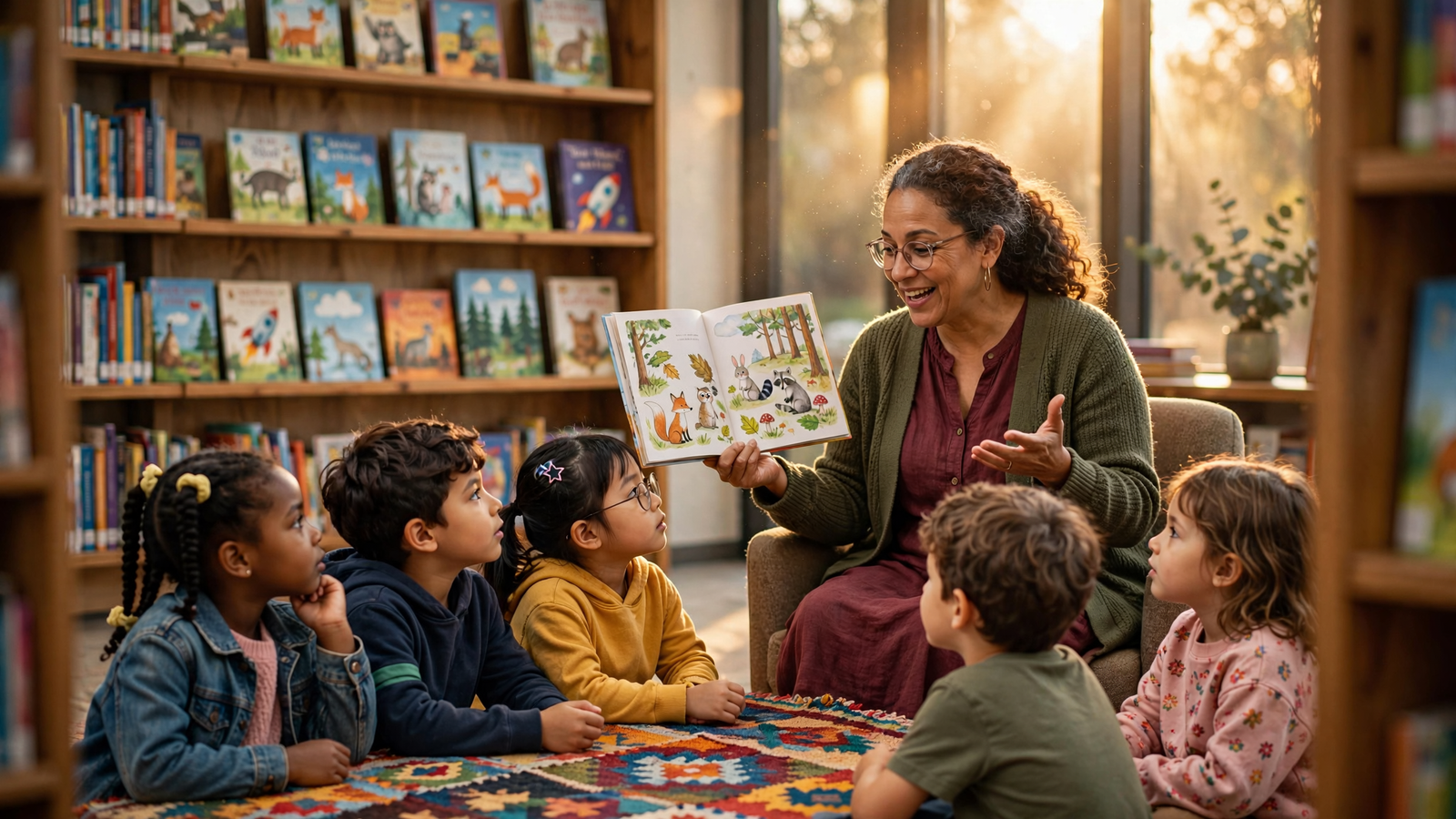
Belpré understood that a library could be more than a place to borrow books. It could also be a place where children heard familiar stories and families saw their traditions treated with respect. She organized Spanish-language programs, introduced storytelling to children and helped connect the library with New York’s Puerto Rican community.
Her own work also mattered. Belpré collected and adapted folktales, including stories associated with Puerto Rican tradition, and published children’s books such as Pérez and Martina. Her career linked two activities that are often separated: preserving cultural memory and inviting children into the world of reading.
What the award changed
The Belpré Award gave librarians, teachers and families a dependable way to identify children’s books by Latino authors and illustrators. Its medals and honor selections recognize picture books, fiction and nonfiction for children and young adults. The award can also draw attention to the visual language of a story: its illustration medal acknowledges that art can carry history, identity and emotion just as powerfully as words.
That recognition matters because children’s publishing has long shaped which communities appear to be part of the American story. A book about a family preparing a traditional meal, a child navigating two languages or a young person discovering an inherited history can offer both representation and an invitation. For readers who share that background, the experience may feel like recognition. For other readers, it can widen their understanding of the country around them.
A living tradition
The award does not treat Latino identity as a single experience. The books honored over time have included stories connected to different countries, regions, languages, migrations and family histories. That range is one of the award’s most important contributions: it resists the idea that there is only one way to tell a Latino story.
Pura Belpré died in 1982, but the award bearing her name continues the work she began in New York libraries. Each year’s selections give young readers new entry points into literature while reminding adults that children’s books are part of the nation’s cultural record.
A medal cannot solve every imbalance in publishing. It can, however, help a meaningful book travel farther—from an author’s desk to a library shelf, from a librarian’s recommendation to a child’s hands, and from one generation’s memories to the next.