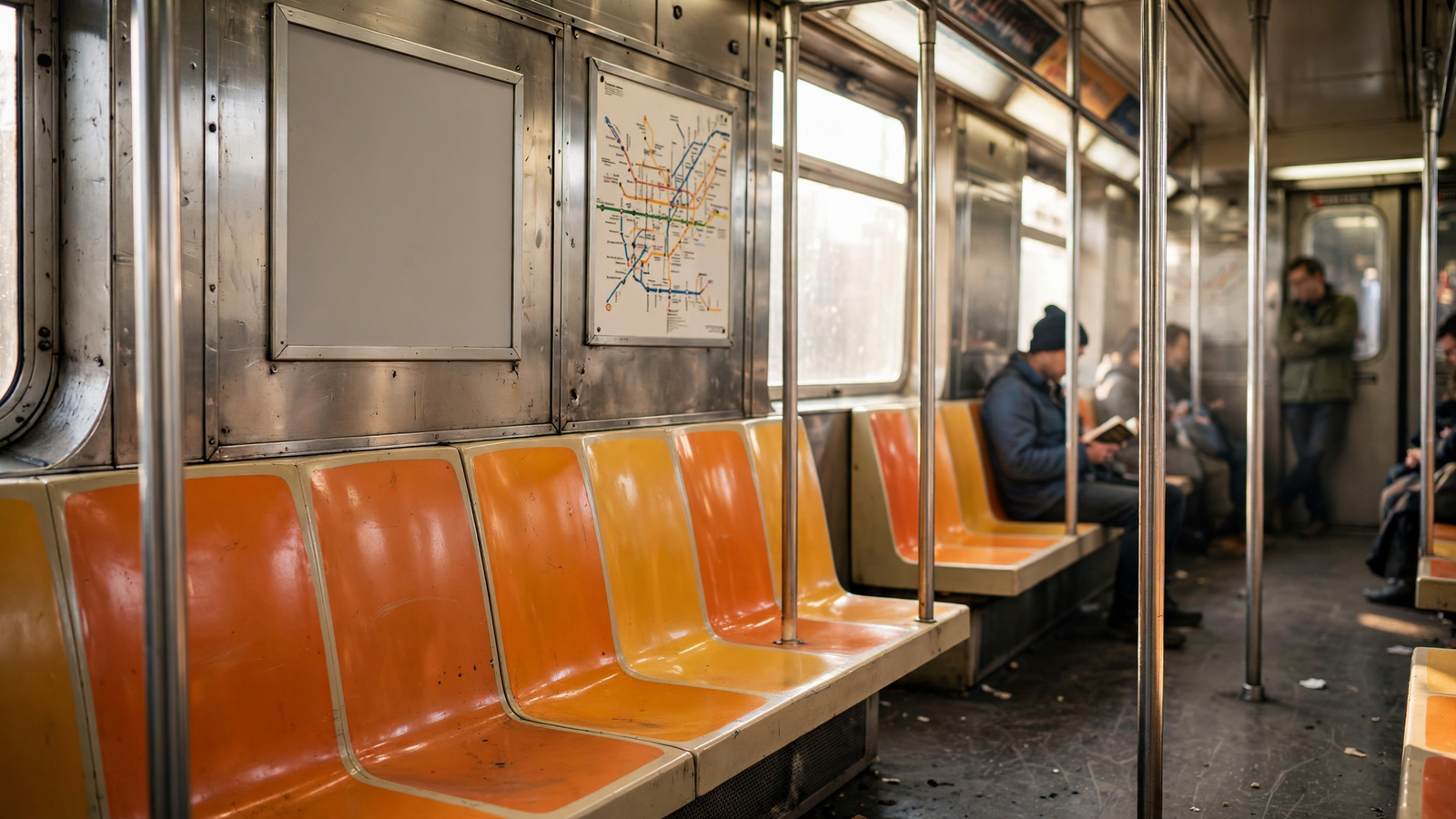
On a subway ride through New York City, a passenger may encounter the usual underground vocabulary: station names, service changes, advertisements and warnings. But alongside those practical messages, another kind of language has been traveling through the system for more than three decades.
Poetry in Motion places poems inside subway cars, turning a routine commute into an unexpected encounter with literature. The project began in New York in 1992 as a collaboration between the Metropolitan Transportation Authority and the Poetry Society of America. Its basic idea is simple: put carefully selected poems where people are already looking.
A poem in the middle of the day
The setting matters. A poetry book requires a deliberate choice—to find it, open it and spend time with it. A subway poem asks for much less. It can be read while waiting for a train, during a stop between stations or in the few quiet minutes after a crowded car begins moving again.
That accidental quality is part of the project’s appeal. A rider might arrive looking at a phone and notice a line of verse instead. Someone who rarely visits a bookstore or poetry reading can still come across a poem without needing to buy a ticket, know an author’s name or understand a literary tradition in advance.
The poems are presented in the same public spaces where New Yorkers encounter commercial messages. Yet they make a different request of the audience. They do not ask passengers to purchase something. They offer a moment of attention.
From New York to a wider network
Poetry in Motion became a model for bringing poetry into public transportation systems beyond New York. The Poetry Society of America’s account of the program describes its growth into a broader national and international effort, with versions appearing in other cities and transit networks.
The format is adaptable. A transit authority can display a poem in a train car, station or other passenger space, often using a compact design that makes the work legible during a short journey. The result is not a traditional classroom and not quite a literary magazine. It is public art designed for people who may be tired, hurried or simply curious.
New York’s subway system is especially suited to that kind of project. It is one of the country’s largest public gathering places, carrying people from many neighborhoods, languages, occupations and generations. A poem posted there enters a conversation with a remarkably varied audience.
Why public poetry endures
Public poetry does not depend on every passenger reading an entire poem or agreeing on its meaning. One rider may pause over a single image. Another may remember a line later in the day. A child may discover that poetry is not confined to a school assignment. Even a brief encounter can make a familiar route feel less automatic.
That may be the project’s quiet achievement: it treats literature as part of ordinary civic life. Poetry is not reserved for special occasions or elite institutions. It can appear in a moving train, between errands and appointments, among strangers sharing a few square feet of space.
More than 30 years after its New York launch, Poetry in Motion still offers a generous proposition. A commute can be more than movement from one address to another. For the length of a subway car, it can also become a small public reading room.