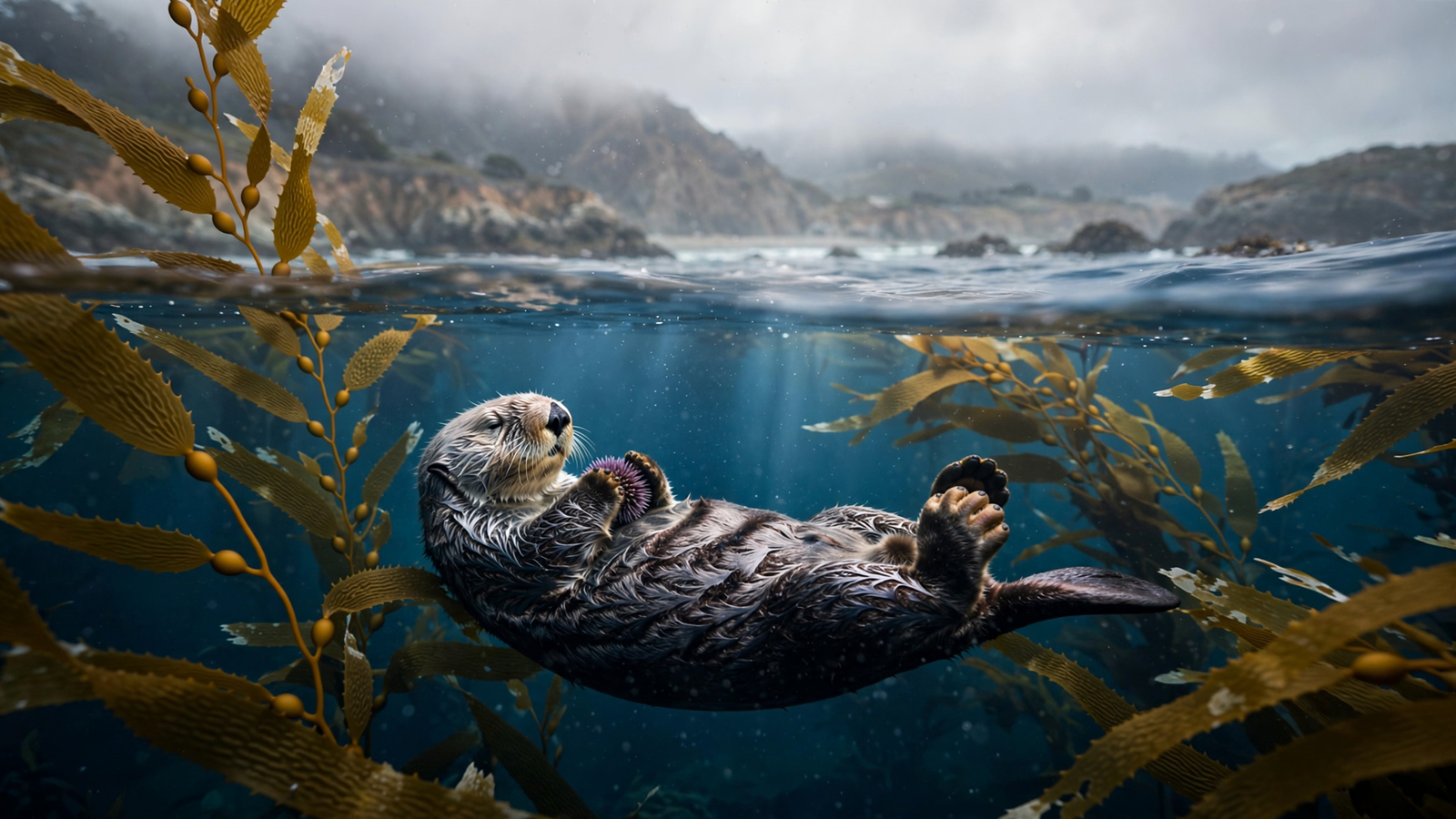
Along California’s central coast, a conservation success story is unfolding close to the waterline. Southern sea otters, once reduced to a small remnant population, have survived, reproduced and reclaimed an important role in the nearshore ecosystem.
Their recovery is not only a story about saving an appealing marine mammal. It is also a reminder that protecting one species can influence an entire community of life.
From a few dozen animals to a living population
Southern sea otters were hunted extensively for their fur during the maritime fur trade. By the early 20th century, the California population had nearly disappeared. The U.S. Fish and Wildlife Service says that only about 50 animals were known to remain along the Big Sur coast in 1938.
Legal protection changed their prospects. The species received protection under California law in 1913 and was listed as threatened under the federal Endangered Species Act in 1977. Since then, researchers and conservation groups have monitored the animals, protected habitat and worked to reduce threats such as disease, pollution, fishing-gear entanglement and conflict with human activity.
Today, roughly 3,000 southern sea otters live along the California coast. That number is far below the species’ historical abundance, and the population remains federally threatened. But compared with the crisis of a century ago, it represents a remarkable foundation for continued recovery.
Why an otter can change a kelp forest
Sea otters are voracious predators. They eat crabs, clams, snails, sea urchins and other invertebrates, often consuming a quarter of their body weight in food each day. By feeding on sea urchins, otters can help prevent those grazers from stripping kelp from the seafloor.
This relationship is sometimes described as a trophic cascade: a predator affects its prey, and that change travels through the food web. Where conditions are favorable, fewer urchins can mean more kelp, creating habitat for fish, invertebrates and other coastal wildlife. Kelp forests also soften wave energy, store carbon and support productive coastal waters.
The effect is not automatic. Kelp health also depends on ocean temperatures, storms, disease, food supplies and other predators. Researchers therefore treat sea otters as one important part of a larger ecological system, not a single solution to every coastal problem.
A recovery measured in more than numbers
California’s otter population has expanded beyond its historic refuge and now occupies much of the central coast. Animals can be seen resting in kelp beds, floating in sheltered coves and raising pups in estuaries such as Elkhorn Slough.
Those sightings are meaningful because otters are both highly visible and unusually influential. Their presence gives scientists a way to track the condition of coastal habitats, while their feeding behavior helps reveal how changes in one part of the food web affect another.
The population still faces serious limits. Southern sea otters have not yet returned to much of their former range, and their numbers have remained relatively stable rather than increasing rapidly. Disease, food shortages, shark-bite injuries, harmful algal blooms and human-caused pollution remain concerns.
Even so, the recovery demonstrates what sustained protection can accomplish. A species that came close to vanishing now helps shape the living coastline around it. Every raft of otters is evidence that conservation can do more than prevent extinction: given time, it can restore relationships that make an ecosystem work.