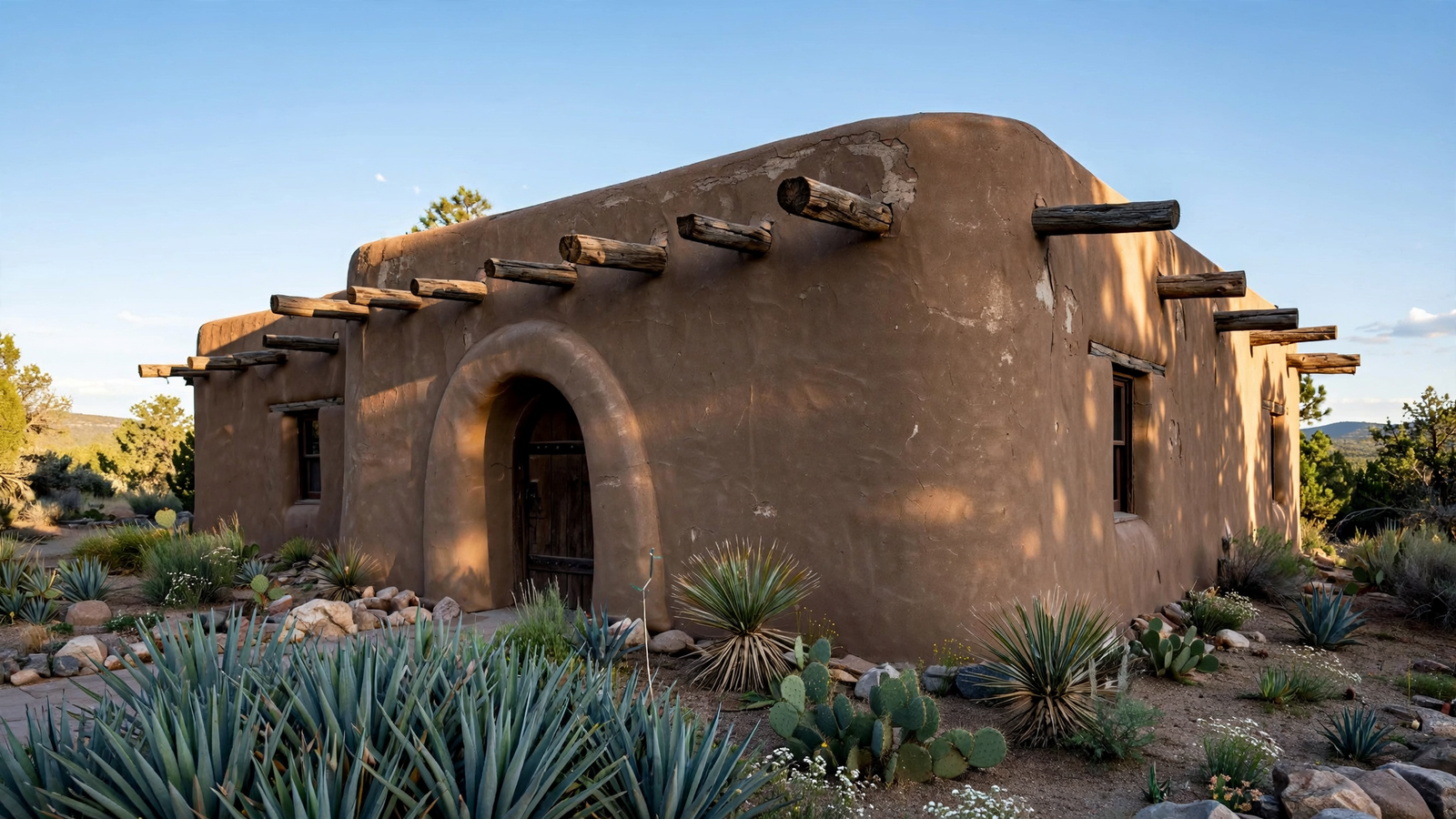
Near the center of Prescott, a low Pueblo-style building holds a collection that reaches across the Southwest: pottery, baskets, textiles, katsina figures, jewelry and other works connected to Native communities. The building is the Smoki Museum, one of the city’s most distinctive cultural places—and one that asks visitors to think not only about what museums preserve, but also about who gets to tell a region’s story.
The Smoki Museum is not a conventional house of local history. Its collections focus on Native American art and material culture, while its own beginnings are closely tied to a group of Prescott residents who adopted imagined Native identities and performed ceremonies for public entertainment during the early twentieth century. That history is difficult, and it cannot be separated from the museum’s later role as a place where people encounter the artistic traditions of the Southwest.
That tension gives the museum a significance beyond its displays. A visit can be an introduction to the careful work of Native artists and makers. It can also become a lesson in how American communities have sometimes collected, interpreted and presented Indigenous culture through non-Indigenous institutions.
A museum with an unusual beginning
The Smoki Museum grew out of the Smoki people, a fraternal organization formed in Prescott in the 1930s. According to the museum’s historical account, the group created ceremonies, costumes and performances inspired—often inaccurately—by Native traditions. The performances became part of Prescott’s civic and tourist culture, attracting audiences during a period when communities across the country were turning regional identity into public spectacle.
The museum opened in 1935 in a building designed to evoke Pueblo architecture. Its founders presented the institution as a place for Native American objects and traditions, but the circumstances of its creation reflected the attitudes of its time. The organization was not a Native nation or a representative Indigenous cultural body. It was a group of local white men performing an invented identity.
That distinction matters. The museum’s origin story is not simply an amusing piece of Prescott folklore. It belongs to a broader history of cultural appropriation in the United States, when Indigenous imagery and ceremony were often treated as costumes, entertainment or symbols available for outsiders to borrow. For visitors, understanding that context changes the experience of the building. The museum is not only a container for objects; it is also an artifact of the era in which Americans decided how the Southwest should look and sound.
The building became a lasting Prescott landmark
Even with its complicated origin, the museum became a durable part of Prescott’s cultural landscape. Its architecture helps explain why. The structure’s rounded forms, stepped massing and earth-toned exterior place it visually within the region’s Pueblo Revival tradition, a style that became popular in the American Southwest during the early twentieth century.
Like many revival-style buildings, the Smoki Museum is both a work of architecture and an interpretation of place. It was designed to look connected to the Southwest, but that visual connection does not by itself make the building Indigenous. The distinction between an architectural style and the culture that inspired it is another part of what the site can teach.
Located close to downtown, the museum is easy to approach as part of a broader Prescott visit. It does not require a long drive into the surrounding mountains or a full day devoted to a single attraction. Its setting makes it feel like part of the city’s everyday cultural infrastructure: a small institution where residents, travelers, students and collectors can encounter regional art without leaving town.
What the collections make visible
The museum’s collections bring together objects from many Native communities and artistic traditions. They include forms familiar to anyone who has spent time in the Southwest—woven baskets, painted pottery, beadwork, textiles and carved figures—but the category names alone cannot describe the knowledge embedded in them.
A basket is not merely a decorative object. Its materials, pattern, shape and construction may reflect a particular landscape, a community’s history and skills passed through generations. Pottery can carry information about local clay, firing methods, design traditions and the choices of an individual artist. Textiles and beadwork can be both practical and expressive, connecting everyday use with identity and ceremony.
Museums can make those details easier to see. They protect objects from loss, provide controlled conditions for their care and give visitors a chance to compare forms across regions. They also create a record of artistic work that might otherwise remain dispersed among private collections or inaccessible to the public.
But collecting is never neutral. Objects enter museums through purchases, donations, expeditions and the decisions of earlier collectors. Those pathways can leave important questions unanswered: Who made an object? Was it sold willingly? Was it removed from a ceremonial or burial context? What does the originating community want visitors to understand about it today?
Those questions are now central to museum work across the country. Federal law, including the Native American Graves Protection and Repatriation Act, has required museums and other institutions to review certain Native American human remains and cultural items and to consult with affiliated tribes. Not every object in a Native art collection falls under that law, but the broader principle is significant: Indigenous communities are not simply subjects of display. They are living communities with authority, knowledge and interests connected to their cultural heritage.
The value—and limits—of a local museum
Small museums often have a different character from large national institutions. They may have fewer resources, smaller staffs and more modest galleries, but they can also feel more immediate. A local museum is embedded in the community whose history it interprets. Its choices can influence how residents understand the place they call home.
For Prescott, the Smoki Museum holds several kinds of memory at once. It preserves examples of Native art. It records the collecting habits of earlier generations. It reflects the popularity of Pueblo Revival architecture. And it preserves the story of a civic organization whose performances reveal how twentieth-century Prescott imagined the American West.
Those layers do not resolve neatly into a single message. The museum should not be treated as if its founders’ imitation represented Native people. Nor should the presence of problematic origins erase the importance of Native-made art or the continuing need for institutions to care for collections responsibly. A more honest visit holds both realities together.
That approach also helps visitors avoid a common mistake: treating Indigenous culture as something that belongs only to the past. The art represented in a museum collection is not evidence of a vanished world. Native artists and communities continue to create, adapt and debate traditions in the present. Historic objects can be approached with respect without freezing the people connected to them in an earlier century.
A place for a more careful kind of attention
The Smoki Museum is not the largest or most famous destination in northern Arizona. Its importance comes from concentration. Within a relatively small building, visitors encounter art, architecture, collecting history, civic identity and the unresolved question of how a city should present a culture that is not its own.
That makes the museum especially useful as a place of reflection. Visitors can look closely at the objects, learn about the communities that made them and consider how the objects arrived in a Prescott institution. They can appreciate craftsmanship without assuming that appreciation gives outsiders ownership. They can recognize the building’s historical character without repeating the assumptions that shaped its earliest public story.
Prescott is often introduced through its courthouse square, historic buildings, rodeo and mountain landscapes. The Smoki Museum adds a more complicated note to that picture. It shows how a community can preserve a physical landmark while still needing to examine the ideas that produced it.
The result is not a simple feel-good story about the past. It is something more useful: a public place where beauty and discomfort remain in the same room, and where looking closely can lead to better questions about memory, responsibility and cultural respect.