For people with type 1 diabetes, daily insulin replaces a hormone their bodies can no longer make. That treatment is life-sustaining, but it is also demanding: blood sugar must be monitored, doses adjusted, and meals, exercise, illness, stress, and sleep all taken into account.
In 2024, researchers in China reported a strikingly different possibility. A 25-year-old woman with type 1 diabetes received a transplant made from her own reprogrammed cells. Within about three months, her transplanted tissue was producing enough insulin for her to stop taking injected insulin.
The result came from a single patient, and it does not yet amount to a widely available cure. But it offers an unusually clear demonstration of an idea that scientists have pursued for years: making replacement insulin-producing cells from a person’s own body, rather than relying on a scarce donor pancreas or donor islets.
Why replacing insulin-producing cells matters
Type 1 diabetes is an autoimmune disease. The immune system mistakenly attacks the beta cells in the pancreas that produce insulin. As those cells disappear, the body loses the ability to regulate glucose normally.
Insulin injections and pumps can replace the missing hormone, and modern monitoring systems have made treatment safer and more precise. Still, even the best technology does not recreate every function of a healthy pancreas. People must continue responding to changing glucose levels, and severe episodes of dangerously low blood sugar can remain a risk.
One potential alternative is to replace the lost beta cells. Donor-islet transplantation has shown that transplanted cells can restore insulin production, but the approach faces two major obstacles. There are not enough donor organs for everyone who might benefit, and recipients generally need long-term immune-suppressing drugs to prevent rejection.
Stem-cell research addresses the supply problem by creating large numbers of insulin-producing cells in the laboratory. The more difficult question is how to protect those cells from the same autoimmune attack that destroyed the original beta cells.
Turning ordinary cells into islet cells
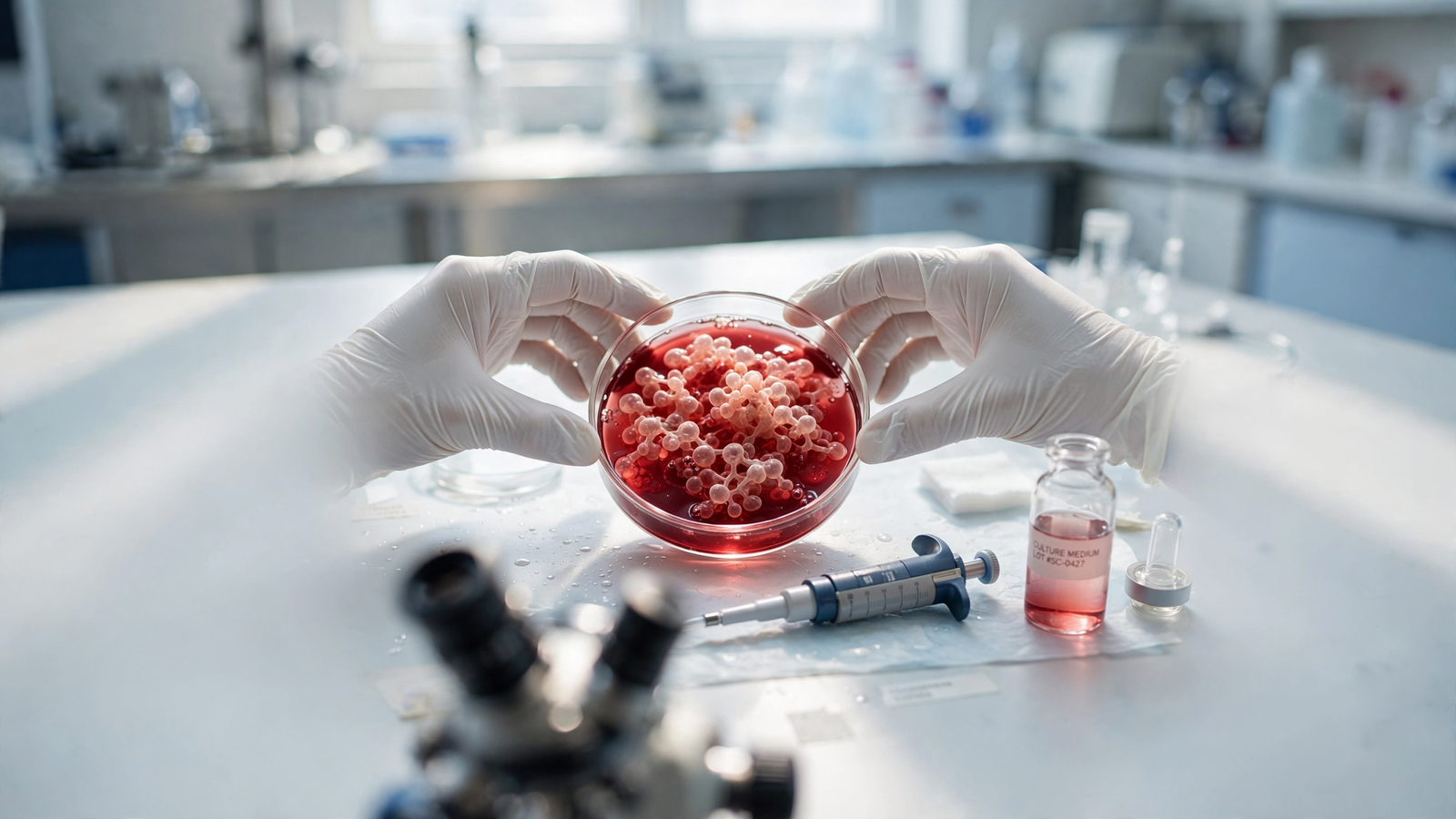
The Chinese research team used a form of cellular reprogramming. They took cells from the patient’s body and converted them into induced pluripotent stem cells, a flexible state in which cells can be guided toward other types. The researchers then directed those cells to develop into clusters resembling pancreatic islets, including insulin-producing cells.
Rather than placing the tissue directly into the pancreas, the team transplanted it beneath the abdominal muscle. That location made the graft accessible for observation and, if necessary, removal. The transplanted cells began releasing insulin in response to glucose, a key sign that they were not merely present but functioning as endocrine tissue.
According to the report in Cell, the woman became independent of injected insulin 75 days after the transplant. Follow-up described continued insulin independence for at least a year, along with improved measures of blood-glucose control.
That outcome is especially notable because the cells were made from the patient’s own tissues. In principle, a close biological match could reduce the risk of conventional immune rejection. The approach also avoids dependence on a deceased donor whose islets must be isolated, transported, and transplanted under time-sensitive conditions.
The crucial complication: her immune system was already suppressed
The result needs to be interpreted carefully. The patient had previously received a liver transplant and was already taking immunosuppressive medication. That meant the researchers could study whether the laboratory-made cells worked without having to solve the entire immune problem at the same time.
In other words, the transplant demonstrated that the cells could survive and produce insulin in a person, but it did not prove that the same procedure would work safely without immune-suppressing drugs. For most people with type 1 diabetes, lifelong immunosuppression would introduce serious risks, including infections and other complications, and would not be justified by current standards for routine diabetes care.
There is also a deeper autoimmune challenge. Even if the body accepts cells because they are genetically similar to the recipient’s own tissues, the original disease process could still recognize the new beta cells as targets. A successful treatment for the broader type 1 diabetes population may therefore require some combination of immune protection, immune modulation, or a way to shield transplanted cells from attack.
What the study does—and does not—show
The most important achievement is not that one person stopped using insulin. It is that researchers produced a personalized cell replacement, transplanted it, and observed measurable insulin production in a living patient.
That moves the idea beyond laboratory dishes and animal models. It also suggests that a patient’s own cells might eventually serve as the starting material for replacement tissue, potentially reducing some forms of rejection.
But a one-person report cannot establish how reliable, durable, or safe the treatment will be. Larger studies must determine whether the cells continue working for many years, whether their insulin production is sufficient under different conditions, and whether any abnormal growth or other complications occur.
Researchers will also need to standardize the manufacturing process. Producing cells for one patient in a controlled laboratory is different from making a treatment that can be delivered consistently to hundreds or thousands of people. Each stage—from reprogramming and cell differentiation to purification, testing, transport, and implantation—must meet demanding safety requirements.
A wider race to replace pancreatic function
The personalized approach is one part of a larger effort to create cell-based treatments for diabetes. Other teams are developing stem-cell-derived islet cells that could be manufactured in batches and given to multiple patients. Some are testing devices or coatings designed to keep transplanted cells alive while limiting contact with immune cells. Others are investigating drugs that might retrain or restrain the autoimmune response.
Each strategy involves a trade-off. Cells made from a patient’s own tissue may offer a closer biological match but could be expensive and slow to produce. Off-the-shelf cells could be more practical, but they may require stronger immune protection. Encapsulation devices could reduce the need for immunosuppression, yet they must allow oxygen, nutrients, and insulin to pass through without becoming scarred or blocked.
The Chinese case does not settle those questions. It does, however, provide evidence that personalized replacement tissue can perform the central job of pancreatic beta cells: sensing glucose and releasing insulin when the body needs it.
Why this is a meaningful step toward better diabetes care
Medical breakthroughs often arrive in stages. The first successful transplant does not immediately become a standard treatment. It establishes that a concept is biologically possible, exposes the obstacles that remain, and gives later studies something concrete to improve.
This case does all three. It shows that reprogrammed cells can be turned into functional insulin-producing tissue for an individual patient. It highlights the continuing importance of immune protection. And it points toward a future in which diabetes treatment might involve restoring the body’s own glucose-regulating system rather than replacing insulin from outside.
For now, insulin, glucose monitoring, pumps, and other established therapies remain the foundation of type 1 diabetes care. The new transplant should not be presented as an available cure. Its significance is more measured—and more durable: it offers clinical evidence that personalized cell replacement may one day make biological insulin production possible again for people whose beta cells have been destroyed.