Good pet-food storage is about more than keeping kibble from going stale. Clean hands, utensils and containers help reduce the spread of germs while you handle your pet’s meals. This beginner-friendly routine covers dry food and opened wet food; always follow the storage directions on your specific product’s label, too.
Steps for safer storage
- Check the package before buying. Choose food in packaging that is intact, and check the date and product information. Keep the package or its label after opening so you can refer to details such as the product name and lot code if you have a question or need to report a problem.
- Wash your hands before and after handling food. Use soap and water. The FDA advises washing for at least 20 seconds, including after touching pet food, treats or feeding equipment.
- Store unopened food in a suitable place. Keep dry food and unopened cans or pouches in a cool, dry place. The FDA recommends storing them below 80°F. Keep packages away from damp areas and places where pests could reach them.
- Keep dry food in its original bag. Fold or clip the top closed after each use. For extra protection, place the whole bag inside a clean container with a lid. The original packaging helps preserve product information, including its lot code and best-by date.
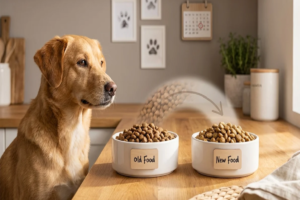
- Clean the storage container between bags. If you use a bin, empty it and wash and dry it before adding food from a new bag. Avoid topping up old kibble with new food; leftover crumbs and oils can remain in the container.
- Refrigerate opened wet food promptly. Cover and refrigerate unused canned or pouched food, or discard it. Follow the product label for how long it can be kept after opening; that period can vary, so don’t assume one rule applies to every food.
- Wash feeding equipment after use. Clean the food bowl and scoop with soap and hot water. Let them dry before putting them away or using them again. Keep scoops out of the food container between servings.
Things to know
A sealed package does not mean food should be kept indefinitely. Pay attention to the date and storage instructions on the label, and do not use food if its packaging is damaged or its condition seems unusual. If you think your pet’s food may be contaminated, stop feeding it and keep the packaging and product details in case you need to contact the manufacturer or report a concern.
Keep pet food and feeding equipment separate from the areas and utensils you use to prepare human food. Wash your hands after feeding your pet, too. These habits are especially worth building into the routine in households with young children, older adults, pregnant people or anyone with a weakened immune system, who may be more vulnerable to foodborne illness.
There is no need for a complicated setup: close the bag, keep food in a cool, dry place, refrigerate opened wet food according to its label, and wash bowls and scoops. A few consistent habits make everyday feeding cleaner and easier.