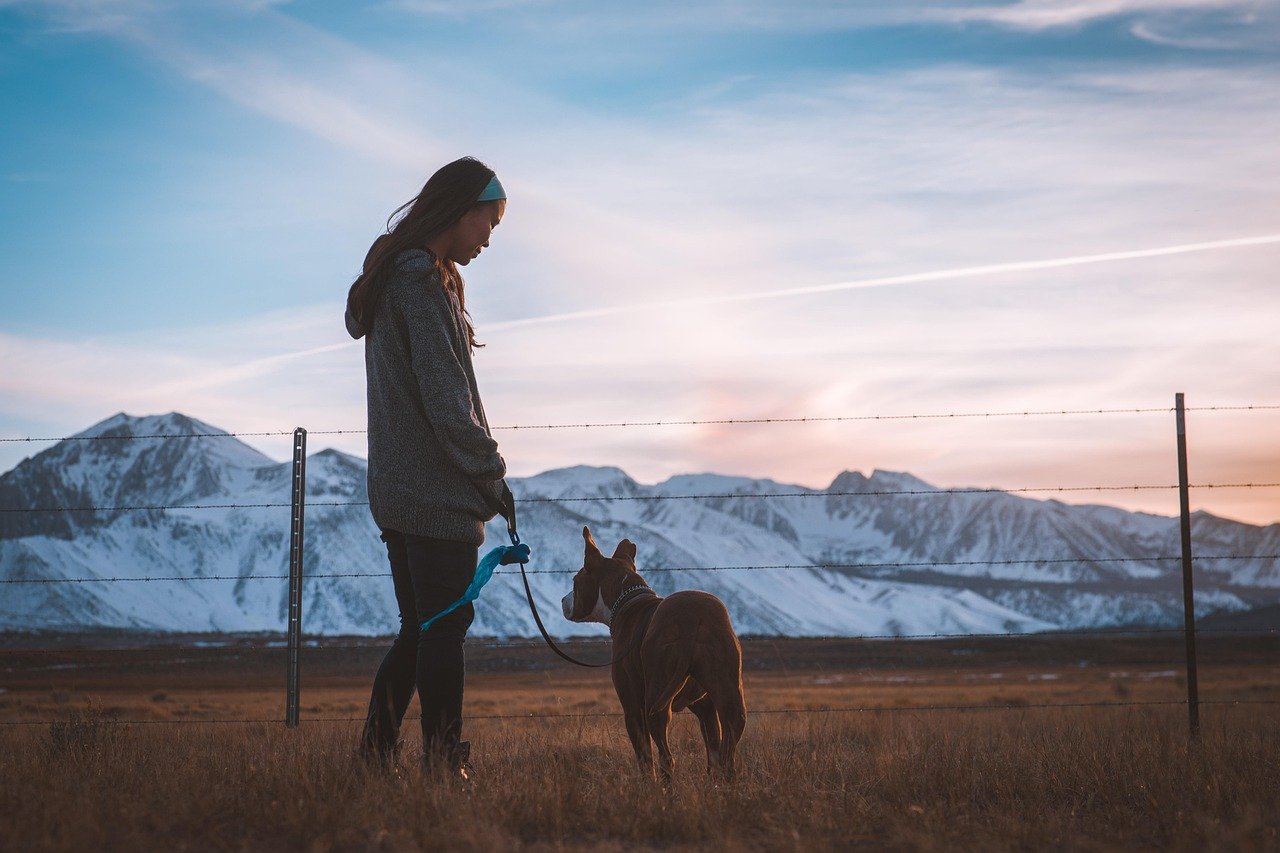
A walk is easier when your dog can explore without towing you down the sidewalk. Loose-leash walking is a learned skill, not something most dogs know automatically. With short practice sessions and rewards for keeping the leash slack, you can teach the habit without jerking or scolding.
This guide is for everyday leash pulling. If your dog lunges, snaps, or is difficult to control around people or other animals, start at a safe distance and ask your veterinarian about help from a qualified, reward-based trainer.
What you’ll need
- A regular leash that you can hold securely.
- A well-fitted collar or harness your dog cannot slip out of. Check the fit according to the manufacturer’s guidance.
- Small treats your dog likes, or another reward that works for them.
Choose equipment that lets you keep control without causing pain. A harness may make it easier to manage some dogs, but it does not teach loose-leash walking by itself. Avoid correcting pulling with leash jerks or equipment designed to cause discomfort; veterinary behavior experts recommend reward-based training.
Steps to teach loose-leash walking
- Begin somewhere quiet. Start indoors, in a yard, or in another low-distraction place where your dog can focus. Make sure the leash and collar or harness are secure before you begin.
- Reward your dog for being near you. Stand still with your dog beside you. When they look toward you or stand close with a slack leash, offer a small treat. You are rewarding a useful starting position, not demanding a perfect heel.
- Take a few steps and reward slack. Walk forward slowly. As long as the leash stays loose and your dog remains near enough to walk comfortably, give a treat. At first, reward often—before your dog has a chance to surge ahead.
- Stop when the leash becomes tight. Stand still without pulling back. Wait for your dog to turn toward you, move closer, or otherwise create slack. Then reward and continue. If your dog stays at the end of the leash, calmly call them back toward you rather than dragging them in.
- Practice changing direction. When your dog is paying attention, turn and walk the other way. Reward them for catching up and walking with a loose leash. Do this in an open, safe area, not near traffic or where a sudden turn could create a hazard.
- Keep sessions short. Practice for a few minutes, then let your dog take a break to sniff or relax. End while things are going well. Several short sessions are often easier for a beginner and a dog than one long training walk.
- Add distractions gradually. When your dog can manage in a quiet place, practice in slightly busier settings. If they pull or cannot take a treat, the surroundings may be too distracting. Move farther from the distraction or return to an easier location.
- Use the same approach on ordinary walks. Reward loose-leash moments throughout the walk. If pulling starts, pause and wait for slack before moving again. Consistency helps your dog learn that a tight leash does not move the walk forward.
Tips and things to know
Let your dog sniff
A loose leash does not mean your dog must stay beside your leg every second. Sniffing is a normal part of a walk. You can use a cue such as “go sniff” to invite exploration, then reward your dog for returning to your side when it is time to move on.
Make the reward worth noticing
Use a treat your dog enjoys and offer it promptly when the leash is slack. Some dogs respond to praise or a chance to approach a familiar sniffing spot. If your dog is too excited to eat or pay attention, create more distance from whatever is distracting them.
Don’t turn every walk into a test
Training takes practice, and a dog may pull more in a new or exciting place. Choose a manageable route, give your dog time to settle, and reward progress rather than expecting a perfect walk. Avoid wrapping the leash around your hand, and keep a secure grip.
Get help if walks feel unsafe
If your dog is powerful enough to pull you over, repeatedly reacts to other dogs or people, or cannot settle even at a distance, ask your veterinarian for guidance. A veterinarian can also check whether pain or another health issue could be affecting behavior. For training support, look for a qualified professional who uses reward-based methods.
Start in a quiet place, reward the slack leash, and build up one distraction at a time. With patient, consistent practice, walks can become more comfortable for both of you.