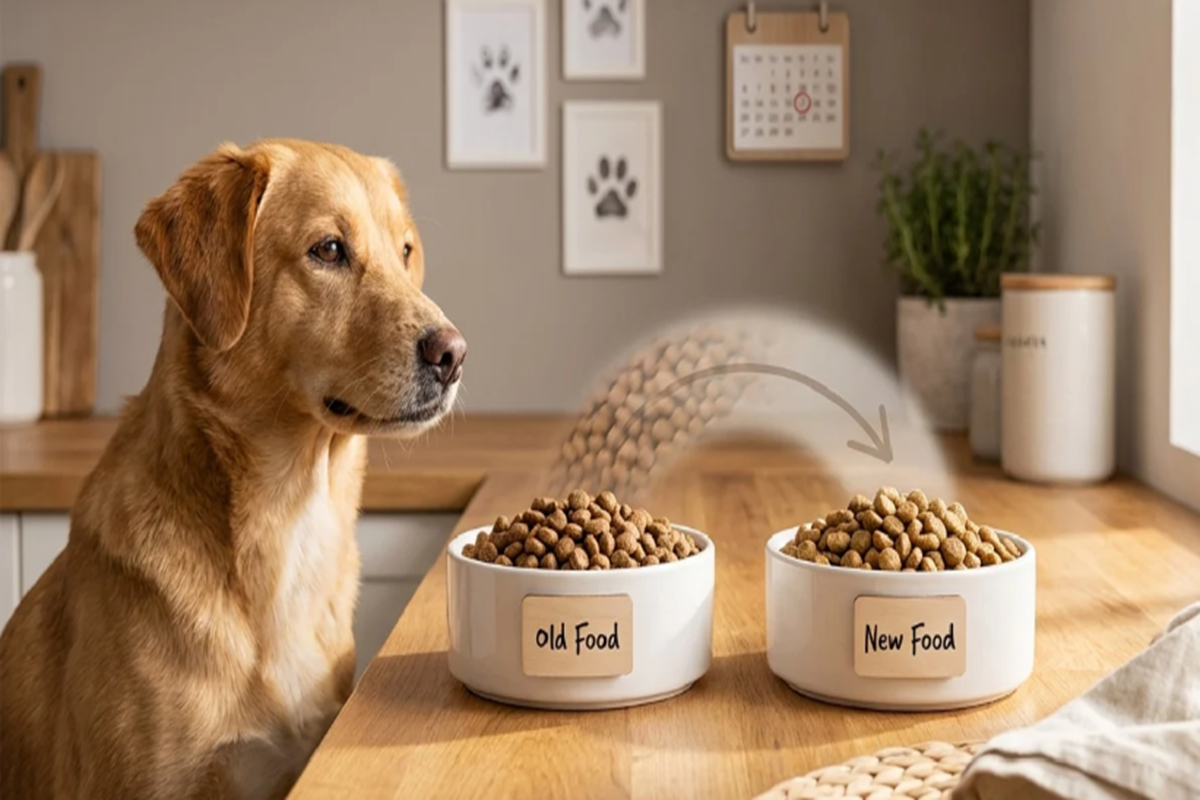
Changing your dog’s food may be necessary when a product is unavailable, your dog’s needs change, or your veterinarian recommends a different diet. Switching all at once can upset some dogs’ digestion, so a gradual change gives you time to watch how your dog responds.
This guide is for a healthy dog changing between ordinary complete dog foods. If your veterinarian prescribed a therapeutic diet, or your dog has a medical condition, ask the clinic how to make the change; its instructions should take priority.
Before you begin
Check the new food’s package for feeding directions and calorie information. Foods can differ in calories per cup or can, so the same-looking scoop may not provide the same amount of energy. If your dog has a target daily amount from your veterinarian, use that guidance. When you are unsure how much of each food to serve, ask the clinic or the food manufacturer’s nutrition staff for help interpreting the label.
Keep the old food on hand until the transition is finished, and use a clean measuring cup or kitchen scale to keep servings consistent. Continue your dog’s usual meal routine and access to fresh water.
A gradual seven-day transition
The percentages below describe how much of the daily ration comes from each food. Because foods may have different calorie levels, don’t assume equal scoops are nutritionally equal. Follow the new food’s feeding guidance or your veterinarian’s portion recommendation as you make the change.
- Days 1–2: Serve about 75% of the old food and 25% of the new food.
- Days 3–4: If your dog is doing well, serve about half old food and half new food.
- Days 5–6: If things are still going smoothly, serve about 25% old food and 75% new food.
- Day 7 onward: Serve the new food alone, using an appropriate daily portion.
Mix the foods together in the same bowl, or offer them in the same meal if your dog eats them separately. Keep the mix consistent through each stage rather than changing the ratio from meal to meal.
Watch your dog as you go
Pay attention to appetite, energy, and bowel movements. A simple note on your phone or calendar can help you track which day of the transition you are on and when you notice a change. If your dog refuses the new food, don’t force-feed or withhold food to make the dog accept it. Pause the transition and contact your veterinarian for advice, especially if your dog misses meals or has a health condition.
If loose stool or vomiting appears, stop increasing the amount of new food and contact your veterinary clinic for guidance. Your veterinarian may recommend returning to the last mix your dog tolerated or slowing the schedule. Repeated vomiting, blood in the stool, marked weakness, or other serious symptoms warrant prompt veterinary attention rather than further food experiments.
Tips for a smoother change
- Give the transition more time if needed. Some dogs do better with a slower change than the seven-day example. Ask your veterinarian how to adapt the schedule if your dog has a sensitive stomach or has reacted to food changes before.
- Change one thing at a time. Avoid introducing several new foods or treats during the same week. That makes it easier to tell what may be affecting your dog.
- Keep treats in mind. Treats and toppers add to a dog’s daily intake. Keep them steady during the switch, and ask your veterinarian how they fit into your dog’s feeding plan.
- Don’t make a medical diet change on your own. Food prescribed for a health problem may have specific feeding instructions. Check with the prescribing veterinarian before mixing it with another food or changing the schedule.
- Check the label, not just the serving size. Feeding directions are a starting point; a dog’s needs vary. Ask your veterinarian whether your dog’s body condition and weight suggest the portion should be adjusted.
When to call the veterinarian
Contact your veterinarian before switching if your dog has a diagnosed condition, takes medication affected by meals, or is on a prescribed diet. Get advice if your dog stops eating, develops ongoing digestive symptoms, or seems unwell during the change. A food transition is not a substitute for investigating persistent symptoms.
A slow, observant transition is a practical way to make a routine diet change. Follow a measured schedule, keep portions appropriate for the new food, and let your dog’s health—not the calendar alone—guide your next step.