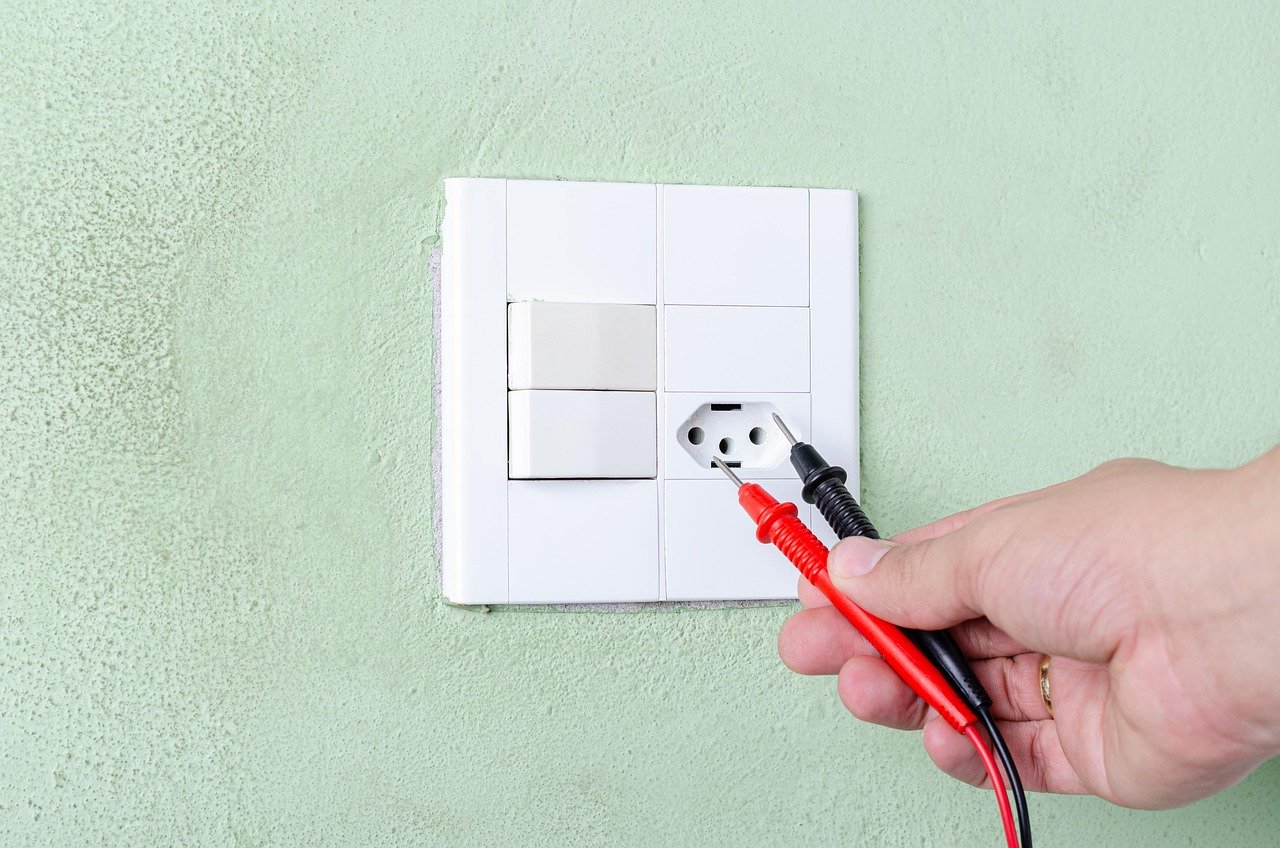
The two buttons on a bathroom or kitchen outlet may look like ordinary switches, but they serve a safety purpose. A ground-fault circuit interrupter, or GFCI, monitors the flow of electricity and can shut off power when it detects that some current is taking an unintended route—potentially through a person.
Knowing what the device does, and what it does not do, can help you use it sensibly. The basic check is simple: use the built-in test and reset buttons according to the maker’s instructions. But a GFCI is not a substitute for sound wiring, and repeated trips are a reason to investigate rather than keep pressing reset.
What a GFCI detects
In a normally operating circuit, the current flowing out through the energized conductor should return through the circuit’s other conductor. A GFCI compares those currents. If they differ, it detects that some electricity may be escaping along another path and quickly interrupts the circuit.
That difference could be caused by current passing through a person to ground, but a trip does not prove that anyone received a shock. A damaged appliance, damp equipment or wiring fault can also cause an imbalance. The device’s job is to respond to the electrical condition—not diagnose its cause.
A GFCI is different from a standard circuit breaker. A breaker is mainly intended to stop excessive current that could overheat wires, such as an overload or short circuit. Ground-fault protection is intended to reduce the risk of severe electric shock. Some breakers combine both functions, but one kind of protection should not be assumed to provide the other.
Where you may find one
In the United States, GFCI protection is commonly associated with outlets in places where electricity and water may meet, including bathrooms, kitchens, garages and outdoor areas. Exact requirements depend on the applicable electrical code, the building’s age and the details of the installation. Requirements differ between countries, too: similar protection may be called RCD or residual-current protection, and the device may be fitted at an outlet, in a consumer unit or elsewhere.
That means the absence of a TEST button on a particular receptacle does not, by itself, tell you whether a circuit is protected. A GFCI outlet can sometimes protect other outlets farther along the same circuit. A protective device may also be located in the electrical panel. If you are unsure what protects an outlet, check the labels and instructions or ask a qualified electrician.
How to test one
The U.S. Consumer Product Safety Commission recommends testing GFCIs monthly. Follow the instructions printed on the device or provided by its manufacturer, especially for newer self-testing models.
- Check what will lose power. Unplug sensitive equipment from the outlet and any outlets you know are protected by it. Avoid testing a circuit that supports something you cannot safely interrupt.
- Press TEST. The protected outlet should lose power. A lamp plugged into it can help you check, but use it only as directed by the device instructions.
- Press RESET. Power should return. Some models signal their status with an indicator light, so consult the label or manual if the result is not obvious.
If the TEST button does not shut off power, or RESET does not restore it, do not rely on that device for protection. Stop using the affected outlet and arrange for a qualified electrician to inspect it. Some GFCIs cannot reset when they have lost power, so a dark outlet may also point to a tripped upstream device, a breaker problem or another fault—not necessarily a failed receptacle. Do not open the outlet or electrical panel to investigate unless you are qualified to do so.
What to do when it trips
A trip is a warning to pause and look for a cause. Unplug appliances from the affected outlets, especially anything wet, damaged or recently brought into use. If the device resets, reconnect items one at a time while watching for another trip. If the same appliance repeatedly triggers protection, stop using it and have it checked or replaced.
Do not keep resetting a GFCI that trips again immediately, and never tape down or bypass its buttons. Repeated trips can indicate a fault in an appliance, wiring or the protective device. If water has entered equipment or an outlet, keep away and seek professional help rather than trying to dry or repair energized electrical parts.
Useful protection, not a guarantee
A GFCI can reduce the danger of certain ground-fault shocks, but it cannot make every electrical situation safe. It does not prevent all shocks, correct faulty wiring or replace overcurrent protection. It also does not mean an outlet is safe to use with wet hands or damaged cords.
Use electrical equipment as its instructions specify, keep cords and appliances in good condition, and treat a trip as information—not an inconvenience to defeat. If a device will not pass its test, keeps tripping, or leaves you unsure which outlets it protects, an electrician can check the circuit and explain what protection is in place.