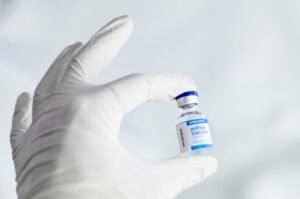
A vaccine is now part of routine malaria prevention for children in a growing number of African countries. The first large-scale rollout offered a way to test an important question beyond clinical trials: could a malaria vaccine be delivered through everyday health services, and would it make a difference in communities where the disease is common?
Evidence from a pilot in Ghana, Kenya and Malawi offers encouraging answers. The programme reached more than two million children with at least one dose of the RTS,S vaccine. The World Health Organization reported a 13% reduction in all-cause mortality, excluding injuries, among children eligible for vaccination in areas where it was introduced, alongside a 22% reduction in hospital admissions for severe malaria among eligible children.
Those figures do not mean a vaccine has made malaria disappear. They do show that a new prevention tool can reach children at scale and contribute to better outcomes when added to existing measures.
Testing a vaccine in everyday health systems
The pilot, known as the Malaria Vaccine Implementation Programme, began in 2019. Ghana, Kenya and Malawi introduced RTS,S through their national immunization services in selected areas. Health workers offered it to young children alongside routine childhood vaccinations, rather than in a separate campaign that would reach only families able to attend a special event.
By the end of the pilot period, more than two million children had received at least one dose, and over six million doses had been administered. That experience mattered in its own right: a vaccine can help only if health systems can store it, offer it at the right ages and give families a practical way to complete the schedule.
WHO recommends four doses, starting from around five months of age. The first three are given at monthly intervals, with a fourth dose later to extend protection. Keeping that schedule on track takes reliable supplies and follow-up, particularly where families live far from clinics or move seasonally.
What the early results do—and don’t—show
The mortality result is especially notable because it measures deaths from all causes, not only deaths formally attributed to malaria. WHO’s evaluation reported that all-cause mortality, excluding injuries, was 13% lower among children in the age group eligible for the vaccine in areas where it was introduced. The programme also saw fewer hospital admissions for severe malaria among eligible children.
These are findings from a real-world introduction, not a claim that the vaccine alone produced every change. Children in the pilot areas continued to benefit from other malaria-control measures, including insecticide-treated bed nets, diagnosis and treatment. The vaccine is intended to add another layer of protection, not replace those tools. The results are encouraging evidence of the programme’s contribution, rather than a promise that every vaccinated child will avoid malaria.
That distinction is important because RTS,S does not provide complete protection. Its value lies in reducing the risk of serious disease and death as part of a broader prevention effort. Malaria can still occur after vaccination, so families and health services need to continue using and providing other proven protections.
The pilot also generated practical lessons. It showed that malaria vaccination could be integrated into routine services in three different national settings. WHO reported that introducing the vaccine did not displace other childhood immunizations or reduce the use of bed nets. The programme therefore offered evidence not just about a vaccine’s effects, but about how it could fit into the work health clinics already do.
From pilot to wider access
In October 2021, WHO recommended wider use of RTS,S for children in areas with moderate to high transmission of Plasmodium falciparum, the parasite responsible for the most severe form of malaria. The recommendation followed review of trial evidence and the experience of the pilot. It gave countries a basis for deciding whether and how to add the vaccine to their own malaria-control plans.
Since then, malaria vaccination has moved beyond the original three-country programme. A second malaria vaccine, R21/Matrix-M, has also received WHO recommendation. Having two recommended vaccines gives countries more than one option as programmes expand, although supply, staffing and access remain essential to turning recommendations into protection.
The promising pilot results are therefore a beginning, not a finish line. Wider use will need steady vaccine supplies, dependable routine immunization services and continued monitoring of safety and impact. It will also need malaria testing and treatment, bed nets and other prevention measures to remain available. These parts work together; none makes the others unnecessary.
Still, the rollout has established a meaningful milestone. A malaria vaccine has moved from research into ordinary child-health services, reached millions of children with an initial dose, and shown measurable benefits in the settings where it was introduced. For families and health workers facing a disease that has long been difficult to prevent, that is concrete progress—and a foundation for reaching more children.