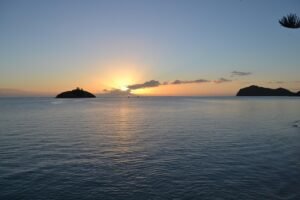
On a November day in 1963, smoke and ash rose from the sea south of Iceland. An underwater volcanic eruption was building something unusual: new land. By the time the eruption ended in 1967, Surtsey had become an island—and an extraordinary place to study how an ecosystem begins.
Most landscapes have long histories. Their soils, plants and animal communities have been changed by countless generations of life, as well as by people. Surtsey offered researchers a much rarer starting point: a young island whose earliest stages could be observed as they happened.
The island is not a controlled laboratory. Wind, waves, weather and the arrival of organisms cannot be switched on and off. But its history is unusually well documented, and access has been tightly limited. That combination makes Surtsey a valuable natural record of colonization and ecological change.
Protecting the experiment
Surtsey did not remain bare for long. Living things could reach it in several ways: carried by wind or seawater, or brought by birds. Seeds and other plant material might arrive with them. Some arrivals would fail to establish; others could survive long enough to grow and reproduce.
That process is called ecological succession: the changing composition of a community as organisms arrive, persist and affect the conditions around them. On a new volcanic island, the early steps are especially visible. Bare rock and loose volcanic deposits offer little of the sheltered, fertile ground that established plants usually need. As organisms take hold and organic material accumulates, conditions can gradually change.
Iceland protected Surtsey as a nature reserve while the eruption was still under way. Today, access remains restricted, with visits generally reserved for scientific work. Limiting disturbance helps preserve the island’s value as a study site: an introduced seed or an unrecorded human visit could complicate the task of working out how a species got there.
Protection does not mean that Surtsey is untouched by every influence. It is exposed to the same wider environmental forces as other islands, and its volcanic ground continues to change. The point is to reduce avoidable disturbance so researchers can better interpret the changes that do occur.
Birds can reshape a young landscape
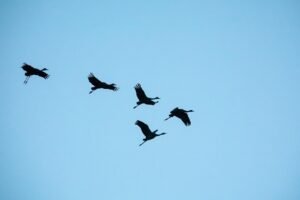
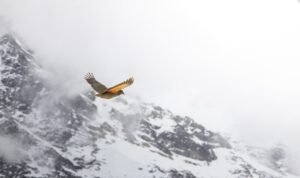
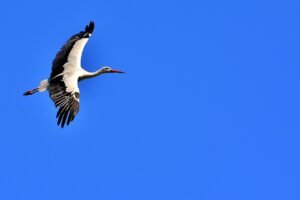
One of the most important developments has been the arrival and establishment of birds. Birds are not just inhabitants of an island; they can also help make it more hospitable to other life. They carry seeds, and their droppings add nutrients to ground that began with little organic matter. Where birds feed and nest, their activity can create local patches with different conditions from the surrounding rock and gravel.
That makes colonization more than a simple list of species arriving one by one. Organisms can change the environment for later arrivals. A plant that finds a suitable patch may add cover and organic material; a bird colony may enrich the soil nearby. These interactions create new opportunities, although they do not guarantee that every arriving species will become established.
Researchers studying Surtsey have documented changes in its plant communities, bird life and invertebrates over decades. Their work shows why the island is useful beyond the question of which species appeared first. It can also help scientists investigate how relationships among organisms develop, and how those relationships influence the changing habitat.
A rare record, not a universal template
Surtsey’s story is sometimes described as a natural experiment, but that phrase needs care. The island has no identical twin for comparison, and its particular geology, climate and position in the North Atlantic shape what can live there. The sequence observed on Surtsey should not be treated as a fixed timetable for every new island or disturbed landscape.
Instead, its value lies in the detail of a specific case. Researchers can compare observations made at different times and ask how factors such as seabird activity, weather and the physical condition of the ground relate to ecological change. A peer-reviewed review of Surtsey’s first 50 years brought together findings from this long-running work, highlighting how a new island can become a complex habitat through the combined effects of organisms and their surroundings.
The record also depends on restraint. Restricted access is not simply a way to keep people away from an unusual landmark; it is part of how the scientific value of the site is maintained. Careful monitoring and limited disturbance help keep the island’s changing ecology interpretable.
Watching an ecosystem take shape
More than six decades after it emerged, Surtsey is no longer just a volcanic mound rising from the ocean. It has become a living landscape, still changing as species arrive and conditions shift. The transformation is neither a neat march toward a final, settled state nor a guarantee that every newcomer will thrive.
That is what makes the island compelling. Surtsey lets researchers follow a process that usually has to be reconstructed from scattered clues: how life reaches new ground, how early arrivals alter their surroundings, and how a habitat develops through many small interactions. Its lesson is not that nature follows a simple script. It is that, given time and limited disturbance, even land born in fire and ash can become a place where communities of life take hold.