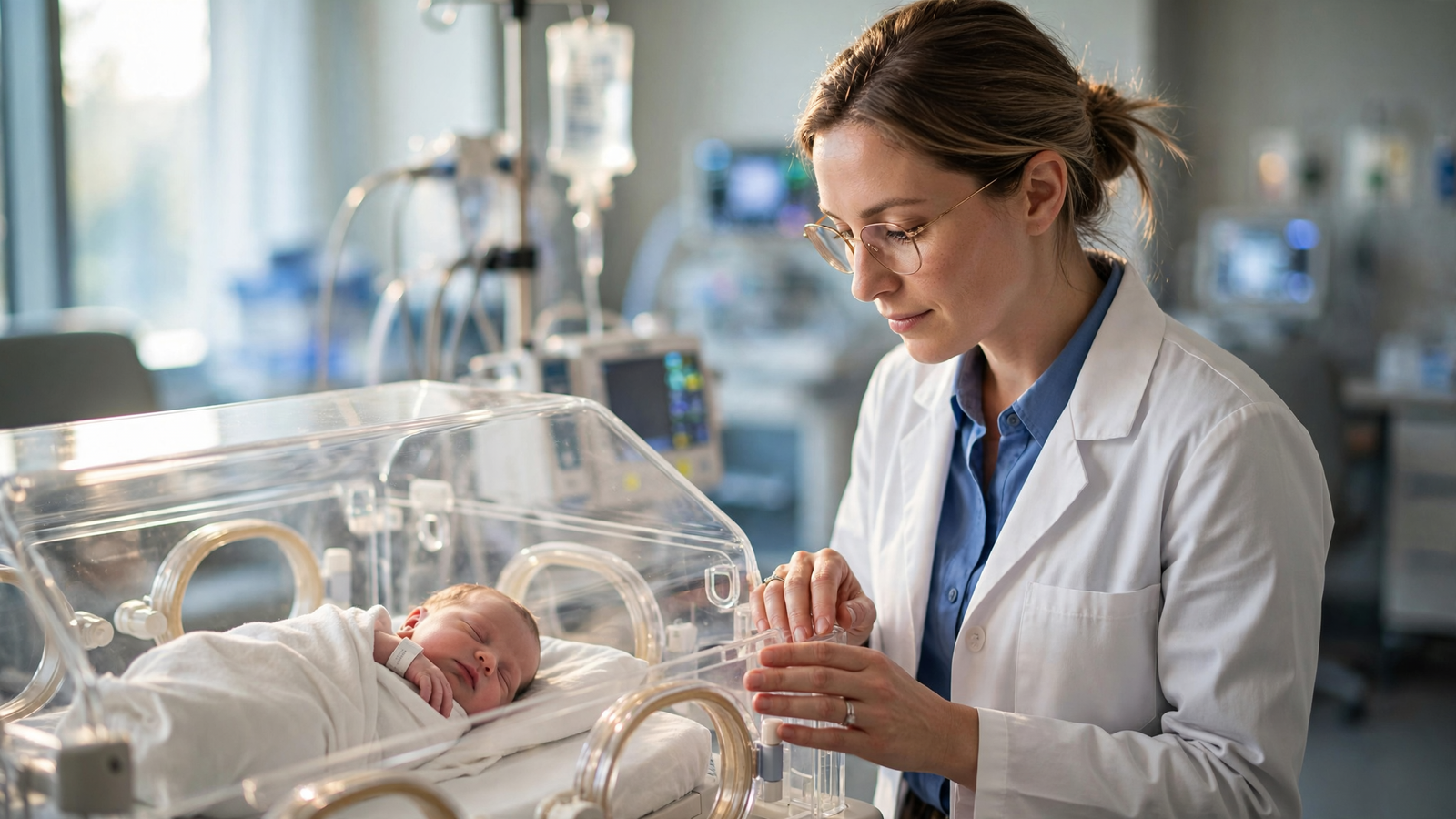
For families facing a severe genetic disease, time can be one of the hardest parts of the diagnosis. A treatment may exist in theory, but developing and testing a medicine for one rare mutation can take years—far longer than a sick infant can wait.
In May 2025, physicians and researchers at Children’s Hospital of Philadelphia and the University of Pennsylvania reported a striking alternative: they created and administered a gene-editing treatment designed for a single patient.
The child, identified publicly by the nickname KJ, was born with a rare disorder called carbamoyl phosphate synthetase 1 deficiency, or CPS1 deficiency. The condition prevents the body from safely processing nitrogen, allowing toxic ammonia to build up in the blood. Severe cases can cause brain injury or death early in life.
KJ’s treatment used CRISPR-based gene editing delivered inside the body. Rather than replacing an entire faulty gene, the therapy was designed to make a targeted correction in liver cells, where the CPS1 enzyme is needed. Researchers developed the treatment in months by using the child’s specific genetic information to guide the design.
What makes the case different
Gene therapies are no longer experimental in the broadest sense. Several have been approved for particular diseases, including some inherited blood disorders and childhood neurological conditions. But those treatments are generally developed for groups of patients who share the same disease-causing mutation or biological problem.
KJ’s therapy represents a more individualized model. The researchers built a treatment around one patient’s mutation and then used a carefully monitored clinical process to deliver it. That approach could eventually help children whose conditions are so rare that a conventional commercial drug would never attract enough patients to justify the usual development pathway.
Early results were encouraging. According to the clinical team, KJ tolerated the treatment, experienced fewer dangerous ammonia-related episodes, and was able to receive more protein in his diet. Those changes matter because children with CPS1 deficiency often require strict dietary limits and may need emergency treatment when ammonia levels rise.
Still, the report describes one patient and an early follow-up period—not a proven cure. The treatment’s long-term durability and safety remain to be established. Researchers will need to watch for immune reactions, unintended edits, and whether the corrected liver cells continue functioning as KJ grows.
A possible path for ultra-rare conditions
The significance of the work is not only the specific therapy. It is also the process behind it: rapid genetic diagnosis, computer-guided design, laboratory testing, manufacturing, regulatory review, and treatment delivered on an individual timetable.
That process will not automatically work for every disease. Some mutations affect organs that are difficult to reach, and some conditions may require editing many different cell types. Cost, manufacturing capacity, and the need for rigorous safety testing are also substantial obstacles.
But the case offers a reason for optimism. It suggests that, for at least some devastating genetic disorders, medicine may be able to move beyond the question of whether a disease is common enough to treat. The future challenge will be making these individualized therapies safe, repeatable, and accessible to more families.
For now, KJ’s treatment is a carefully watched beginning. It shows what can happen when a child’s genetic diagnosis is not only used to name a disease, but also to design a treatment specifically for that child.