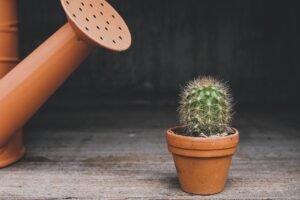
Houseplants can bring color, texture and a little daily tending into a room. They are also often credited with a more technical job: cleaning the air. That claim has a famous origin—a NASA study showing that certain potted plants removed pollutants under laboratory conditions. But the finding is easy to overextend. A plant’s ability to affect air in a sealed test chamber does not mean a few pots will clean the air in an ordinary home.
The distinction matters if you are choosing plants for a windowsill, a desk or a whole indoor garden. The research is interesting, but it points to a practical conclusion: grow houseplants because you enjoy them, not as a substitute for managing indoor pollution.
What the NASA experiment tested
In 1989, NASA researchers published a study on interior plants and indoor air pollution. The work explored whether plants might help address air-quality concerns in enclosed environments, including the kind of confined setting relevant to spaceflight. In controlled chamber experiments, researchers exposed selected potted plants to pollutants such as benzene, formaldehyde and trichloroethylene, then measured changes in the air.
The results showed that some pollutants could be removed in those test conditions. The plant was not acting alone: the research considered the potted plant system, including the growing medium and the microorganisms around the roots, as well as the plant itself. That is a useful scientific result. It is not the same as demonstrating that a living room full of plants will have cleaner air.
A sealed chamber is a carefully controlled experiment. A home is a larger, changing space, with air moving through doors, windows and ventilation systems, and with pollutants entering from varied sources. A result measured in a chamber cannot simply be carried over to a room without considering how quickly pollutants enter, how much air is exchanged and how much plant material is present.
Why later research changed the household picture
A 2019 review by researchers Bryan Cummings and Michael Waring examined studies of potted plants and the removal of volatile organic compounds, or VOCs. These are gases that can come from some building materials, household products and other indoor sources. The review compared plants’ reported removal rates with the air exchange that occurs in typical buildings.
Its central takeaway was not that plants can never remove VOCs. Rather, the removal measured in small experimental settings is too slow to make ordinary numbers of houseplants a meaningful replacement for ventilation in typical indoor spaces. The authors estimated that it would take roughly 10 to 1,000 plants per square meter of floor area to match the pollutant removal associated with ordinary air exchange, depending on the experimental results used.
That range is a reminder of scale, not a shopping list. It does not suggest that filling a room with plants is a sensible way to manage air quality. The review’s point is that a measurable effect in a test does not necessarily add up to a substantial effect in a real building.
What to do if indoor air is the concern
The U.S. Environmental Protection Agency’s indoor-air guidance emphasizes practical measures such as controlling pollution sources and bringing in outdoor air when conditions allow. Those steps address the flow of pollutants through a space rather than relying on a small number of plants to capture them.
- Look for sources. If you are concerned about an odor or possible pollutant, consider what may be releasing it. Reducing or removing a source can be more direct than trying to treat the air after the fact.
- Use ventilation thoughtfully. Outdoor air can help dilute indoor pollutants when outdoor conditions are suitable. Local smoke, pollution, weather and building constraints may affect what is practical.
- Choose air-cleaning equipment for the problem. Different devices are designed for different pollutants. Check what a product is intended to remove rather than assuming one type of filter handles every indoor-air concern.
These measures are not a reason to clear the shelves of plants. They simply keep the roles distinct: building and household practices are the main tools for indoor-air management; houseplants are plants. A leafy corner can make a room feel more welcoming without being assigned an air-cleaning job it is unlikely to perform at household scale.
Keep the plants; retire the miracle claim
The NASA study remains a real and useful piece of research. It showed that plant-and-soil systems can remove some pollutants in particular experimental conditions. The later review helps explain why that does not translate into a practical, stand-alone air-cleaning strategy for homes.
That is a more interesting story than either extreme—“plants purify every room” or “the study was meaningless.” Science can identify an effect and then ask how large it is outside the laboratory. For indoor gardeners, the answer leaves plenty of room for a thriving collection. Just let the plants earn their place through their beauty, the pleasure of caring for them and the life they bring to a space—not a promise to replace ventilation or pollution control.