A change in temperature can change the air pressure inside your tires. That makes seasonal transitions a useful reminder to check them—not because your car needs a different pressure for each season, but because the pressure may need correcting as the weather changes.
This beginner-friendly guide explains how to find your car’s recommended pressure, take a reading with a gauge, and add or release air. It also covers common mistakes, including using the number printed on the tire as your target.
What you will need
- A tire-pressure gauge, either handheld or built into an air pump
- Access to an air compressor or tire inflator if any tire needs more air
- Your owner’s manual, or the vehicle’s tire-information label
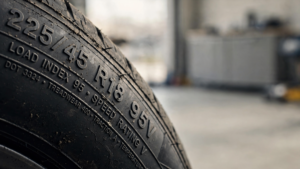
The label is commonly on the driver’s door frame or door edge. Check the owner’s manual if you can’t find it. It gives the recommended pressure for your vehicle’s tires, usually in pounds per square inch (PSI). The number on the tire’s sidewall is not the pressure target for your car; use the vehicle’s recommendation instead.
How to check and adjust tire pressure
- Choose a good time to check. Measure the tires before driving, or after the car has been parked for several hours. Driving warms the tires and can raise the reading, so a warm-tire measurement may not match the recommended cold pressure.
- Find the recommended pressure. Read the vehicle’s tire-information label or consult the owner’s manual. Note the recommended pressure for the front and rear tires; they may differ. Check the manual for instructions about the spare tire, too.
- Check all four tires. Unscrew a tire’s valve cap and press the gauge firmly onto the valve stem. Read the measurement, then repeat for the other tires. Keep track of each reading so you know which tires need attention.
- Compare each reading with the vehicle’s recommendation. A tire below the recommended cold pressure needs air. If a reading is above the recommendation, you can release a little air and check again. Take care not to let out too much.
- Add air to an underinflated tire. Use an air compressor or suitable inflator, adding air in short bursts. Recheck with the gauge after each adjustment. Stop when the cold reading reaches the vehicle’s recommended pressure.
- Recheck an overinflated tire. Press the small pin inside the valve stem briefly to release a little air, then measure again. Repeat gradually until the reading matches the recommendation.
- Replace the valve caps. Once you have checked and adjusted the tires, screw each cap back on to help keep dirt and moisture out of the valve.
Seasonal tire-pressure tips
Check when temperatures shift
Cold weather generally lowers tire pressure, while warmer conditions can raise the reading. Check your tires when the season changes and make regular checks part of your routine. The recommended pressure on the vehicle label remains your target; don’t add extra air just because it is winter, or let air out just because it is summer.
Don’t wait for the warning light
A tire-pressure monitoring system (TPMS) can alert you when pressure is low, but it is not a substitute for checking with a gauge. A warning light may come on only after pressure has dropped substantially. Check at least monthly and before a long trip, even if the dashboard shows no warning.
Measure cold tires correctly
If you must check after driving, remember that the reading may be higher because the tires are warm. Don’t release air from a warm tire simply to make its reading match the cold-pressure recommendation. Check it again when the tires are cold and adjust then.
Look beyond the number
While checking pressure, look for a tire that appears unusually low, visible damage, or an object lodged in the tread. If a tire keeps losing pressure, or you find a bulge or other damage, ask a tire professional to inspect it rather than treating it as a routine air top-up.
Things to know
- Check the spare if your vehicle has one, and follow the pressure instructions in the manual. Its recommended pressure may differ from the four tires in use.
- Use the vehicle’s label or manual for the correct pressure, not a guess based on appearance.
- If your gauge and an air-station gauge give different readings, check again with a reliable gauge when the tire is cold.
A few minutes with a gauge can help you catch pressure changes before they become a bigger problem. Keep the vehicle’s recommended numbers handy, check regularly, and adjust only when the tires are cold.