New York Harbor is famous for its bridges, ferries, and skyline. But beneath the water, a quieter restoration project is taking shape—with students helping lead the way.
Through the Billion Oyster Project, young New Yorkers learn how oysters can provide habitat, improve water quality, and support a wider harbor ecosystem. The project connects science lessons with hands-on work, giving students a chance to study the harbor not just from a textbook, but as a living place that needs their attention.
A harbor once filled with oysters
Oysters were once extremely common in New York Harbor. They were an important food source and formed underwater reefs where other animals could live. Over time, harvesting, pollution, shoreline changes, and the loss of natural habitat caused the harbor’s oyster population to collapse.
Restoration does not mean returning the harbor to exactly what it was centuries ago. Instead, scientists and community partners are rebuilding oyster habitat in carefully chosen locations and tracking how those sites change.
Oysters are useful because they are ecosystem builders. As they grow, they can cluster together into reef-like structures. Those hard surfaces provide places for small fish, crabs, and other organisms to shelter. Oysters also filter water as they feed, although restoration projects are not a substitute for controlling pollution at its source.
Science lessons that leave the classroom
The Billion Oyster Project, founded in 2010, works with schools, educators, scientists, and harbor organizations. Its programs help students investigate questions about water quality, marine life, shoreline design, and oyster growth.
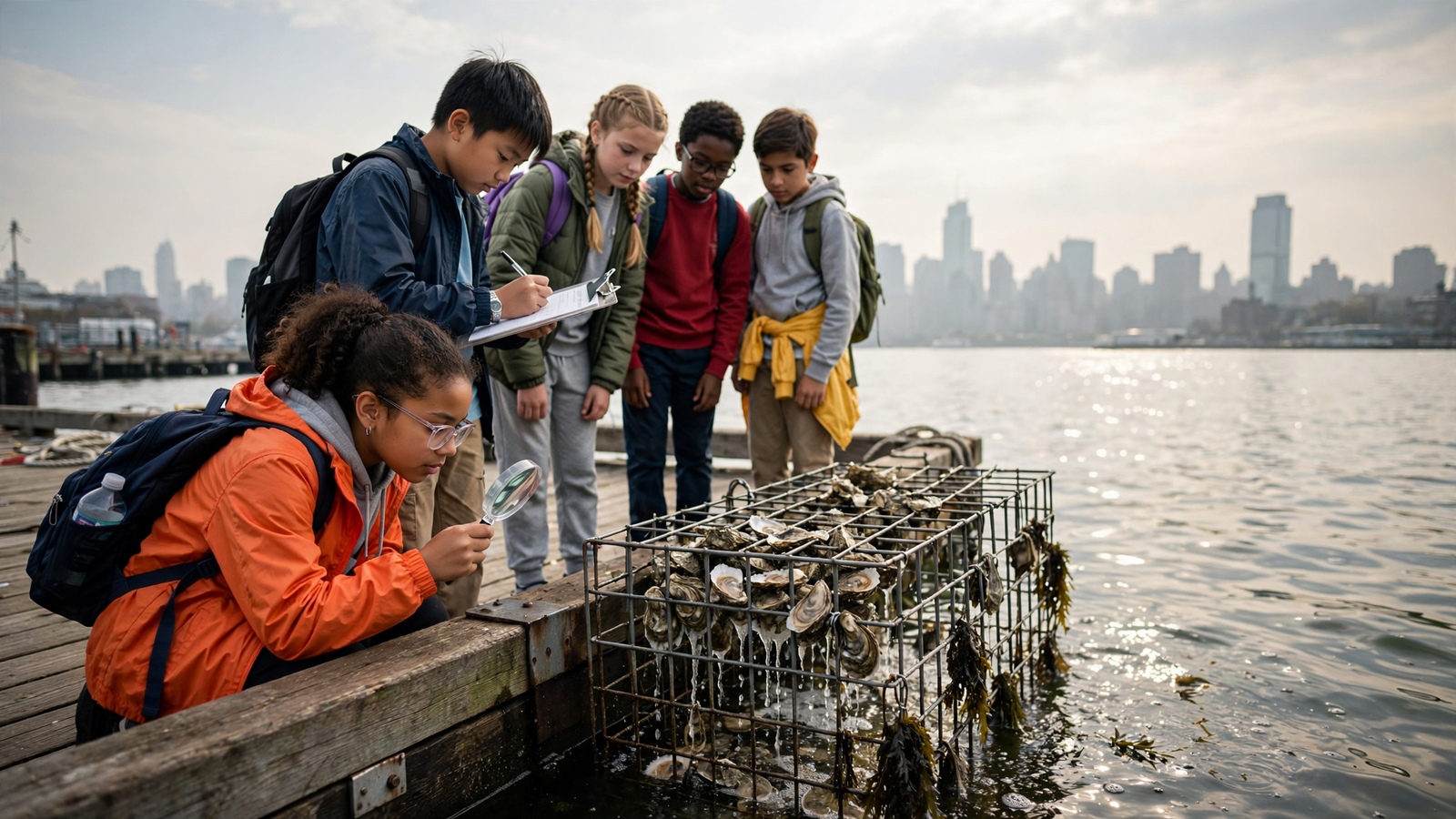
In school-based oyster research stations, students can observe young oysters, record changes, and practice the same habits scientists use: making careful measurements, comparing results, and asking what the evidence shows. Older students, including those at the New York Harbor School on Governors Island, have opportunities for more advanced fieldwork and restoration training.
One important part of the work is preparing oyster shells so they can become homes for new oysters. Tiny young oysters, called spat, attach to hard surfaces. Reusing cleaned shells gives them somewhere to settle and helps create the foundation for future habitat.
Small observations, lasting results
For students, the project offers a different kind of science experience. A class may begin by learning how oysters feed or how salt marshes protect shorelines. It can then continue with a trip to the water, where students examine equipment, look for living organisms, or check whether a restoration site is changing over time.
That connection matters. Young people are not simply being told that the harbor is important; they are given tools to understand it. They learn that environmental improvement often depends on patient work: restoring habitat, checking results, and making adjustments over many years.
The oysters will not solve every problem facing New York Harbor. But the project shows how conservation can become part of everyday education. A student who learns to recognize a healthy shoreline, measure water conditions, or care for a living organism may carry that sense of responsibility far beyond the classroom.
New York’s harbor is still a busy working waterway. Yet in classrooms and along its edges, a new generation is helping it become more alive. The most encouraging part of the story may be that the restoration is growing in two places at once: in the water, and in the students who are learning how to care for it.