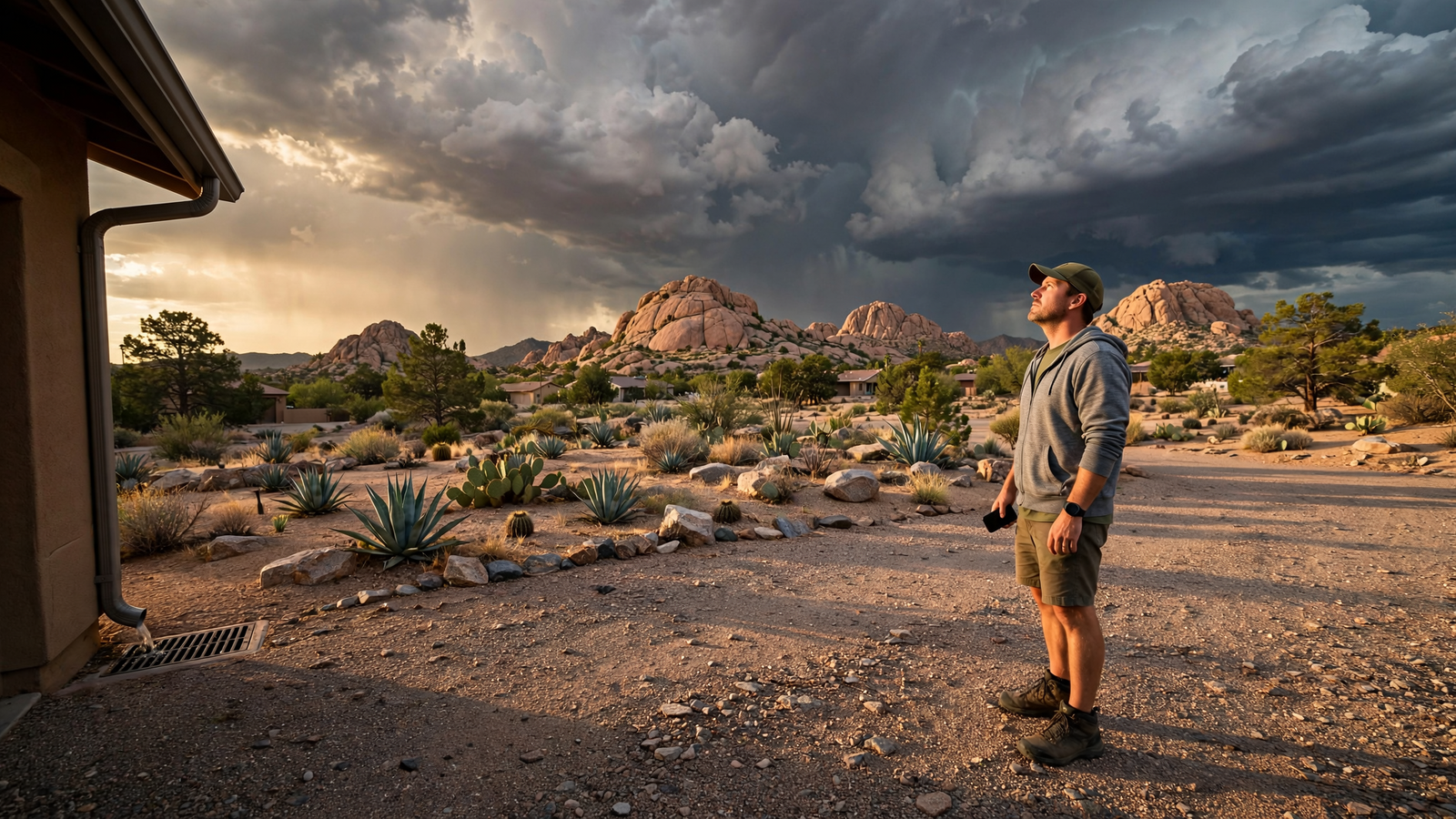
In the Prescott area, a summer storm can change a routine drive or walk quickly. The useful first step is not guessing from a dark cloud: it is knowing which official sources to check, and making sure you can receive warnings when you are away from a screen.
The National Weather Service’s Flagstaff office provides forecasts and warnings for northern Arizona, including the Prescott region. Its website lets residents check conditions for a specific location. Yavapai County’s Emergency Management pages are another place to look for local preparedness and emergency information. Keep both bookmarked rather than searching for them in the middle of a storm.
Set up your weather check before the forecast turns
Check the forecast for the place you plan to be—not only for “Prescott.” Conditions can differ across the county, and a forecast for one town may not describe a drive through a neighboring community or a stay in a higher-elevation area. Review the forecast before an outing and again if the weather begins to change.
Understand the difference between a watch and a warning. A watch means conditions could develop that support hazardous weather; a warning means the hazard is occurring or expected soon. Follow the instructions in the warning, which may include moving to a safer place or avoiding travel.
Also check your phone’s emergency-alert settings. Wireless emergency alerts can deliver certain urgent warnings to compatible phones, but settings, reception and device configuration matter. Do not rely on a single alert method: keep a way to check official weather information, and consider a battery-powered weather radio if you need another source during a power or network outage.
Treat water on roads as a hazard
Heavy rain can create dangerous runoff, including in places that are dry much of the year. A road crossing or wash that looks passable may become hazardous as water rises. Do not drive or walk through floodwater. If a route is covered, turn around and find another way rather than trying to judge its depth or strength from the vehicle.
Before leaving, consider whether your route crosses low spots or washes, and have an alternate route in mind. If a warning is in effect, postpone a nonessential trip. Avoid stopping near fast-moving water to take photographs, and keep children away from drainage channels and flooded areas.
Make a small plan for your household
Decide how household members will contact one another if a storm disrupts travel or service. Keep phones charged, and know where you would go for shelter if you are outdoors when lightning approaches. If you live in an area where an evacuation could be ordered, discuss how you would leave and where you would meet; use instructions from local authorities rather than assuming a familiar route will remain open.
When an alert arrives, confirm details through official sources and follow the directions provided. Social posts and forwarded messages can spread quickly, but may omit the location, timing or action residents need. Check the National Weather Service for weather information and Yavapai County for local emergency guidance.
Preparedness does not require predicting exactly where a storm will hit. It means having dependable sources ready, recognizing when conditions call for a change of plan, and not taking chances with floodwater. A short check before heading out can make that decision easier when the sky changes.