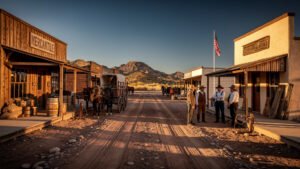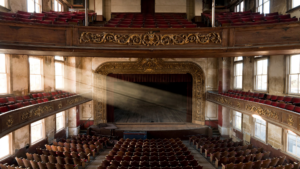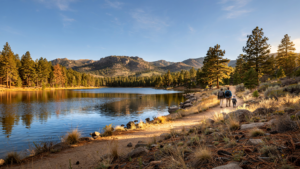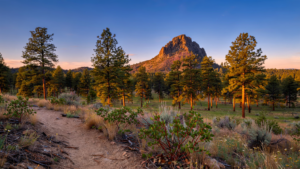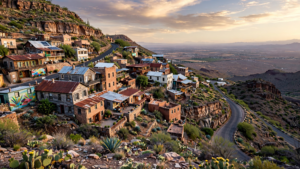
In Prescott, history does not sit quietly behind glass. It lines the streets.
It appears in the proportions of an old storefront, the shade cast by a mature tree, the porch of a nineteenth-century home and the way downtown blocks still gather around the Courthouse Plaza. Some buildings are grand. Others are modest. Together, they create something more revealing than a collection of landmarks: a town whose past remains part of its ordinary life.
That continuity is one of Prescott’s defining qualities. The city is known for its territorial-era roots, its mountain setting and its long relationship with the American West. But its sense of place is not sustained by history alone. It depends on the continued use, care and interpretation of buildings and neighborhoods that were created for earlier generations.
A town remembered through its streets
Prescott was established in 1864 as the first territorial capital of Arizona. Its early civic role helped give the community a concentration of public buildings, commercial spaces and residences that reflected the ambitions of a young territorial town.
Over time, Prescott changed. Businesses moved, transportation patterns shifted, new neighborhoods appeared and the community grew beyond its original center. Yet much of the older urban pattern remained recognizable. The streets around downtown still make it possible to understand how people once moved through the city, where they shopped, where they worked and how civic life was organized.
That kind of physical evidence can be easy to overlook. A historic place is not always a famous building. Sometimes it is the relationship between several buildings: a narrow commercial block facing a public square, a row of houses set close to the sidewalk or a quiet residential street that retains its earlier scale.
Preservation gives those relationships a chance to survive.
What preservation protects
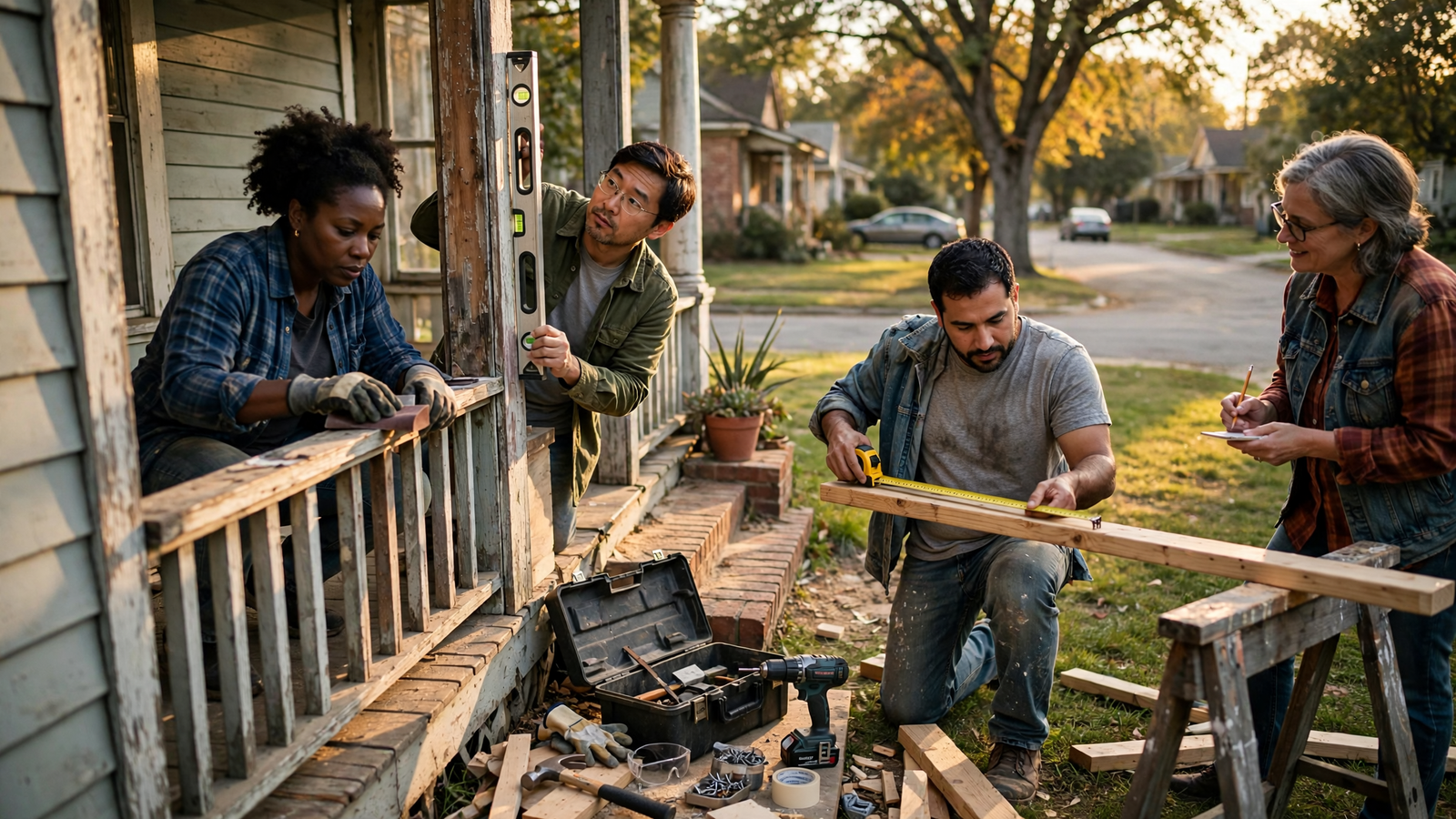
Historic preservation is often described as saving old buildings, but the work is broader than that. It can involve documenting structures, identifying changes that have occurred over time, guiding rehabilitation and helping property owners understand how new work can fit within an established setting.
Prescott’s historic-preservation program recognizes that older buildings are part of the city’s public identity as well as its private property. The goal is not to freeze every structure in one particular year. Instead, preservation can provide a framework for adapting older places without erasing the features that make them meaningful.
That balance matters in a town that remains active. Historic buildings need plumbing, heating, electrical systems, fire protection and accessibility. Storefronts need to serve current businesses. Homes must remain comfortable and safe. A building that cannot function in the present is difficult to preserve for the future.
The most successful historic districts therefore tend to be lived-in places rather than outdoor museums. People work in them, shop in them, raise families in them and return to them for community events. Their value comes partly from age, but also from usefulness.
The downtown as a shared room
Prescott’s downtown is the clearest example of this relationship between preservation and everyday life. The Courthouse Plaza provides a civic center, but the surrounding blocks give the square its sense of enclosure and activity.
Older commercial buildings create a walkable edge around public space. Their ground floors can accommodate restaurants, shops, galleries and services, while upper floors and neighboring structures preserve the visual scale of an earlier town. The result is not simply a picturesque setting. It is a place where the distance between civic life and commercial life remains unusually small.
That arrangement helps explain why historic downtowns can feel different from newer commercial areas. A contemporary shopping center may be convenient, but a traditional main street gives people more reasons to linger. Buildings meet the sidewalk. Entrances are visible. Blocks invite movement. A public square can function as both destination and passage.
In Prescott, those qualities are reinforced by local traditions and recurring events. The downtown is not only a backdrop for visitors. It is part of the city’s social infrastructure, a place where residents gather for celebrations, community activities and the simple routines of an afternoon in town.
Homes that reveal another Prescott
The story changes as the streets move away from the commercial center. Residential areas reveal a quieter side of Prescott’s history.
Older houses show how residents once adapted architecture to the high-desert and mountain climate. Porches, shade structures, windows and compact lots were not merely decorative choices. They shaped how people experienced heat, cold, sunlight and the transition between private interiors and public streets.
These homes also make history more personal. A courthouse or opera house may represent public ambition, but a house suggests the rhythms of ordinary life: meals, repairs, family gatherings and neighbors meeting along the sidewalk. Residential preservation protects those smaller stories, even when the original occupants are no longer known.
Walking through an older neighborhood can also reveal layers of change. A house may retain its original form while gaining a later addition. A former residence may become an office. A porch may be enclosed, or a storefront may be adapted for a new use. Such changes are evidence that historic places survive by evolving.
Why local knowledge matters
Preservation works best when a community knows what it has. That knowledge comes from many sources: historic photographs, maps, building records, oral histories, architectural surveys and the memories of people who have lived in a place for decades.
Organizations such as Sharlot Hall Museum help connect Prescott’s visible landscape with the documentary record. Museums and archives make it possible to compare the city people see today with earlier maps, photographs and accounts. The comparison can reveal both continuity and loss.
National and state preservation programs add another layer of recognition. Listing a property or district in a historic register does not turn it into a museum, but it acknowledges that the place has significance beyond the individual parcel. It may reflect architectural character, association with important events or the ability of a district to communicate an earlier period of community development.
Local decisions remain essential. A register listing cannot substitute for maintenance, thoughtful design or public interest. Preservation is ultimately a civic practice: people deciding that a familiar building, street or neighborhood contributes enough to the community’s identity to deserve care.
A living inheritance
Prescott’s historic character is sometimes treated as something it simply possesses, as though the past arrived fully formed and asked nothing of the present. In reality, the city’s older places require ongoing choices.
Owners decide whether to repair or replace. Businesses decide how to use historic storefronts. Designers decide how new construction should meet older buildings. Residents decide which parts of the community’s story deserve attention. Visitors, too, influence preservation when they support local businesses and treat historic districts as neighborhoods rather than scenery.
Those choices do not always produce easy answers. A growing community needs housing, updated infrastructure and economic opportunity. Historic buildings can be expensive to maintain, and preservation rules can create disagreements about design or use. The point is not that every old structure must remain unchanged. The point is that change is more meaningful when it begins with an understanding of what is already there.
Prescott offers a useful example because its historic places remain woven into daily life. A visitor may come for the Western atmosphere, the mountain air or the public events. But the deeper experience comes from noticing how the city’s layers coexist: territorial history beside contemporary businesses, old homes beside active streets, civic traditions beside new residents making their own memories.
That is the quiet achievement of preservation in Prescott. It keeps the past from becoming a distant subject. Instead, history remains something people can walk through, use and add to—one building, block and neighborhood at a time.