In Prescott, history does not stay behind a glass door. It begins with a building, spreads across a small campus, and keeps asking visitors to reconsider how Arizona became the place it is. For related reading, see Sharlot Hall: The Arizona Historian Who Built a Home for the Past.
That is the quiet achievement of Sharlot Hall Museum, a cultural institution near the center of the Yavapai County seat. The museum is named for Sharlot Mabridth Hall, a writer, historian, rancher, and preservationist who understood that Arizona’s past could disappear quickly if no one chose to care for it. Today, her name belongs to a museum that brings together territorial history, Indigenous and Hispanic heritage, ranching, mining, transportation, domestic life, art, and the everyday objects that rarely appear in grand historical summaries. For related reading, see The Auburn Cord Duesenberg Museum: Where America’s Car Story Still Has a Home.
The result is more than a collection of old things. Sharlot Hall Museum is a place where Prescott’s past remains available for inspection: in the rooms of the former Governor’s Mansion, in changing exhibitions, in photographs and documents, and in the questions raised by the museum’s interpretation.
A territorial building at the center
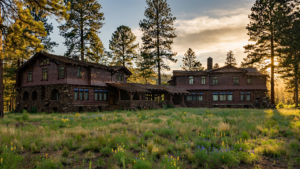
The museum’s most recognizable structure is the Old Governor’s Mansion, built in 1864 during the earliest years of the Arizona Territory. Prescott was established as the territorial capital that same year, and the building served as a residence and office associated with the territory’s first government.
Its importance is partly architectural and partly geographic. The building connects the modern city to a period when Prescott was a rough administrative outpost surrounded by military roads, mining camps, ranches, and Indigenous homelands. Government in that era was not an abstract system viewed from a distant capital. It occupied a small number of rooms in a young settlement.
Preserving those rooms gives visitors a more physical understanding of territorial government. Walls, doorways, fireplaces, and floor plans make the scale of early public life easier to imagine than a list of dates can. They also reveal the limits of the institution. A government building could represent authority while still standing in a community whose future was uncertain and whose population included people with sharply different experiences of territorial expansion.
The mansion is not valuable because it turns the past into a simple story. It is valuable because it keeps a complicated period attached to an actual place.
The woman behind the museum
Sharlot Hall came to Arizona as a child and grew into one of the territory’s most distinctive writers and public historians. She worked in several worlds at once: journalism, poetry, ranch life, historical research, and civic preservation. In the early twentieth century, she became Arizona’s territorial historian, a position that placed her close to the work of collecting and explaining the region’s past.
Hall also understood that historical memory was shaped by whoever did the saving. Official records tended to emphasize governors, soldiers, politicians, and prominent settlers. A broader collection could preserve clothing, tools, household goods, photographs, letters, and stories that showed how ordinary people lived.
Her preservation work helped prevent the Old Governor’s Mansion from being lost. In 1928, the building became the foundation of the museum that bears her name. That origin matters because Sharlot Hall Museum was not created only to celebrate a famous person or a government era. It was created from the conviction that Arizona needed a place where its material past could be gathered before it vanished.
That mission still shapes the museum’s character. The institution is rooted in Prescott, but its collections and exhibitions point outward to the wider region. Yavapai County contains high-desert grasslands, pine forests, river corridors, mining districts, ranch country, and communities with distinct cultural histories. A local museum can therefore tell a story that is both specific and expansive.
History in objects and rooms
Museums often make history feel distant when they display only exceptional objects. Sharlot Hall Museum’s strength lies in the way exceptional and ordinary materials can sit beside one another.
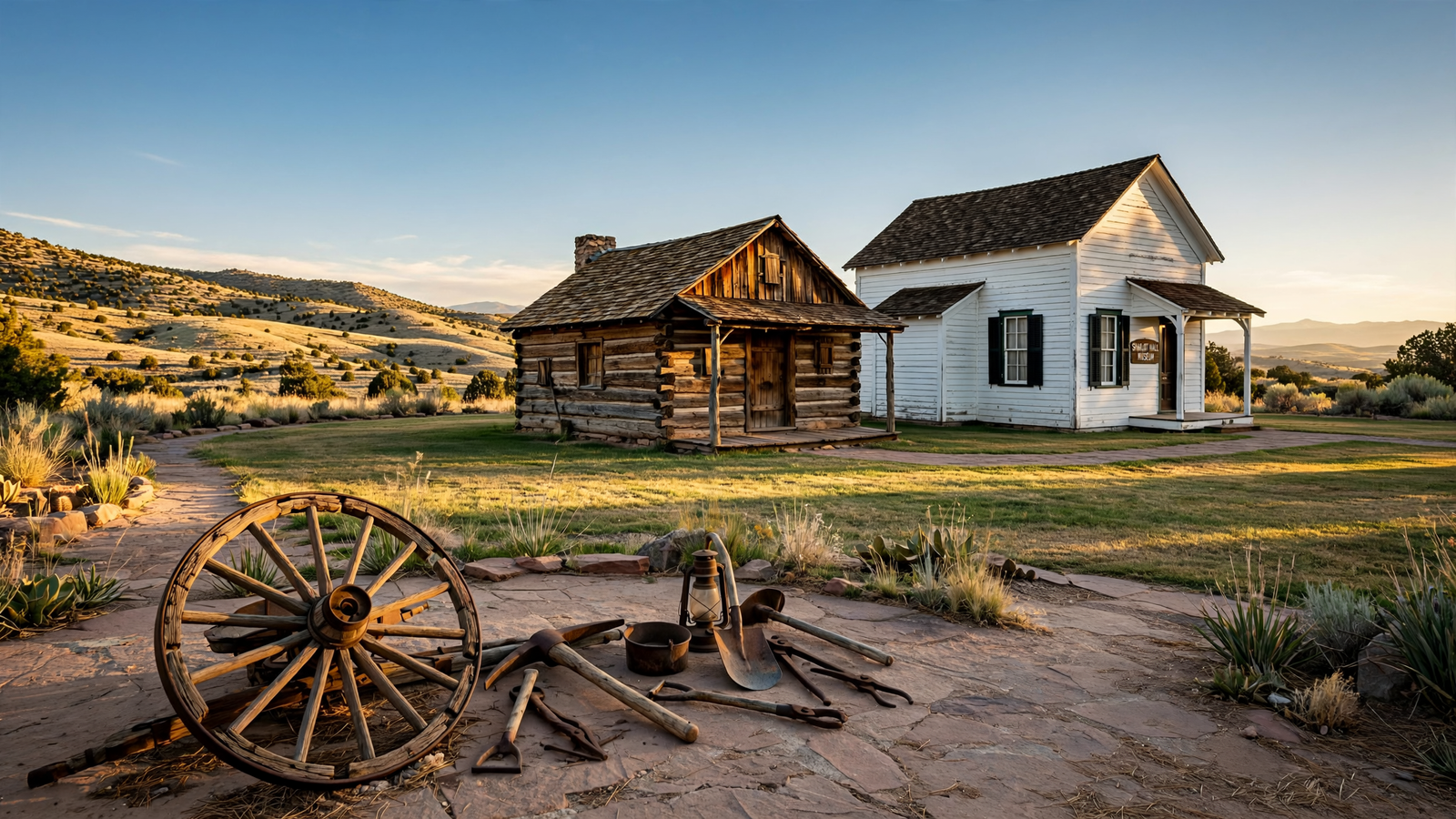
A historic photograph can show how a street changed. A tool can suggest the work required to build a household or maintain a ranch. A piece of clothing can reveal the difference between public appearance and daily labor. A letter can bring private uncertainty into a story otherwise dominated by institutions. Together, such objects make history less like a parade of famous names and more like a network of decisions made by people living with limited information.
The museum’s campus allows those materials to be interpreted in several ways. Visitors can move from the preserved government building to galleries and exhibits that place local experience in a larger Arizona context. The change of setting is useful: a period room can evoke the texture of the past, while a gallery can step back and examine how that past has been recorded, collected, and remembered.
This distinction is important. Historic preservation is never a perfect recovery of what happened. It is a selection. Someone decided which buildings mattered, which objects were worth keeping, and which stories belonged in the public record. A good museum makes those choices visible enough for visitors to think about them.
Prescott beyond a single origin story
Prescott’s public identity is often tied to its territorial beginnings, courthouse plaza, mining history, and Western atmosphere. Those associations are real, but they can also narrow the story if treated as the whole picture.
Sharlot Hall Museum helps widen the frame. The history of the region includes Indigenous nations whose presence predates Arizona’s territorial government by thousands of years. It includes Hispanic and Mexican influences, African American history, Chinese immigrants and workers, women whose labor was often unrecorded, and families whose lives were shaped by ranching, forestry, commerce, education, and migration. It also includes the environmental realities of living in a high-desert landscape where water, fire, distance, and seasonal change have always mattered.
A museum cannot resolve every omission in the historical record, but it can create room for more than one inheritance. Its most useful work is not to offer a single official version of Prescott. It is to provide evidence and context that allow visitors to see how different communities encountered the same place differently.
Why local museums remain useful
Large national museums can explain broad themes, but local museums offer a different kind of knowledge. They preserve the details that make a place recognizable: the businesses people entered, the roads they used, the homes they maintained, the technologies they adopted, and the landscapes that constrained their choices.
That local scale is especially valuable in a fast-changing region. Prescott continues to grow and change, while Yavapai County absorbs new residents, new development, new pressures on water and land, and new debates about what should be preserved. A museum provides a long view without pretending that the past was stable or uncomplicated.
It also gives residents a shared reference point. People can disagree about what a community should become while still examining the evidence of what it has been. School groups can encounter history close to home. Researchers can use collections that do not appear in national archives. Visitors can understand that the town’s character was made by more than its most photographed buildings.
For travelers, that makes Sharlot Hall Museum a useful complement to Prescott’s outdoor trails, historic downtown, and surrounding landscapes. The museum supplies context before or after a walk through the city. It explains why certain places matter and shows how the region’s stories were built from both dramatic events and ordinary persistence.
A living archive in a historic town
The most enduring idea in Sharlot Hall’s legacy is that preservation is an active responsibility. Saving a building is only the first step. The harder work is deciding how to interpret it honestly, how to expand the record, and how to keep historical materials meaningful to people who did not live through the period being described.
Sharlot Hall Museum continues that work from the place where Prescott’s territorial story began. Its campus does not make the past remote or perfectly settled. Instead, it offers something more useful: a set of tangible starting points for understanding Yavapai County, Arizona, and the people who have shaped both.
That is why the museum remains an important place in Prescott. It preserves a building, but it also preserves the habit of looking closely—at documents, objects, landscapes, and the stories a community chooses to carry forward.
Use: Institutional history, campus information, collections, exhibitions, and visitor context.
Use: Background on Sharlot Hall, the museum’s founding, and its preservation mission.
Use: Arizona historical context and primary-source collections related to the state’s communities and past.
Use: State-level historical and archival reference context.
Sharlot Hall Museum — Official Website — https://sharlot.org/ — Institutional history, campus information, collections, exhibitions, and visitor context.
Sharlot Hall Museum — About the Museum — https://sharlot.org/about-us/ — Background on Sharlot Hall, the museum’s founding, and its preservation mission.
Arizona Memory Project — https://azmemory.azlibrary.gov/ — Arizona historical context and primary-source collections related to the state’s communities and past.
Arizona State Library, Archives and Public Records — https://azlibrary.gov/ — State-level historical and archival reference context.