For nearly a century, the standard measure of monumental American engineering stood cast in millions of tons of concrete along the Colorado River. Dedicated during the Great Depression, the Hoover Dam transformed the Southwest by harnessing the rushing current of water to light distant cities and irrigate arid valleys. It defined the twentieth-century imagination of infrastructure: massive, centralized, and immovable. Its physical presence became inseparable from the idea that projects of national importance had to be singular in form, enormous in scale, and concentrated in one unmistakable location.
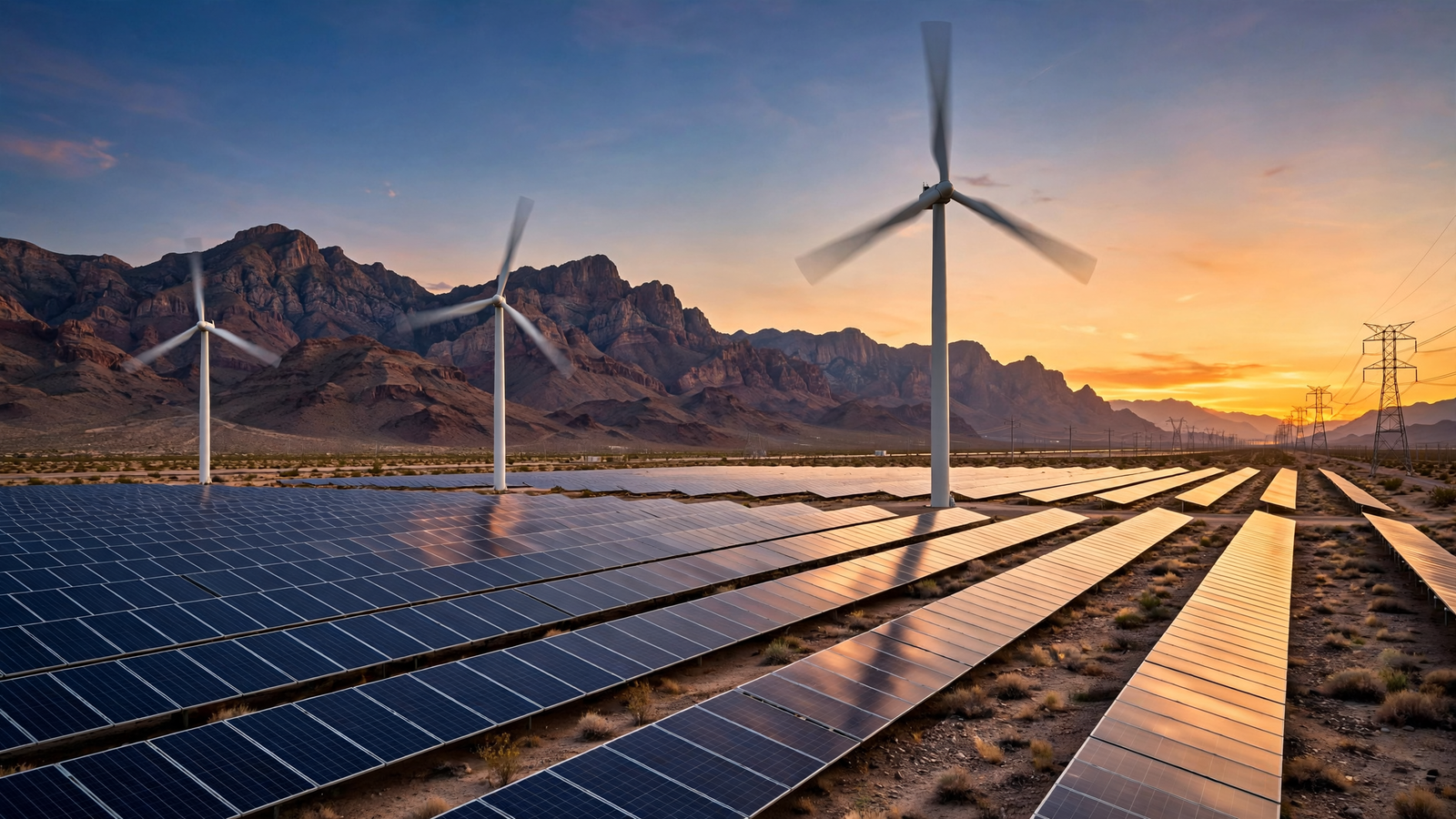
Today, that classic benchmark of utility-scale power is being surpassed not by another river blockade, but by a modern generation of distributed clean infrastructure. The nation’s largest renewable energy project has officially come online, delivering a combined output of emissions-free electricity that exceeds the total power-generating capacity of the historic Hoover Dam. This achievement marks a defining turning point for national power grids and offers a compelling demonstration of how rapidly sustainable technology is reshaping modern life. The comparison also reveals a broader change in how major infrastructure can look and operate: power once associated with a single monumental structure can now come from coordinated wind, solar, storage, and grid systems spread across a wider landscape.
Surpassing a Twentieth-Century Legend
When the Hoover Dam was completed in the 1930s, its sheer scale seemed almost miraculous. Generating more than 2,000 megawatts of electricity at peak operational capacity, it provided the vital foundation for the growth of modern Arizona, Nevada, and Southern California. It was celebrated worldwide as the pinnacle of human ingenuity applied toward clean, abundant mechanical energy. For generations, it remained both a functioning power facility and a familiar standard against which other ambitious engineering achievements could be understood. Its output offered a clear measure of what coordinated planning, technical skill, and public purpose could accomplish.
Surpassing that historical baseline with wind and solar infrastructure marks an extraordinary technological evolution. While a massive hydroelectric facility requires specific topography, decades of planning, and substantial alterations to river ecosystems, contemporary renewable installations tap into resources that are naturally abundant throughout the American landscape: sweeping desert sunlight and consistent continental winds. Their scale is expressed differently. Rather than concentrating every component behind one wall, these systems combine many generating units into a coordinated whole. The resulting capacity can exceed that of a landmark hydroelectric project without reproducing the same physical design or dependence on a single river setting.
Reaching this operational milestone proves that renewable power is no longer merely an experimental supplement at the margins of regional energy grids. Instead, modern clean systems are functioning as foundational pillars capable of generating primary baseload power for millions of residential and commercial consumers across entire regions. The milestone matters not simply because one capacity figure has overtaken another, but because it demonstrates maturity. Renewable generation can now be planned, built, connected, and operated at a scale associated with the most consequential infrastructure of an earlier era. What once appeared supplementary is increasingly central to the way electricity is produced and delivered.
Community Power and Regional Impact
The rise of large-scale renewable generation carries direct benefits for communities across the American West and beyond. In arid environments where water resources are increasingly strained by extended drought cycles, transitioning electrical generation away from conventional steam-driven thermal plants preserves immense volumes of regional water supplies. Unlike traditional fossil fuel facilities that consume billions of gallons of water annually for industrial cooling, wind turbines and photovoltaic panels operate with negligible operational water footprints. That distinction connects electricity policy with the everyday challenge of managing limited water resources. Reducing the water demands associated with power generation can help communities pursue energy reliability without placing the same operational burden on supplies shared by homes, farms, businesses, and regional ecosystems.
Beyond ecological conservation, the deployment of record-breaking energy projects delivers substantial economic vitality to rural and suburban communities. The long-term operations and maintenance of extensive wind corridors and solar arrays create dependable local employment, generate steady tax revenues for county school districts, and provide diversified income for regional landowners. These benefits extend the meaning of an energy project beyond the electricity it produces. A development can also become part of the economic framework of the places that host it, linking large-scale investment with ongoing work, public revenue, and income distributed through local communities. The long operating life of the infrastructure makes those relationships important well after initial construction is complete.
These distributed installations also strengthen local electrical resilience. Rather than relying entirely on a handful of vulnerable, centralized power generation hubs, modern grid networks can balance regional loads dynamically. By pairing clean generation with cutting-edge battery storage arrays, grid operators can smooth fluctuations, stabilize frequency, and ensure steady supplies even through extreme heat waves or sudden seasonal spikes in residential demand. Distribution does not eliminate the need for coordination; it makes coordination more important. Generation, storage, and transmission must work together so that changing conditions in one area can be balanced by available resources elsewhere. The result is a network designed to respond flexibly while continuing to serve homes, businesses, and public institutions.
The Broader Transformation of Everyday Infrastructure
The success of the country’s largest renewable development reflects a wider shift visible in neighborhoods and municipalities nationwide. Community design standards are progressively prioritizing long-term sustainability, from energy-efficient housing developments to regional infrastructure built to withstand climatic shifts. The same principles evident in utility-scale projects are therefore appearing closer to home: lower resource consumption, greater efficiency, and planning that considers conditions over the long term rather than focusing only on immediate needs.
Across Arizona and neighboring states, homebuilders and municipal planners are actively aligning new community construction with clean standards. Residential developments are incorporating native xeriscaping to safeguard local aquifers, installing rooftop solar pre-wiring, and building high-efficiency building envelopes that lower daily consumption. When individual energy-efficient households are connected to utility grids increasingly powered by gigawatt-scale wind and solar farms, the cumulative environmental impact drops precipitously. Each element addresses a different part of the same system. Landscaping reduces pressure on water resources, solar preparation makes future clean generation easier to adopt, and efficient construction reduces the amount of energy required for daily life. Connected to cleaner utility power, those household choices reinforce the regional transition.
This dual convergence—large-scale generation at the utility level alongside smarter design at the neighborhood scale—is making the clean energy transition an everyday reality. It is no longer an abstract blueprint for a distant future; it is the physical framework delivering power to living rooms, schools, and local businesses right now. The change can be understood both through record-setting capacity figures and through ordinary built environments. Large projects reshape the supply of electricity, while efficient homes and communities reshape demand. Together, they show how national infrastructure goals can become tangible at the local and household levels.
Building a Sustainable Future Together
The achievement of bringing more renewable capacity online than the Hoover Dam reminds us that human engineering is capable of rising to meet modern generational challenges. Just as earlier generations pooled civic resources and technical talent to tame rivers and electrify the wilderness, today’s engineers, planners, and community members are building an energy architecture designed to endure for generations. The tools and designs have changed, but the underlying ambition remains recognizable: to organize expertise, investment, and shared purpose around infrastructure that can support communities on a vast scale.
By turning toward inexhaustible natural forces like the wind and the sun, our communities are charting a practical path forward that protects shared ecosystems while driving reliable economic development. It is a milestone worth celebrating—a tangible reminder that our best innovations are those that help both people and the planet thrive together in harmony. Surpassing the generating capacity of a twentieth-century landmark does not diminish that earlier achievement. Instead, it places today’s renewable development within the same continuing story of ambitious American engineering, while showing that monumental progress can now take a more distributed, sustainable form.
Use: Factual reference for the commissioning of the USA's largest renewable energy project exceeding the capacity of the Hoover Dam.