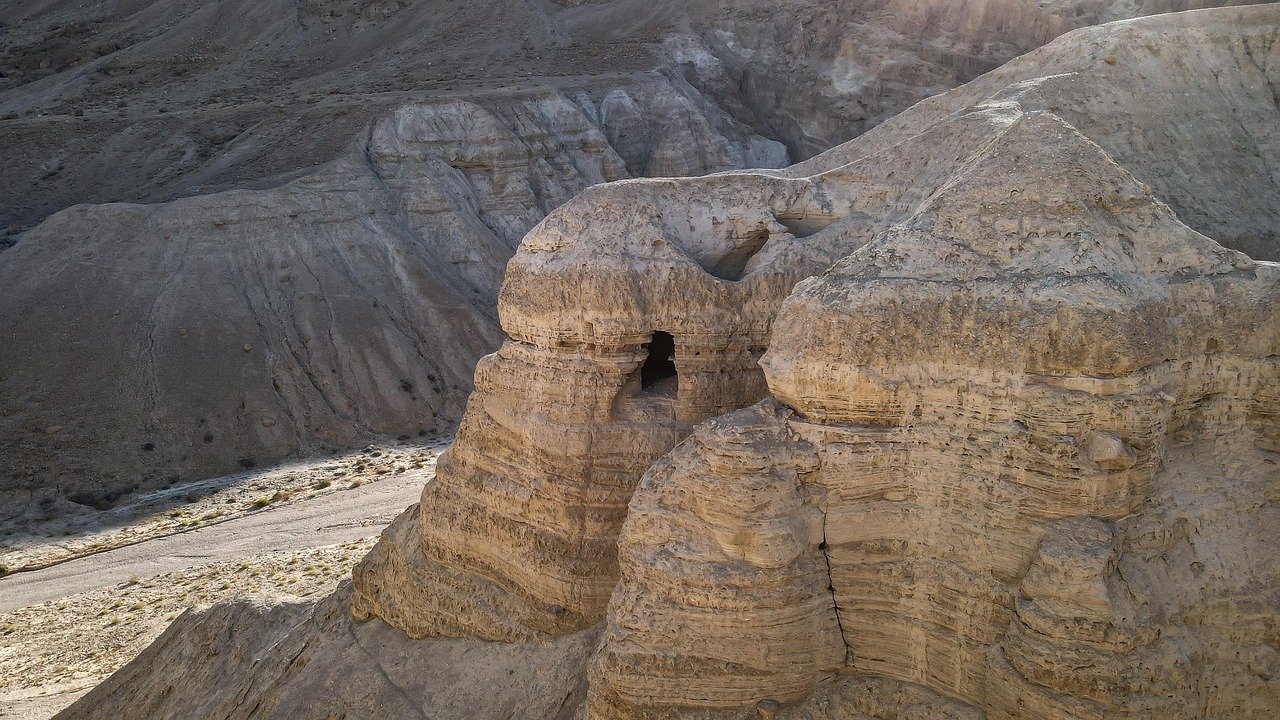
The Dead Sea Scrolls were not found all at once, nor do they make up one single book. They are a collection of ancient manuscripts and fragments discovered over several years in caves near Qumran, beside the Dead Sea. Their journey—from an initial cave find to international research and online access—helps explain why the scrolls matter both as historical artifacts and as documents.
The manuscripts include biblical texts, interpretations, prayers, community rules and other writings. Most were copied between the third century BCE and the first century CE. Some survive as substantial scrolls; many are small, damaged fragments. Here is a timeline of how the collection came to light and how access to it changed.
Third century BCE to first century CE: Manuscripts are copied
The scrolls were written over a span of centuries, not produced as a single set. Their languages include Hebrew, Aramaic and Greek. The texts offer evidence of the religious writing and practices of the period, but they do not all have the same purpose or origin. Alongside copies of books later included in the Hebrew Bible are commentaries, hymns, rules and other works.
That variety is important. The scrolls are often described as a library, but scholars continue to study how the manuscripts were assembled and how they relate to the people who lived in the area. Finding a text in a cave near Qumran does not, by itself, settle who wrote it or who used it.
1947: The first widely reported cave discovery
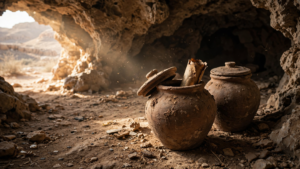
The modern story is generally dated to 1947, when Bedouin shepherds found manuscripts in a cave near Qumran. Accounts of the discovery differ in detail, but the find brought ancient scrolls into the attention of scholars and antiquities dealers. Several manuscripts from the first cave became known as the Cave 1 scrolls.
The discovery was striking partly because some of the manuscripts were far older than the medieval copies that had long been central to the study of biblical texts. But the first finds were only the beginning: additional caves, manuscripts and fragments would turn the initial discovery into a much larger research project.
1947–1948: Scholars and collectors examine early finds
Among the first scholars to investigate the manuscripts was Eleazar Sukenik of the Hebrew University of Jerusalem. He acquired several scrolls, including the Great Isaiah Scroll, and began studying and publicizing their significance. Other manuscripts from the first cave passed through different hands before entering institutional collections.
The early dispersal of the scrolls helps explain why the collection is now held and studied in more than one place. It also created practical challenges: researchers had to identify, document and compare texts that were not all together in a single archive.
1949: Archaeologists investigate Cave 1
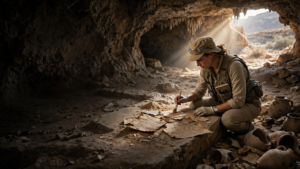
After the initial discovery, archaeologists examined the first cave and recovered additional material. The work shifted the story from an isolated find to a search for further evidence in the surrounding landscape. The manuscripts had survived in a dry, sheltered environment, but they were fragile and required careful handling.
That preservation is uneven. Some texts can be read across sizeable sections of parchment or papyrus; others consist of tiny pieces whose placement and meaning have to be worked out through close study. A fragment can be historically valuable even when it does not reveal a complete sentence.
1951–1956: More caves widen the collection
Further discoveries followed in the caves around Qumran. Cave 4, found in 1952, yielded a particularly large body of manuscript fragments. Cave 11, discovered in 1956, was among the later major finds. In all, manuscripts or fragments were recovered from 11 caves in the area.
The new material changed the scale of the task. Researchers had to sort and piece together fragments, identify overlapping passages, and distinguish different works and copies. A manuscript collection is not automatically a neatly ordered archive; much of its modern organization is the result of sustained scholarly work.
1965: The Shrine of the Book opens in Jerusalem
The Israel Museum’s Shrine of the Book opened in 1965 as a purpose-built home for key Dead Sea Scrolls and related material. Its distinctive design made the scrolls visible to the public while providing a setting for their preservation and interpretation. The Great Isaiah Scroll is among the celebrated manuscripts associated with the shrine.
Display is only one part of the story. The scrolls are delicate objects, and public exhibitions cannot replace the detailed work of reading, cataloguing and comparing images. Museums and research institutions help connect physical artifacts with the scholarship that explains them.
2010s: Digital images expand access
High-resolution digital imaging created another milestone. The Israel Antiquities Authority’s online Dead Sea Scrolls project made images and descriptive information available to readers beyond the institutions holding the originals. Digital access lets researchers and interested members of the public inspect manuscripts without handling fragile artifacts.
Online images do not make interpretation automatic. A damaged mark can remain difficult to read, and scholars may disagree about how fragments fit together or what a passage means. But digital tools make it easier to compare material, revisit details and share evidence across distances.
Why the timeline matters
The Dead Sea Scrolls are valuable not simply because they are old, but because they preserve a range of writing from a formative period in the history of Judaism and the ancient Mediterranean. Their discovery also shows how historical knowledge develops: through chance finds, archaeological work, conservation, cataloguing and repeated scholarly reassessment.
From the first cave discovery in 1947 to online manuscript images decades later, access has changed dramatically. The documents themselves remain fragmentary and sometimes difficult to interpret. Their continuing significance lies in what careful comparison can reveal—and in the fact that many more people can now examine the evidence for themselves.