After planting a tree, it is tempting to set a watering schedule and stick to it. But a calendar cannot tell you whether the tree’s roots are actually getting water. Rainfall, heat, soil type and the size of the root ball all change how quickly the planting area dries.
A better routine starts with a simple check: feel the soil around the root ball, not just the surface nearby. The roots of a recently planted tree are still concentrated in that original ball of soil, and it can dry at a different rate from the surrounding ground. A damp planting bed is no guarantee that the roots are moist.
Give the root ball a thorough first drink
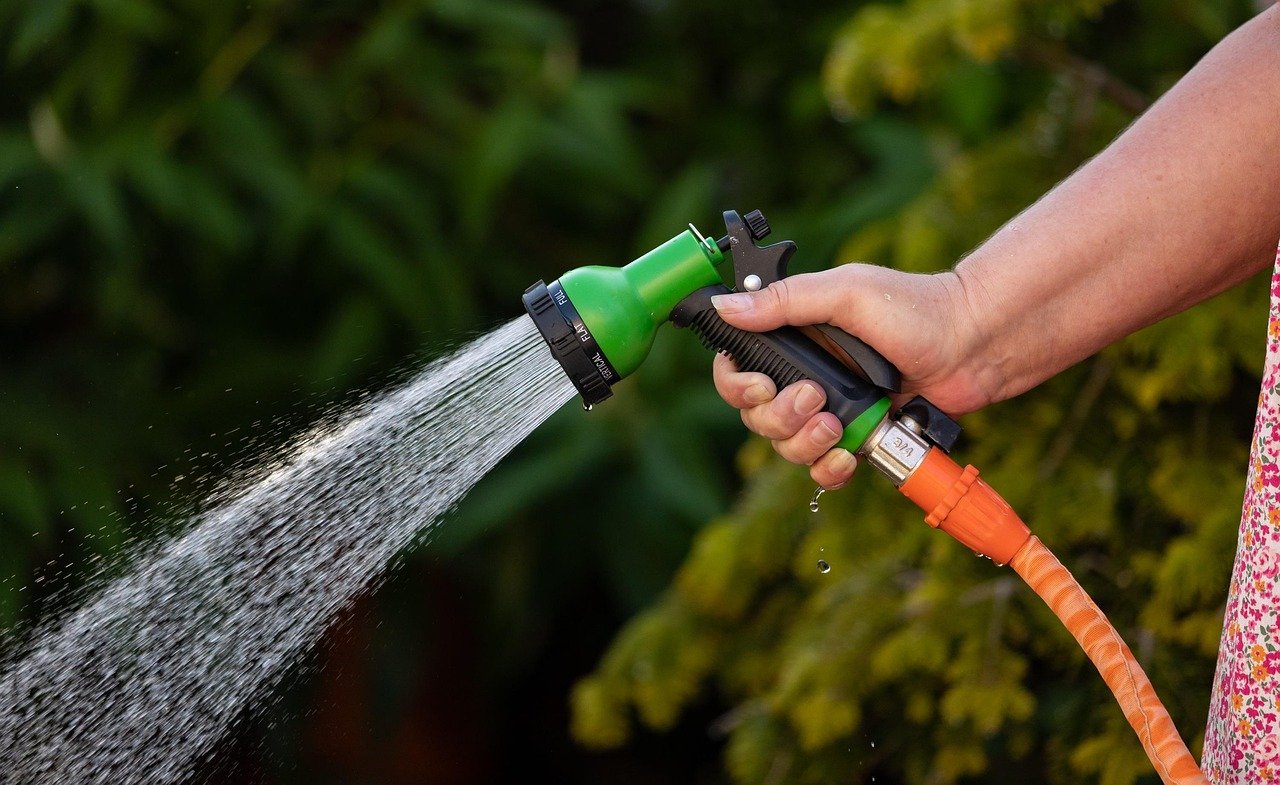
Water the tree slowly after planting so moisture can move into the root ball and the soil around it. A fast blast from a hose may run off, especially if the ground is compacted or dry. Use a gentle stream, or let a hose trickle at the base for a while. If water begins pooling or running away, pause and let it soak in before continuing.
Water close to the root ball rather than spraying the leaves. The goal is to moisten the soil where the new roots are, not simply wet the surface. For a container-grown tree, take care that water reaches the root ball itself; for a balled-and-burlapped tree, include the root ball and the soil immediately around it.
Check below the surface before watering again
Surface soil can dry quickly in sun and wind while deeper soil remains moist. Conversely, the top may look damp after rain even though the root ball is dry. Check in more than one place: feel the original root ball and the adjacent soil. A finger, small trowel or soil probe can help you assess moisture below the surface without digging into the roots.
If the soil at root depth feels dry, water slowly and check again later. If it is already moist, wait and reassess rather than adding more on autopilot. There is no single interval that suits every newly planted tree: sandy soil usually loses water faster than clay, while hot, windy weather can dry a planting area sooner than cool, calm conditions. The tree’s size and the amount of rainfall matter too.
Too much water can be a problem as well. Roots need air in the soil, and persistently saturated ground can impair them. If water stands around the tree or the soil stays soggy, stop watering until conditions improve and consider whether drainage is adequate.
Make watering easier with a basin and mulch
A low ring of soil around the planting area can help keep water from flowing away before it soaks in. Keep the basin broad enough to catch water over the root zone, and check that it is not holding water for long periods. On a slope, a basin may need adjusting to prevent runoff on one side.
A layer of organic mulch helps slow evaporation and moderate soil temperature. Spread it over the soil around the tree, but leave a clear gap around the trunk. Mulch piled against bark can keep it too wet and create other problems. As the mulch settles, check that it has not formed a thick mound against the tree.
Keep checking as the tree establishes
Do not assume a tree is established just because it has leaves or made it through its first few weeks. Newly planted trees need attention while they develop roots beyond the original root ball. Continue checking soil moisture through dry spells, and adjust as rainfall and temperatures change. The right schedule for one season—or one yard—may not be right for the next.
Also avoid treating a drooping crown as a diagnosis. Wilting can signal dry soil, but it can also occur when roots are stressed by excess water, heat or transplant shock. Check the soil first. If it is moist, adding more water may make matters worse.
Local extension services can offer guidance suited to regional climate and soils. That advice is useful alongside direct checks in your own planting area. A practical routine is simple: inspect the root ball, water slowly when it needs moisture, and check again rather than relying on a fixed number of days.
For a young tree, attentive watering is less about running the hose on a schedule and more about learning how the planting spot behaves. A few careful checks can help prevent both a dry root ball and needless overwatering.