Some of Prescott’s most revealing places are not downtown landmarks or major trail systems. They are the places where the city gives way to the forest so gradually that it is difficult to tell exactly when one ends and the other begins.
White Spar Campground is one of those places. Located along Senator Highway in the Prescott National Forest, the campground sits only a short drive from Prescott but feels separated from the city by pine-covered slopes, granite, open sky, and the quiet rhythm of a forest road.
That balance is the reason White Spar has endured as a popular local camping destination. It is not a remote wilderness base camp, and it does not try to be a resort. Instead, it offers something increasingly valuable: a straightforward public place where people can spend a night outdoors without turning the experience into a complicated expedition.
A forest campground within Prescott’s orbit
White Spar Campground is in the Bradshaw Ranger District of the Prescott National Forest, south of Prescott on Senator Highway. The drive is short enough to make the campground practical for a quick overnight stay, yet the surrounding forest creates a clear change of pace.
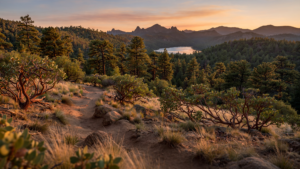
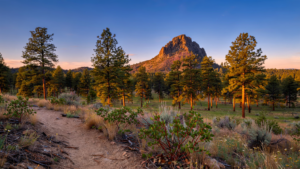
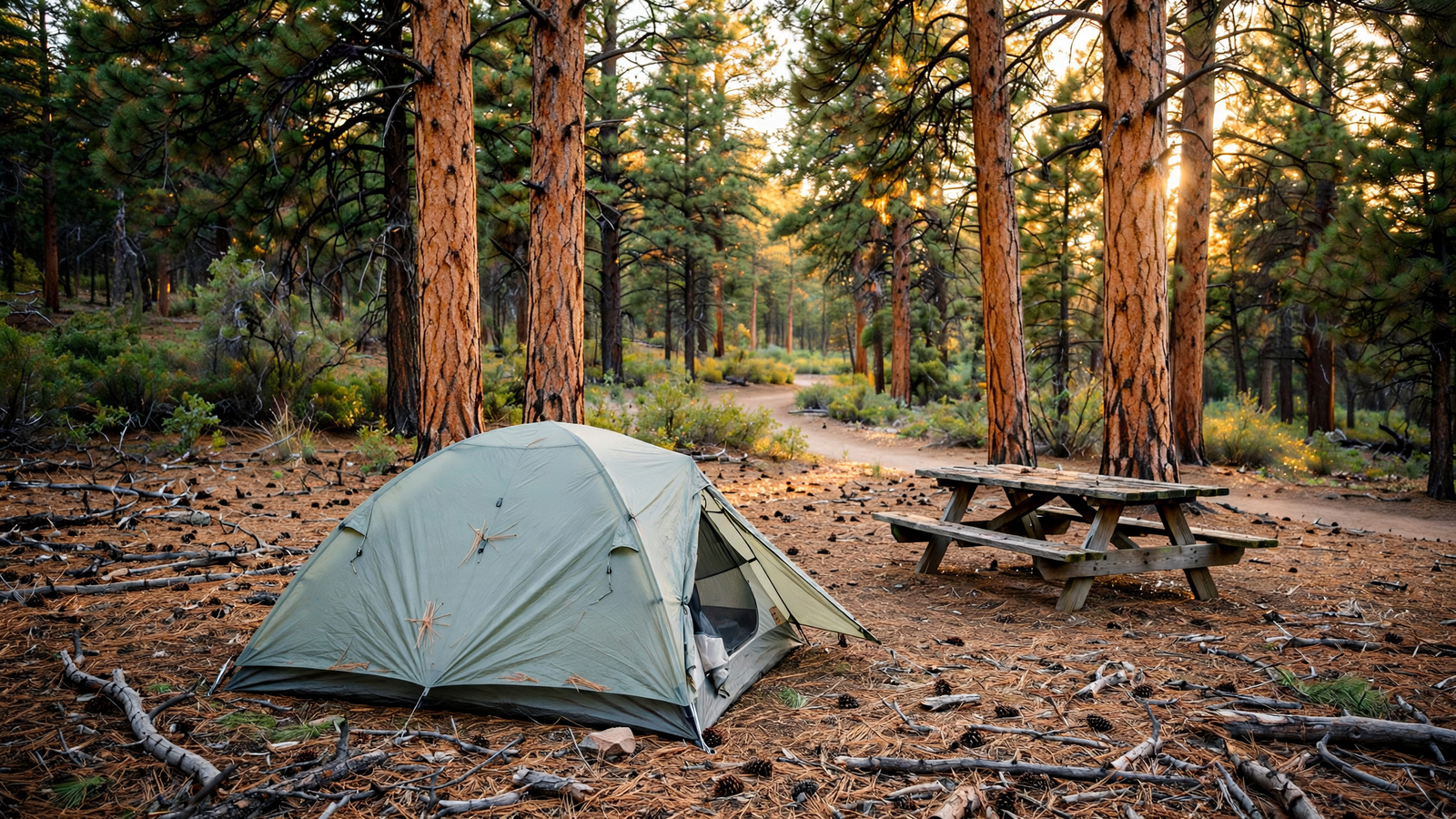
The campground sits in the ponderosa pine country that gives the Prescott area much of its character. These forests are not uniform walls of trees. They open and close in uneven patterns, with sunlight reaching the ground between trunks and rocky terrain appearing beneath the canopy. At White Spar, that setting becomes part of the camping experience rather than scenery viewed from a distant overlook.
The U.S. Forest Service describes the campground as a developed recreation site with individual campsites, picnic tables, fire rings or grills, and vault toilets. Recreation.gov provides reservation and operating information, while the Forest Service remains the best source for current alerts, closures, fire restrictions, and changing conditions.
Facilities are intentionally basic. That simplicity is part of the appeal. Campers arrive with food, water, sleeping gear, and a plan for spending time outside. The forest supplies the atmosphere.
The appeal of a low-pressure escape
Many outdoor destinations ask visitors to choose between convenience and solitude. A campground close to town can feel crowded or heavily developed, while a more secluded site may require a long drive, specialized equipment, or careful logistical planning.
White Spar occupies a useful middle ground. It offers a defined campsite and established amenities, but it also puts visitors directly into the landscape. A family can arrive for a night outdoors without committing to a long backcountry trip. A local resident can use it as a weekend base for exploring the surrounding forest. Someone new to camping can experience the basic routines—setting up a tent, cooking outside, watching the light change through the trees—without having to travel deep into the mountains.
That accessibility matters. Public lands often become most meaningful when people can return to them repeatedly. A first visit may be a planned camping trip. Later visits may be connected to a favorite season, a nearby hike, a birthday, or simply the desire to sleep somewhere quieter than home.
More than a place to park a tent
White Spar is part of a much larger recreation landscape. The surrounding Prescott National Forest contains a network of roads, trails, lakes, campgrounds, and dispersed recreation areas. The campground can serve as a starting point for exploring that landscape, but visitors should distinguish between what is available at the developed site and what requires travel elsewhere.
Nearby forest roads and trails offer opportunities for walking, mountain biking, scenic driving, and wildlife observation, depending on seasonal conditions and local restrictions. The Forest Service’s maps and district information are important because routes may vary in difficulty, and not every road or trail is suitable for every vehicle or visitor.
The broader lesson is that White Spar does not need to contain every possible amenity to be valuable. Its strength is its position within the forest. Campers can spend a day exploring and return to an established site in the evening. They can remain near camp, read beneath the trees, or watch birds and squirrels move through the understory. The place supports both activity and doing very little.
Living with fire, weather, and elevation
Prescott’s mountain environment is beautiful partly because it is dynamic. Weather changes quickly. Summer thunderstorms can bring lightning, strong winds, and sudden rain. Spring and fall nights can be much colder than daytime temperatures suggest. Winter conditions may affect access, water systems, or campground operations.
Fire is another essential part of understanding the forest. Ponderosa pine landscapes evolved with periodic fire, but modern conditions can still make wildfire risk serious. Campfires may be restricted or prohibited during periods of elevated danger, and restrictions can change quickly. Visitors should check current Prescott National Forest information before leaving home and follow every posted rule at the campground.
Responsible camping is not merely a matter of courtesy. It helps protect the forest that makes White Spar worth visiting. Keeping food secured, packing out trash, staying on designated routes, respecting quiet hours, and leaving natural objects where they are all reduce pressure on a place that serves many users.
Dogs should be managed according to posted rules, and visitors should remember that wildlife may be nearby even when it is not visible. A campground is a shared public setting, not an extension of a private backyard.
A place shaped by repeated visits
The meaning of a campground is rarely contained in a single dramatic view. It is built through repetition: the same road taken at a different time of year, the same trees seen under morning light, the familiar work of preparing dinner outdoors, and the small pleasure of waking before the rest of the campground becomes active.
That kind of experience is easy to underestimate because it does not announce itself. White Spar is not a destination that depends on one iconic structure or one carefully staged viewpoint. Its value comes from providing room for ordinary outdoor life.
For Prescott, that role is especially important. The city is known for its historic downtown and civic traditions, but its identity also depends on its relationship with public land. The Prescott National Forest is not simply a backdrop around the community. It is part of how residents and visitors understand the place: a nearby source of recreation, shade, seasonal change, and open space.
White Spar makes that relationship tangible. A person can leave Prescott, reach a campsite among the pines, and still remain close enough to return to town when needed. The campground turns the forest from something seen in the distance into a place where people can stay.
Planning a better visit
Visitors should confirm the campground’s seasonal opening, reservation requirements, water availability, fire regulations, and road conditions before traveling. Recreation.gov is useful for site information and reservations, but conditions can change after a reservation is made. The Prescott National Forest website and the Bradshaw Ranger District are the appropriate places to check for alerts and restrictions.
Because White Spar is near Prescott, it can be tempting to treat the trip casually. Preparation still matters. Bring sufficient drinking water, layers for changing temperatures, lighting for moving around camp after dark, and a way to store food securely. Avoid relying on cell service for navigation or emergency planning.
Most of all, arrive with the understanding that a developed campground is a shared landscape. A good visit leaves the site ready for the next camper, the forest floor undisturbed, and the night as quiet as possible for the people and wildlife around it.
White Spar’s gift is not spectacle. It is access. It gives Prescott a place where the forest can become part of an ordinary weekend—a place close enough to use often, simple enough to feel genuine, and wild enough to remind visitors that the city is surrounded by a living landscape.