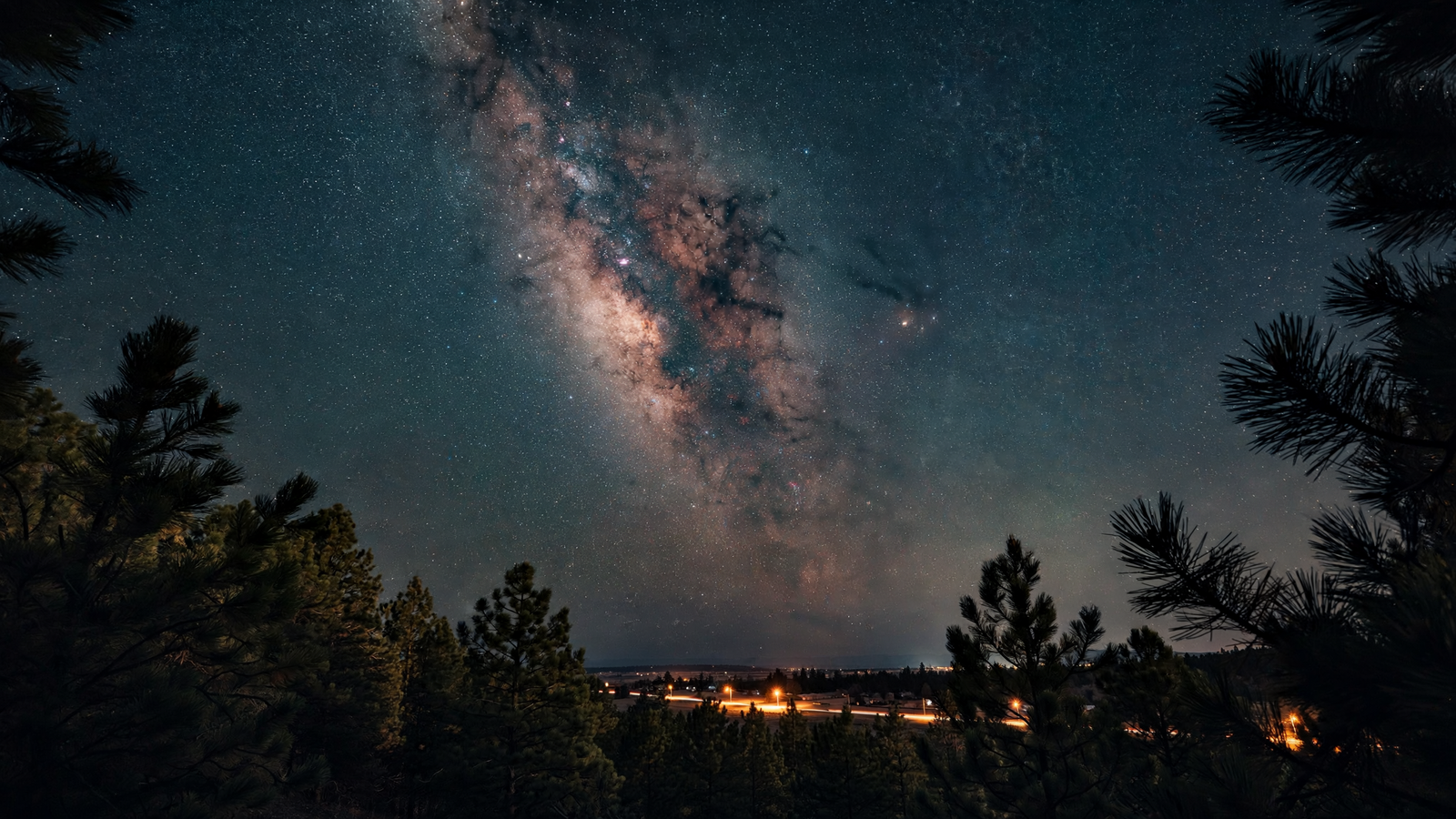
In Flagstaff, the night sky is not treated as empty space above the city. It is part of the community’s identity, a scientific resource and a public benefit that residents have worked for generations to protect.
The northern Arizona city became the world’s first International Dark Sky City in 2001, according to DarkSky International. That designation recognized something Flagstaff had already been developing for decades: local rules and community habits designed to reduce unnecessary light directed into the sky.
A community project written into local rules
Flagstaff’s interest in dark skies is closely connected to astronomy. Lowell Observatory, located on a hill above the city, has been studying the universe there since the late 19th century. As Flagstaff grew, more outdoor lighting threatened to make faint astronomical objects harder to observe.
The city responded with outdoor-lighting standards that regulate issues such as brightness, shielding and the direction of light. The goal is not to leave streets, sidewalks or businesses unlit. It is to put light where people need it, for as long as they need it, without sending large amounts upward or across neighboring properties.
That distinction makes Flagstaff’s example especially useful. Dark-sky protection is not simply a matter of switching off every lamp. It is a design challenge: choosing fixtures that aim downward, using warmer and more appropriate light when possible, and avoiding excessive illumination.
Why the night matters beyond astronomy
Artificial light at night can change the behavior of nocturnal wildlife, obscure views of the stars and make it harder for people to experience a natural night. In Flagstaff, protecting darkness also supports the city’s connection to the surrounding high-country landscape and its long-standing astronomy community.
The results are visible to residents and visitors. On a clear evening, the Milky Way can remain part of the city’s sense of place rather than something that requires a long drive into remote wilderness. Stargazing becomes a shared civic experience: available from yards, neighborhoods and public viewpoints when conditions are right.
Flagstaff’s approach also shows how environmental progress can happen through ordinary decisions. A properly shielded porch light, a timer that prevents all-night illumination or a business sign that follows local standards may seem small on its own. Across an entire city, those choices add up.
A model other communities can adapt
Flagstaff is not the only place working to preserve dark skies, but its history demonstrates the value of starting before light pollution becomes impossible to reverse. Residents, local government, astronomers and businesses all have a role in maintaining the shared resource.
For people who want to help, the basic principles are straightforward: use the lowest practical brightness, aim fixtures downward, shield the light source, choose a color temperature that limits harsh glare and turn lights off when they are not needed. Homeowners can check local requirements before replacing outdoor fixtures, while communities can support lighting policies that balance safety with restraint.
The hopeful lesson from Flagstaff is that a city does not have to choose between a modern community and a natural night. With thoughtful design and sustained public attention, both can exist together—and the stars can remain part of the neighborhood.