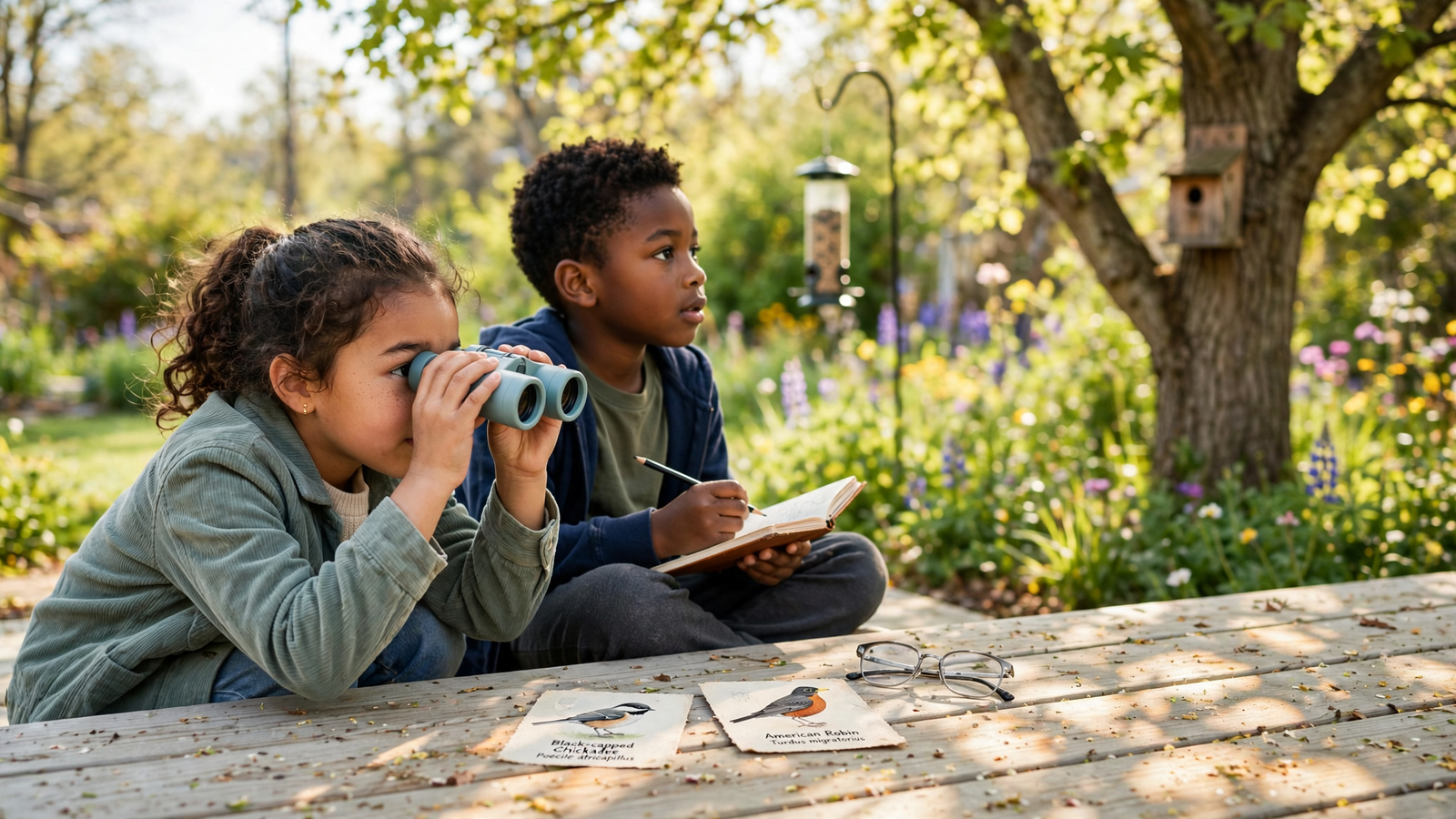
A child with a notebook, a pair of binoculars and a little patience can become part of a worldwide scientific effort. Every year, people of all ages take part in the Great Backyard Bird Count, a community-science project that turns ordinary birdwatching into useful information for researchers.
The idea is simple: participants spend time watching birds, record the species they see and submit their observations online. A backyard, schoolyard, balcony or neighborhood park can become a small outdoor research station.
A small observation can join a much bigger picture
The Great Backyard Bird Count began in 1998 as a project of the Cornell Lab of Ornithology and the National Audubon Society. Birds Canada later became a partner, helping the count grow into an international event.
Participants do not need to be professional birders. The official instructions suggest spending at least 15 minutes watching birds, counting the different species present and noting how many individuals of each kind are seen. Those observations can then be submitted through the project’s website or compatible birding tools.
One family may report a group of house sparrows near a feeder. A class might notice robins on the school lawn. Someone in a city apartment could spot a hawk circling above the buildings. Each report is limited on its own, but together thousands of checklists help reveal where birds are being seen and how those patterns change.
Why this is exciting for children
Birdwatching gives kids a reason to slow down and look closely. It encourages questions that do not have to be answered immediately: Why are some birds visiting the feeder? Which birds appear in the morning? Do the same species return after winter?
Children can begin with familiar birds such as cardinals, robins, crows or pigeons. They can use a field guide, a bird-identification app or an adult’s help to check their guesses. The goal is not to identify everything perfectly. Careful observation matters more than having expensive equipment or advanced knowledge.
For teachers, the count can connect science lessons with writing, math and geography. Students can make a class checklist, compare the number of species found in different parts of the school grounds or map where observations came from. They also learn an important lesson about science: useful evidence can begin with paying attention to the world nearby.
Nature is closer than it seems
The project also helps children see that wildlife conservation is not limited to distant forests or national parks. Birds live alongside people in suburbs, farmland and busy cities. Observing them can make local habitats feel important—and worth protecting.
Adults can make the activity welcoming by treating every sighting as a discovery. A notebook is enough to begin. Binoculars are helpful but optional, and children can participate from a window if outdoor conditions are uncomfortable. Families should avoid disturbing nests and keep a respectful distance from wildlife.
The Great Backyard Bird Count offers no promise of a rare discovery. Its strength is more encouraging: ordinary people can contribute to a shared scientific record. For kids, that means a familiar backyard can become a place where curiosity has a real purpose—and where the next important observation may be waiting in a tree.