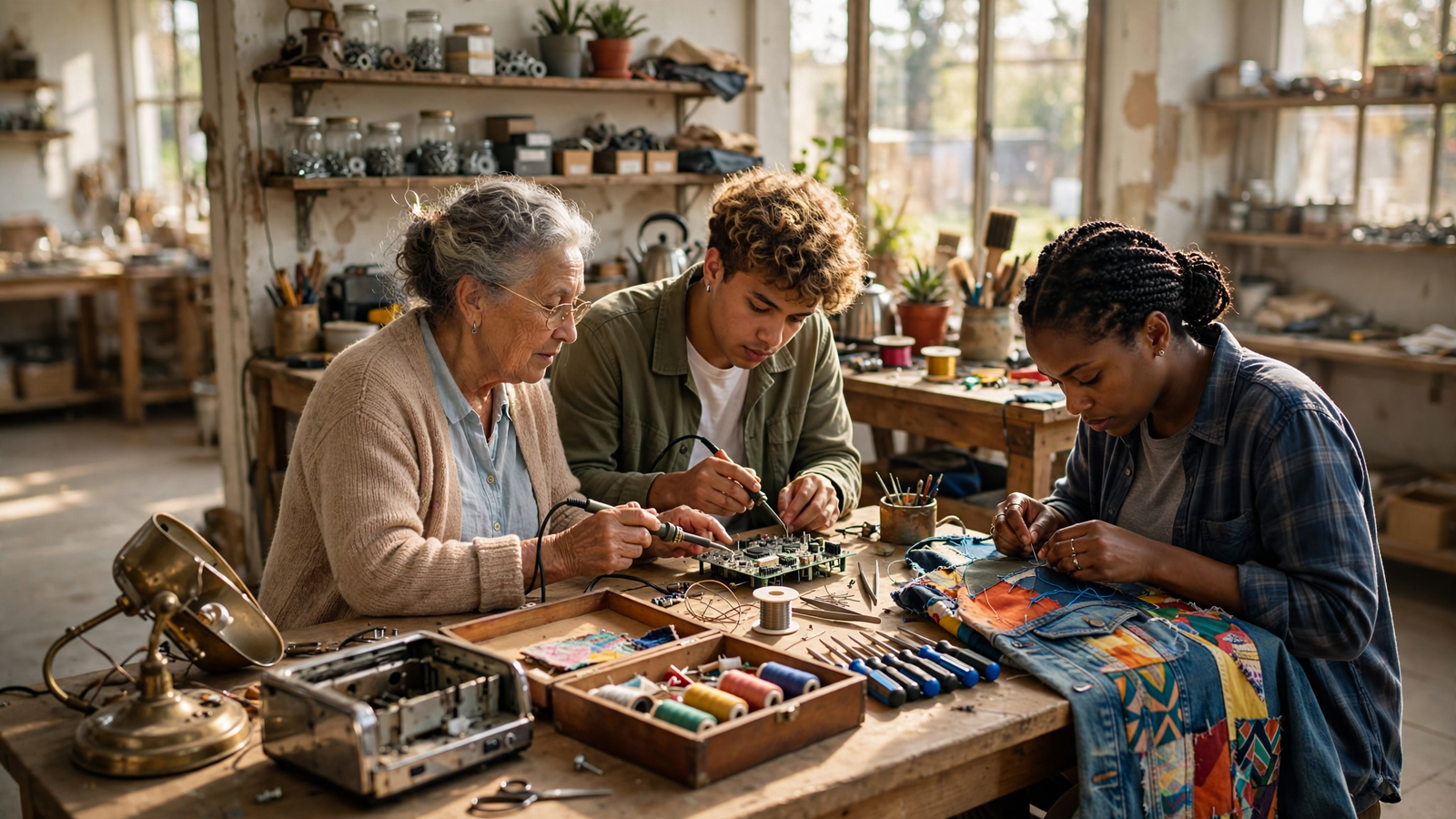
When a toaster stops working or a jacket loses a button, the easiest response is often to replace it. Repair cafés offer a different possibility: bring the damaged item to a community gathering, sit beside someone with the right tools and experience, and try to fix it together.
The idea began in Amsterdam in 2009, when journalist and sustainability advocate Martine Postma organized a meeting where local residents could repair household belongings with volunteer help. The event was intended to make repair more accessible, but it also revealed something less measurable: fixing ordinary objects can bring strangers into conversation.
A workshop built around participation
Repair cafés are not conventional repair shops. In most cases, visitors do not simply hand over an item and wait for a bill. They take part in the process, with volunteers explaining what they are doing and why. A session might include a retired electrician helping with a lamp, a seamstress showing someone how to mend clothing, or a bicycle enthusiast adjusting a brake.
That arrangement makes the gatherings practical and educational at the same time. A person who learns how to replace a zipper or diagnose a loose connection may feel more confident handling the next small problem at home. The knowledge stays in the community rather than disappearing when a single professional retires or a local repair business closes.
Repair cafés also tend to be welcoming precisely because the objects are ordinary. A coffee maker, toy, chair or pair of trousers can become an easy starting point for conversation between people who might not otherwise meet. The shared goal is clear, immediate and modest: see whether one more useful thing can be kept in service.
Small fixes, wider consequences
The environmental argument for repair is straightforward. Extending the life of an object can delay the purchase of a replacement and reduce the materials and energy associated with manufacturing, packaging and transporting something new. A single repaired appliance will not solve the waste problem, and volunteers cannot fix every item. But repeated small decisions can change what people consider disposable.
The movement has grown beyond its original gathering in the Netherlands. Repair Café International, the organization founded to support the concept, provides a model, practical guidance and a directory for groups in many countries. Its network now includes thousands of independently organized locations. Some meet in libraries or community centers; others operate as occasional pop-up events.
That independent structure matters. A repair café does not need an elaborate building or a large budget to begin. It needs a place to meet, basic tools, people willing to share skills and a system for handling safety issues. Groups may specialize in particular objects or invite several kinds of volunteers to work side by side.
Making repair feel possible again
Modern products can be difficult to open, diagnose or repair, and some repairs should be left to qualified professionals—especially when electricity, batteries or structural damage are involved. Repair cafés generally acknowledge those limits rather than promising that every object can be saved.
Their larger contribution is cultural. They make maintenance visible. Instead of treating a broken possession as an isolated nuisance, a repair café turns it into a shared problem with a possible next step. The result may be a working radio, a safer bicycle or simply a better understanding of why an item failed.
In an age of fast replacement, that is a quietly hopeful idea: useful knowledge can be passed from one person to another, and an everyday object can receive more time than its first malfunction seemed to allow.