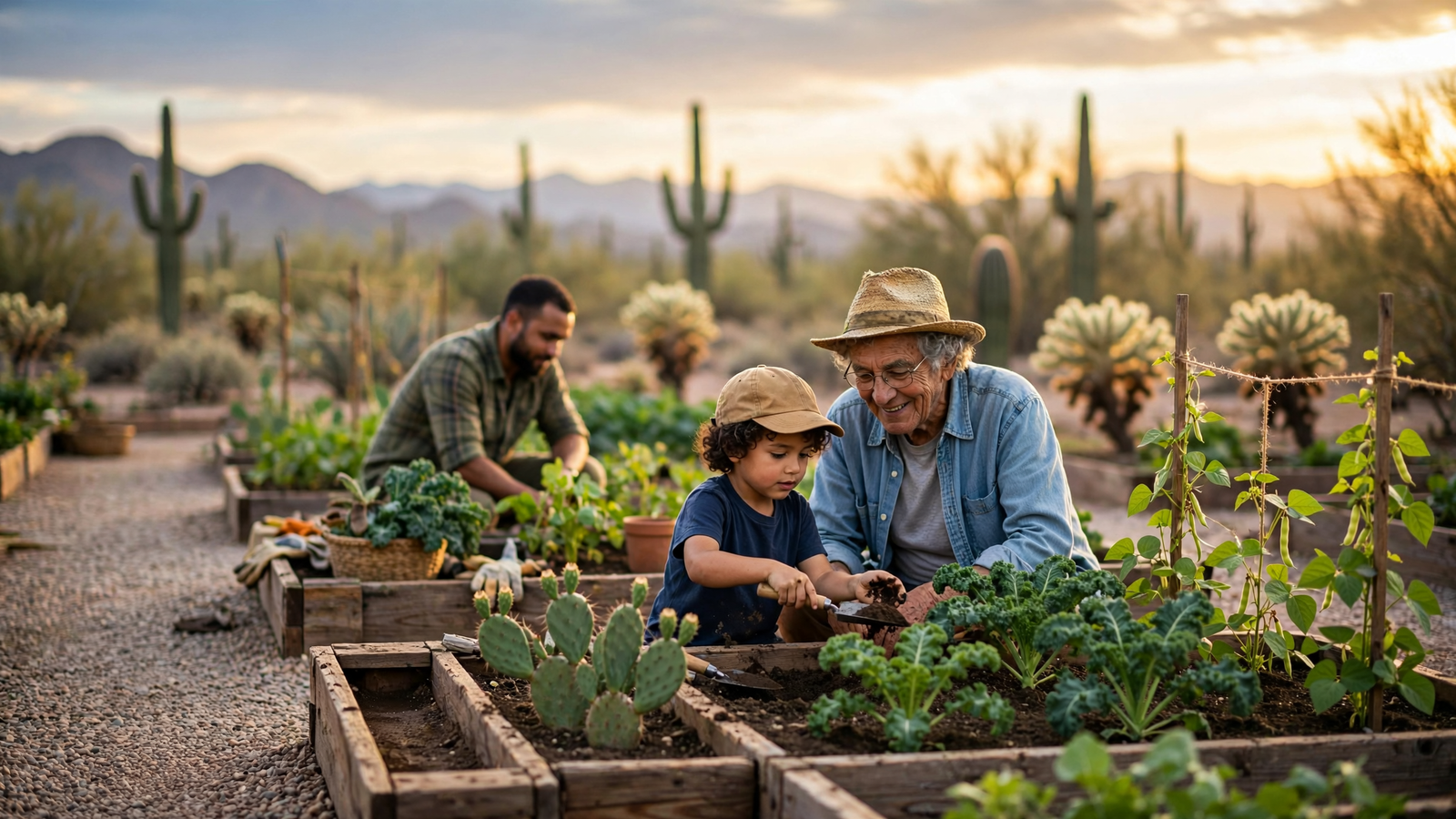
In a city where summer heat and limited water shape nearly every garden decision, growing food can seem like a solitary challenge. In Tucson, community gardens offer another approach: neighbors share land, knowledge, tools, and the rewards of a harvest.
Community Gardens of Tucson, a nonprofit organization, helps operate a network of gardens where residents can rent plots and grow plants together. The gardens vary by neighborhood, but the basic idea remains consistent. A piece of land becomes more than a place to plant vegetables. It becomes a regular meeting point for people who might otherwise never cross paths.
A practical model for desert gardening
Community gardening does not remove the difficulties of growing in the Sonoran Desert. It makes those difficulties easier to solve collectively. Gardeners can exchange advice about planting seasons, shade, soil improvement, irrigation, and crops that tolerate heat. New gardeners can learn from people who have already discovered what works in Tucson’s climate.
That shared knowledge is especially useful because desert gardening follows a different rhythm from gardening in much of the country. The University of Arizona Cooperative Extension identifies seasonal timing, efficient irrigation, soil care, and protection from extreme heat as important parts of successful home gardening in the state. In a community garden, those lessons are not limited to a webpage or a class. They are demonstrated in neighboring plots.
Gardeners may grow familiar vegetables such as greens, beans, peppers, and tomatoes, while also experimenting with plants suited to the region. The work encourages attention to local conditions: when to plant, how to conserve moisture, and how to keep a productive garden alive through changing temperatures.
More than a collection of plots
The strongest benefit of a community garden is not measured only in pounds of produce. Shared gardens create low-pressure opportunities for connection. People meet while watering, preparing beds, trading seeds, or discussing a plant that is thriving—or struggling.
That social dimension matters in neighborhoods where residents may have little access to private yards. Renters, apartment dwellers, older adults, families, and beginning gardeners can all find a way to participate. A plot provides room to grow food, but the surrounding garden provides something less tangible: a sense of belonging and a reason to return.
Community gardens can also make urban spaces more welcoming. Instead of leaving a parcel unused, a garden gives it a shared purpose. The result is a place where stewardship becomes visible. Fences, paths, compost areas, shade structures, and planted beds all reflect many small acts of care.
What Tucson’s gardens demonstrate
The model is modest, but its lessons reach beyond gardening. Shared resources can make everyday life more accessible. Local knowledge can be as valuable as specialized equipment. And community improvements do not always begin with a large construction project; sometimes they begin with neighbors agreeing to care for one piece of land.
For people interested in starting a garden, Tucson’s example also points to a practical first step: begin with the conditions of the place. Learn the local growing calendar, understand water needs, choose appropriate plants, and look for partners. A successful community garden depends as much on relationships and ongoing care as it does on fertile soil.
In Tucson, those relationships are growing alongside the vegetables. Each shared plot offers food and practice, but the larger harvest is a durable neighborhood connection—one that can continue through every season.