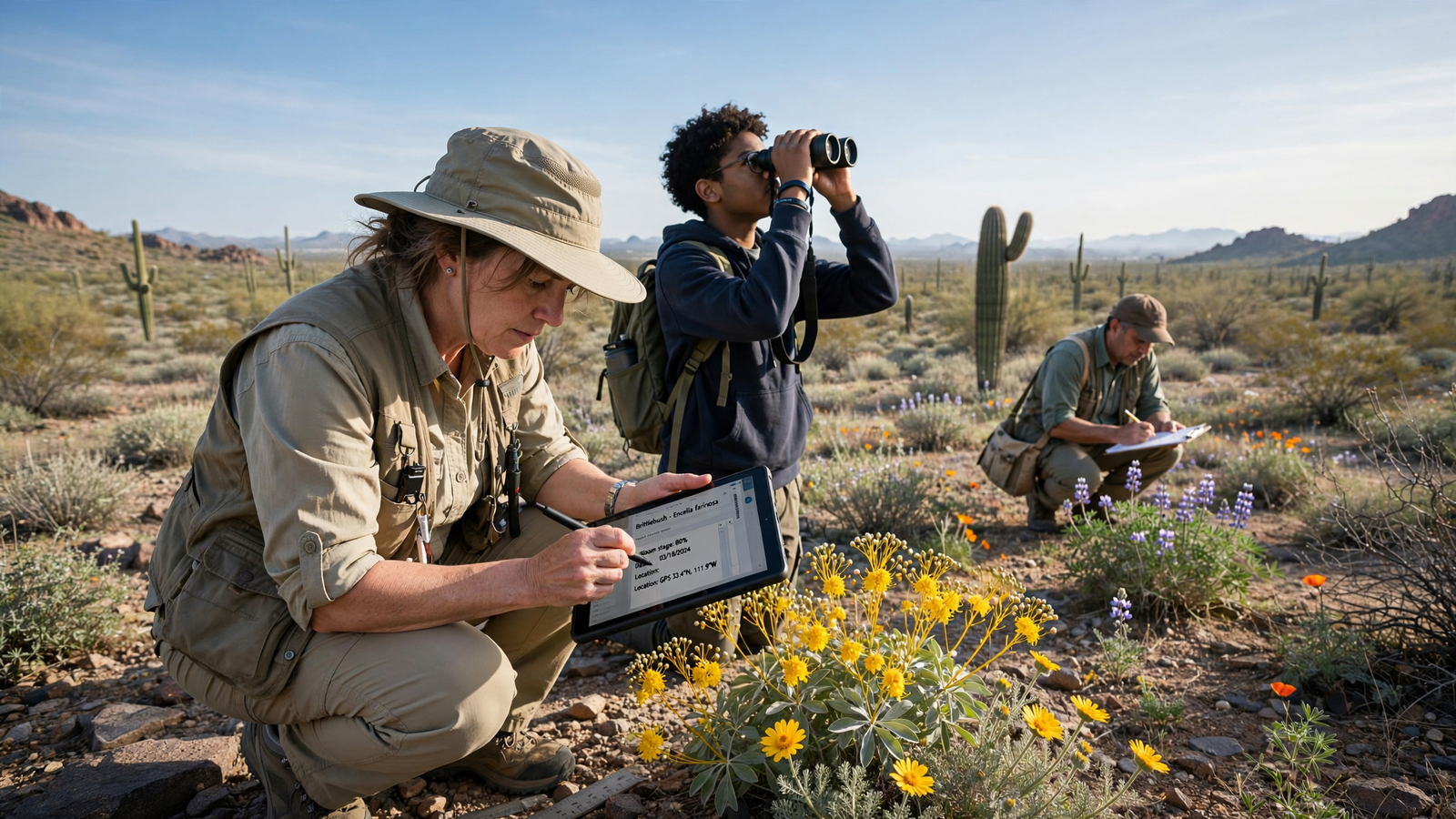
Every spring, Arizona’s landscape offers a familiar set of signals: desert plants begin to flower, trees put out new leaves, and insects appear after the first warm stretches of the year. Those observations may seem ordinary, but recorded consistently, they become useful scientific evidence.
That is the idea behind Nature’s Notebook, a community science program operated by the USA National Phenology Network, which is headquartered at the University of Arizona. The program invites people to watch plants and animals and report seasonal changes through a standardized online system.
What phenology can reveal
Phenology is the study of the timing of recurring natural events. Scientists use it to track when plants leaf out or flower, when insects become active, and when animals migrate or reproduce. Comparing those dates over many years can show how weather and climate are influencing the living world.
One observation is modest. A long record built from observations by residents, students, gardeners, park visitors and professional researchers is much more powerful. It can help scientists study growing seasons, pollinator activity, wildlife habitat and the timing of ecological changes.
For Arizona, this kind of record is especially valuable. The state contains deserts, grasslands, forests and high-elevation ecosystems, each with its own seasonal rhythm. A flowering event in Tucson does not happen on the same schedule as one in Flagstaff. Observations from many places help fill in that picture.
How neighbors can take part
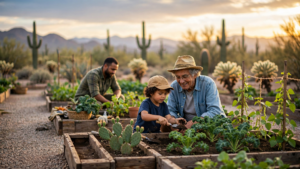
Participants begin by creating a free Nature’s Notebook account and choosing a plant or animal to observe. They can work in a yard, school garden, neighborhood park or other familiar place. The program provides instructions for recording specific signs, such as whether a plant has open flowers, new leaves or developing fruit.
The goal is not to make a guess about the season. It is to make repeatable observations. Participants return to the same plant or location and record what they see over time. That consistency makes the information easier to compare with observations from other communities.
People do not need to be professional botanists or wildlife biologists. The program’s protocols are designed to guide beginners, while its data can also support more formal monitoring. Schools and community groups can use the activity to connect outdoor exploration with lessons in biology, weather and data collection.
A small habit with a wider reach
Community science works because it turns attention into participation. Instead of treating nature as something observed only by specialists, it gives residents a practical role in documenting the places where they live.
That role can be rewarding even before the data are analyzed. A person checking one desert tree through the year may notice pollinators, drought stress or the arrival of a new season more closely than before. A classroom can build a record that students revisit each year. A neighborhood group can compare what is happening in different parts of town.
The larger value comes from combining those individual records. Through Nature’s Notebook, local observations become part of a nationwide research resource that scientists and land managers can use to understand seasonal patterns. In Arizona, where timing can vary sharply across short distances and elevation changes, that shared effort offers a simple way for communities to contribute to knowledge about the future of their environment.