There was a time when seeing a humpback whale in many parts of the world would have been extraordinarily unlikely. Commercial whaling had reduced their numbers so severely that some populations were close to collapse.
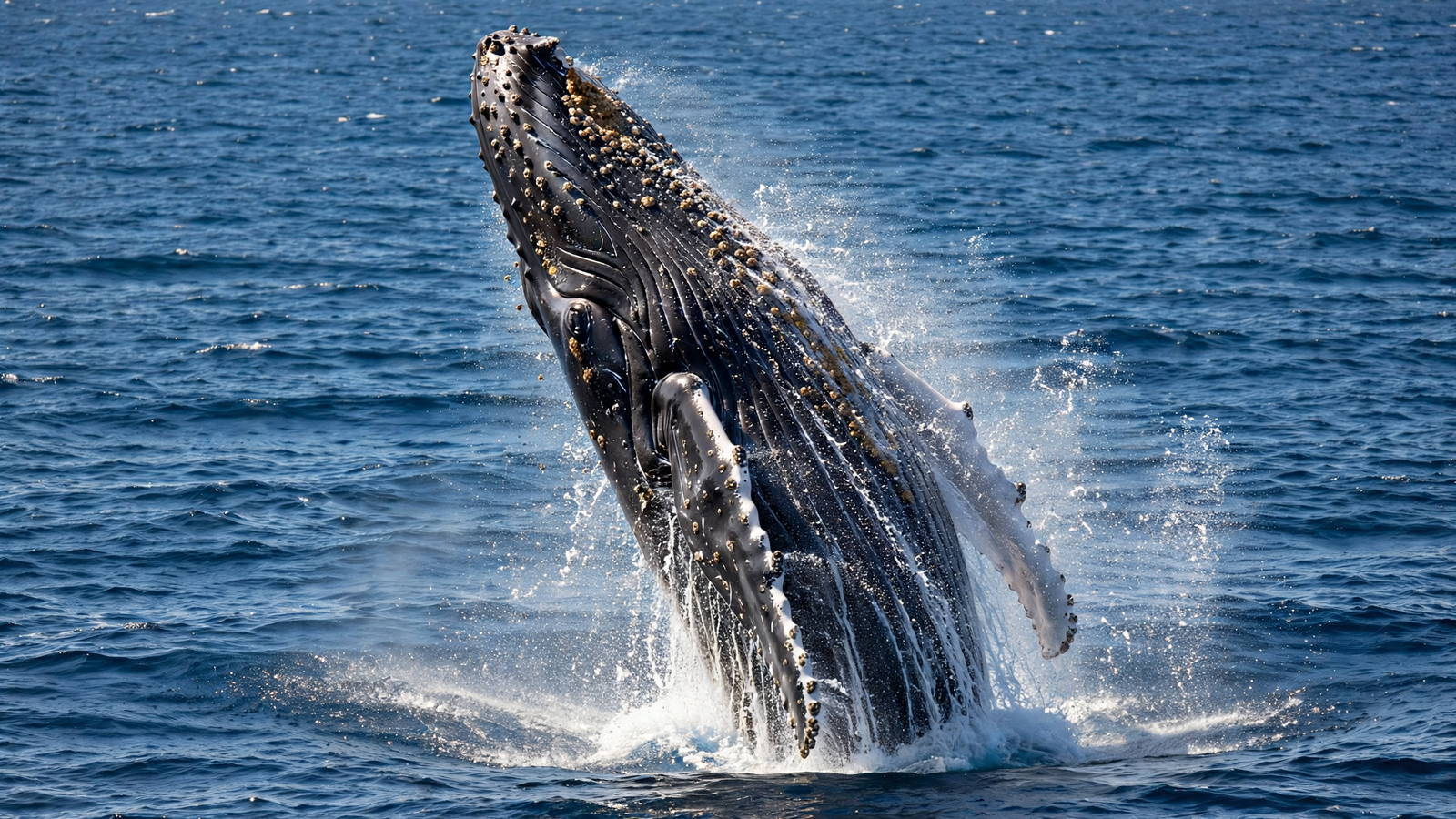
Today, the sight of a humpback breaching, feeding, or traveling with a calf is becoming familiar again in oceans from the North Atlantic to the South Pacific. The recovery is not complete, and the whales still face serious threats. But their return is one of the clearest examples of conservation giving a species room to recover.
A giant given time to recover
Humpback whales were hunted for their oil, meat, and other products throughout the nineteenth and twentieth centuries. Their dramatic behavior and tendency to gather near coastlines made them particularly visible—and particularly vulnerable.
International protection began to change that trajectory. The International Whaling Commission adopted a commercial whaling moratorium in 1986, while national laws such as the United States Marine Mammal Protection Act and Endangered Species Act added further safeguards. The protections did not produce an instant turnaround. Whales live for decades, reproduce slowly, and must travel across huge stretches of ocean. Recovery required time.
That patience has paid off. NOAA Fisheries says humpback whale numbers have increased in many regions since commercial whaling ended. The species was removed from the United States endangered species list in 2016, although several distinct populations remain protected because their recoveries have been uneven.
Recovery can be heard—and seen
Humpbacks are among the most recognizable whales on Earth. Adults can reach roughly 60 feet in length, and males are famous for complex songs that may travel long distances underwater. They also breach, slap their tails, and cooperate to corral schools of fish.
Those behaviors make the species a bridge between scientific monitoring and ordinary life. Whale-watchers, boat crews, coastal residents, and tourists often become the people who notice when whales arrive, where they feed, and whether an individual appears injured. In many places, photographs and sightings help researchers track seasonal movements and identify whales by the unique patterns on their tails.
The comeback also shows that conservation is rarely the work of one organization. Researchers study migration routes. Rescue teams respond to entangled animals. Shipping authorities work to reduce collisions. Fishers and boaters learn how to give whales more space. Members of the public report sightings and support local monitoring programs.
A hopeful story with work still ahead
Humpback whales are not beyond danger. Entanglement in fishing gear, collisions with ships, underwater noise, pollution, and changes in food supplies all affect their survival. Some populations remain far smaller than they were before industrial whaling, and a changing climate may alter the ocean ecosystems on which the whales depend.
Still, the broader pattern is encouraging. A species that seemed destined to vanish has begun to reclaim parts of its former range—not because the threats disappeared, but because people changed the rules and kept enforcing them.
The lesson is quietly powerful: recovery does not always arrive as a dramatic breakthrough. Sometimes it looks like fewer harpoons, safer waters, better information, and decades of protection. Then, one morning, a whale rises from the sea where generations had stopped expecting to see one.