For most of human history, starting a fire was not a quick household task. People relied on flint, steel, tinder, embers saved from an earlier fire, or specialized fire-making tools. A flame could be created, but it could not always be summoned at a moment’s notice.
The match changed that relationship with fire. Small enough to carry and simple enough to use, it made ignition part of ordinary life: lighting a stove, starting a lamp, warming a room, or illuminating a candle. The technology was modest, but its effect was enormous.
From chemical curiosity to useful object
Early chemical matches appeared in Europe during the seventeenth and eighteenth centuries, but they were inconvenient and sometimes dangerous. Some required a separate bottle of acid or another chemical reaction. They belonged more to the world of experimenters than to the average kitchen.
The practical friction match emerged in England in the 1820s. Chemist John Walker developed a mixture that could ignite when dragged across a rough surface. His first matches were sold commercially in 1827. They were known as “friction lights” and offered something people had rarely possessed before: a portable flame that could be produced almost instantly.
Early friction matches were not perfect. They could ignite unpredictably, produced unpleasant fumes, and were difficult to extinguish safely. Their chemical composition also reflected the hazards of nineteenth-century manufacturing. Matches made with white phosphorus could expose workers to a severe condition known as “phossy jaw,” a devastating disease affecting the bones of the face.
The safety match
A safer design developed gradually. Swedish chemist Gustaf Erik Pasch proposed moving much of the reactive material from the match head to a striking surface. The Lundström brothers later improved the idea and helped establish the modern safety match during the 1850s.
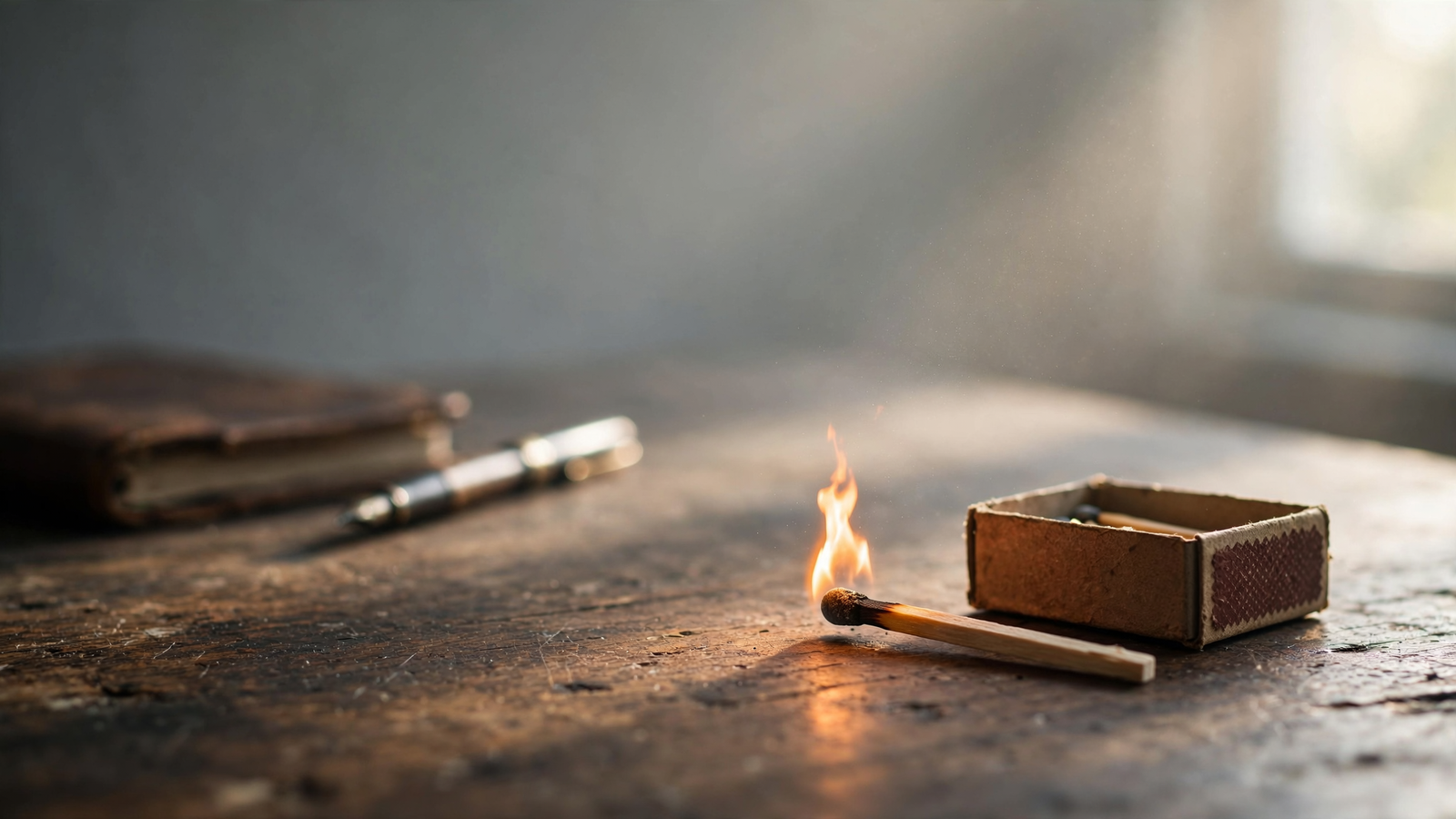
In this design, the match head and the striking surface each contain part of the chemical system needed for ignition. The match is much less likely to flare when rubbed against an ordinary surface, while the familiar box provides a controlled place to strike it.
That small change helped make matches more suitable for homes, shops, travelers, and workplaces. Fire no longer had to be maintained continuously just to preserve the possibility of relighting a stove or lamp. A household could keep a box of matches near the hearth, and an individual could carry a supply without transporting a flame.
A new rhythm for ordinary life
Matches did not create fire, but they changed when and where people could use it. They supported the spread of gas lighting and oil lamps, made household cooking more convenient, and simplified the daily rituals surrounding candles, tobacco, fireplaces, and industrial equipment.
Their importance is easy to overlook precisely because they became so ordinary. A matchbox turned a difficult process into a brief gesture: open, strike, light. That convenience also came with responsibilities. Safer production, better packaging, child-resistant containers, and restrictions on dangerous chemicals were part of the long effort to make this everyday object less harmful.
Today, electronic igniters and gas appliances have replaced matches in many homes. Yet the match remains a powerful example of how an invention can reshape daily life without looking revolutionary. Sometimes a major change arrives not as a machine or a grand public system, but as a thin wooden stick that gives people control over a basic element.