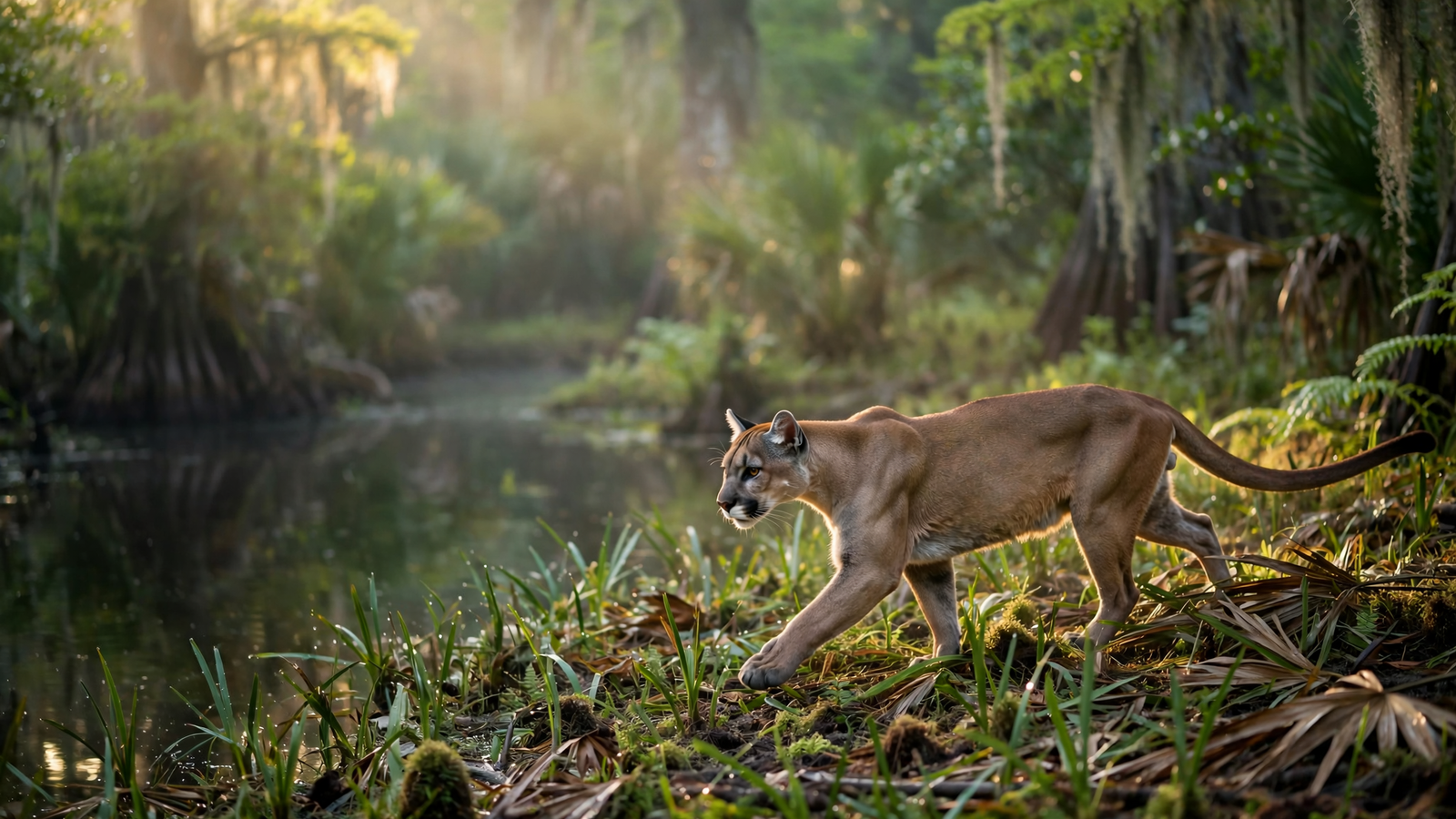
In the forests, wetlands and ranchlands of southern Florida, an American predator is making one of the country’s most difficult comebacks.
The Florida panther, a rare population of the cougar, once ranged across much of the southeastern United States. Today, it is found primarily in southern Florida, where roads, housing development and the loss of connected habitat continue to make survival difficult. Yet the animal is no longer hovering at the edge of disappearance. Conservation work has helped stabilize the population and improve its genetic health.
A population with a narrow path forward
The U.S. Fish and Wildlife Service and the Florida Fish and Wildlife Conservation Commission estimate that between 120 and 230 adult and subadult panthers remain in the wild. That number is still small, but it represents a meaningful change from the late 20th century, when inbreeding had become a serious threat to the population.
With too few unrelated animals breeding in the wild, Florida panthers showed signs of genetic weakness, including heart defects, poor reproduction and physical abnormalities. In 1995, wildlife managers introduced eight female Texas cougars into Florida. The animals were closely related enough to breed with the panthers while adding genetic diversity to the isolated population.
The intervention did not solve every problem, but it helped. Researchers found evidence of improved reproductive success and greater genetic variation in subsequent generations. The Florida panther became an important example of how carefully managed conservation can give a small population more room to recover.
Protection beyond the animal itself
Panther conservation is also a story about landscapes. The cats need large, connected areas where they can hunt, raise kittens and move between territories. Preserving wetlands, forests and working lands therefore benefits far more than one species.
Public agencies and conservation groups have protected habitat through land purchases, easements and wildlife-management areas. The Florida Panther National Wildlife Refuge, established in 1989, safeguards more than 26,000 acres of important habitat in southwestern Florida. Nearby preserves and other protected lands create additional space for panthers and the prey species they depend on.
Road safety has become another crucial part of the effort. Because panthers travel widely, vehicles are a major danger, especially where highways cut through habitat. Wildlife underpasses, fencing and warning systems are designed to help animals cross roads without entering traffic. These structures can also benefit bobcats, bears, deer and other wildlife.
Progress that still needs protection
The Florida panther is not yet recovered. Its entire breeding population remains concentrated in one region, and the species is still listed as endangered under federal law. Habitat fragmentation, vehicle collisions and the pressure of continued development remain serious challenges.
But the direction of the story matters. A population once weakened by isolation has gained genetic strength. Protected lands give it places to live, and wildlife crossings make movement safer. Each successful litter and each preserved connection between habitats adds another small piece to the species’ future.
The panther’s recovery is not a single dramatic rescue. It is the result of scientists, land managers, transportation planners and communities working on different parts of the same problem. That patient approach offers a hopeful lesson: when conservation protects both animals and the places they need, even a population reduced to a narrow corner of its former range can begin to move forward.