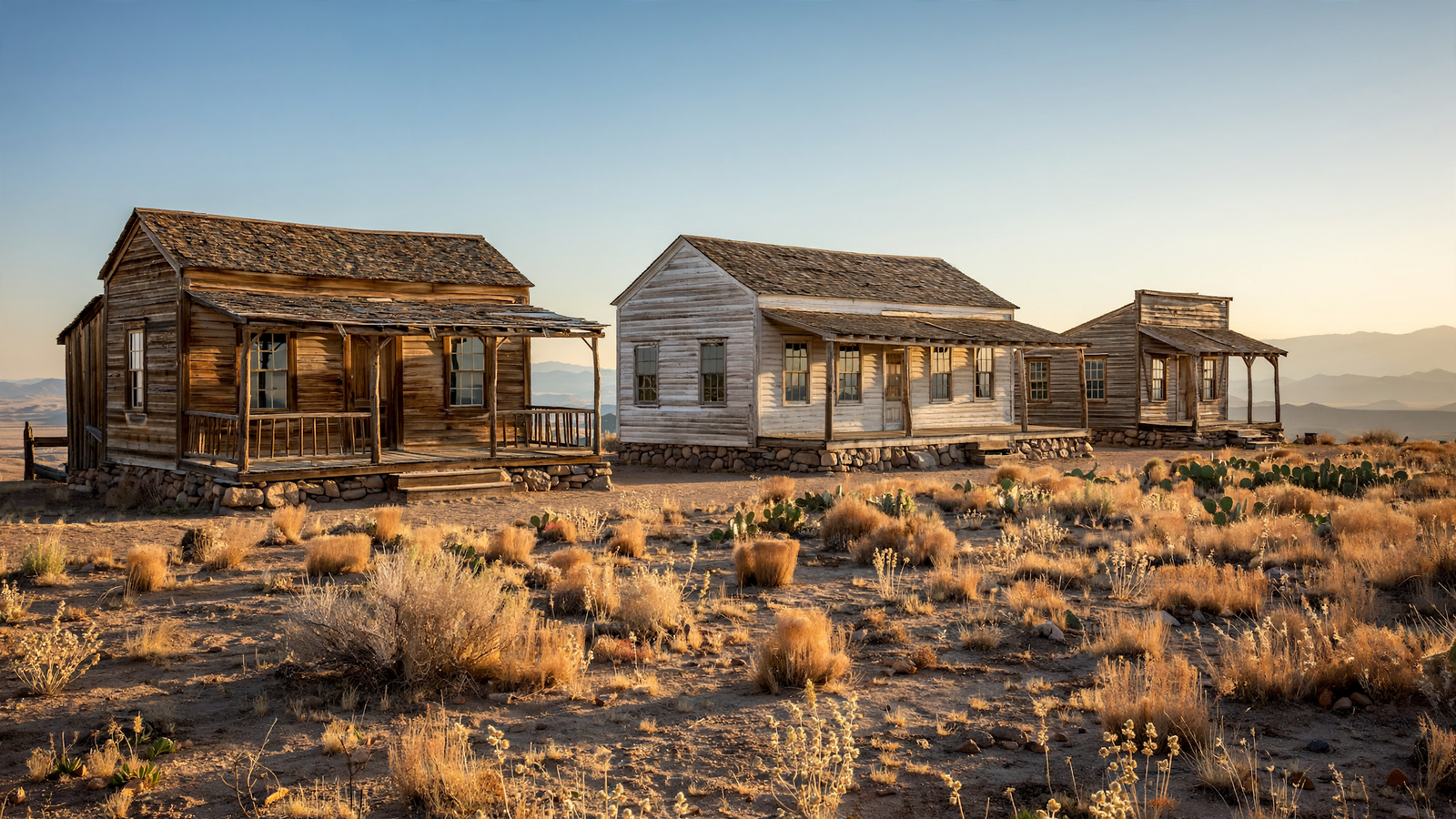
In Camp Verde, the past is not confined to a label on a roadside marker. It stands in three weathered buildings, beneath cottonwoods and the open sky, at Fort Verde State Historic Park.
The buildings are modest by the standards of military history. There is no grand stone citadel, no monumental gateway and no long line of preserved barracks. Instead, the park holds the Commanding Officer’s Quarters, the Administration Building and the Bachelor Officers’ Quarters—survivors of a much larger United States Army post that once occupied the site.
That modest scale is part of what makes Fort Verde meaningful. The park does not ask visitors to imagine history only as a distant sequence of battles and famous names. It places that history in rooms where people worked, slept, stored supplies, issued orders and tried to make a permanent post in a landscape that was already home to Yavapai and Apache communities.
A military post in a living landscape
The installation began as Camp Verde in the early 1870s, during a period when the United States government was expanding military control across central Arizona. The Army established posts throughout the territory as it pursued campaigns against Indigenous peoples and enforced a reservation system that removed Native communities from their homelands.
That context matters. Fort Verde is sometimes presented through the familiar language of the “Old West,” but the story is not simply one of soldiers, settlers and adventure. The post was part of a federal campaign that brought profound disruption to Yavapai and Apache people. In the 1870s, many were forced onto reservations, and the 1875 removal to the San Carlos Reservation became one of the defining traumas associated with the region’s military history.
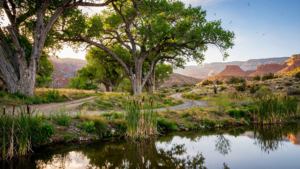
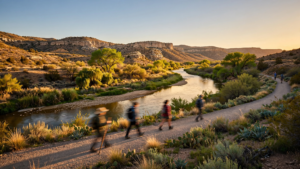
The post was built near the Verde River, an important waterway in a dry country. Its location offered access to water, transportation routes and agricultural land, while also placing the Army near communities it sought to control. The surrounding landscape was not an empty frontier waiting for development. It was a lived-in place with its own economies, traditions, trails and political relationships.
Fort Verde’s surviving structures therefore represent more than military architecture. They are evidence of a government presence that changed the balance of power in central Arizona—and of the Native history that existed before, during and after the fort’s active years.
Why only three buildings remain
At its height, Fort Verde was a substantial post. It included quarters, offices, storage buildings, stables and other facilities needed to support soldiers and their families. But the installation’s useful life was relatively brief.
As military priorities changed and the Indian Wars era drew to a close, the Army reduced its presence. The post was abandoned in the early 1890s. Many of its buildings were sold, moved, dismantled or absorbed into the surrounding community. What remains today is not a complete reconstruction. It is a small group of original structures that survived the ordinary pressures of time, changing land use and the disappearance of the military purpose for which they were built.
That distinction gives the park a particular honesty. Visitors are not walking through a manufactured frontier town assembled to look old. They are seeing original buildings preserved because later generations recognized that the site could help explain the region’s past.
The Commanding Officer’s Quarters offers a sense of the hierarchy built into the post. The Administration Building points to the paperwork and logistics behind military expansion. The Bachelor Officers’ Quarters reveals another part of daily life: the routines of unmarried officers who lived and worked far from larger settlements.
Together, the buildings show how much of history is made from ordinary spaces. Decisions that affected entire communities were written down in offices, discussed in quarters and carried out by people following institutional orders.
A place to slow history down
Fort Verde State Historic Park is valuable partly because it does not require visitors to absorb the whole story at once. The grounds are compact enough to explore without turning the visit into a long expedition. Interpretive displays and period objects help connect the buildings to the people who used them, while the open setting makes it possible to notice the relationship between the fort and the surrounding Verde Valley.
That setting is an important part of the experience. The valley’s vegetation, heat and broad views help explain why the site mattered to the Army. They also make clear that this was not an isolated outpost floating in an abstract desert. It was positioned within a river corridor that supported farming, travel and community life long before the Army arrived.
The park’s scale also makes it accessible to families, school groups and visitors who may not think of themselves as military-history enthusiasts. A child can see the size of a nineteenth-century room. An adult can consider the bureaucracy behind a government campaign. Someone interested in architecture can examine construction details. Someone interested in Native history can ask what the fort looked like from the perspective of the people whose lives it disrupted.
Good historic places leave room for those questions. They do not flatten the past into a single heroic storyline.
The people behind the post
Fort Verde’s history also reaches beyond the officers whose names appear most often in military records. The post depended on enlisted soldiers, civilian workers, families, laborers, scouts, interpreters and suppliers. African American soldiers, commonly known as Buffalo Soldiers, served at western military posts during this period, including in Arizona. Native scouts also played complicated and often essential roles in Army operations, sometimes working within a system that was acting against other Indigenous communities.
These overlapping identities make the fort difficult to reduce to a simple division between “the Army” and “the frontier.” Institutions are made up of individuals, and individuals can experience the same historical moment very differently. The park’s exhibits and educational programs provide an opportunity to explore those layers rather than treating the fort as a backdrop for a single group’s story.
The Yavapai and Apache experience must remain central to any honest interpretation of the site. Military victory did not erase Native presence. Yavapai and Apache people continued to live, work and maintain community ties across Arizona, and their descendants remain part of the region today. The fort is best understood not as the end of that history, but as one place where a period of forced change can be examined.
Preservation as a community choice
Fort Verde became a state historic park in the twentieth century, after decades in which the remaining structures might easily have disappeared. Its preservation reflects a community decision that the buildings could serve a public purpose: not by recreating an imaginary Old West, but by helping people encounter a difficult and consequential past.
That work continues whenever the park hosts visitors, educational programs and community events. The annual Fort Verde Days celebration, organized around the site’s history, brings the fort into the civic life of Camp Verde. Events like that can draw attention to local heritage, but the deeper value of the park is quieter. On an ordinary visit, the preserved buildings offer time for observation rather than spectacle.
Historic preservation is often described as saving structures. At Fort Verde, it also means saving relationships between structures, landscape and memory. The surviving buildings make the history tangible. The valley gives it geographic meaning. Interpretation gives visitors tools to consider who held power, who was displaced and whose stories have too often been left at the edge of the frame.
A small place with a wide story
Yavapai County contains famous landscapes and major archaeological sites, but its identity is also held in places that are smaller and more specific. Fort Verde is one of them. It does not need to be the largest fort in the West to matter. Its importance lies in the way a few original buildings open onto questions about Indigenous sovereignty, military expansion, migration, race, memory and public history.
For visitors, that makes the park more than a stop between larger destinations. It is a place where the physical evidence is limited but the story is expansive. A short walk through the grounds can lead from architecture to ecology, from military records to Native history, and from the nineteenth century to the choices communities make today about what deserves protection.
Fort Verde remains standing because people decided that these buildings could help a later generation understand what happened here. The most responsible way to visit is not to search for a simple frontier legend. It is to look closely, listen for the histories that overlap and recognize that the Verde Valley was never empty—and that its past is still part of its present.