In Yavapai County, water has a way of changing the shape of a place.
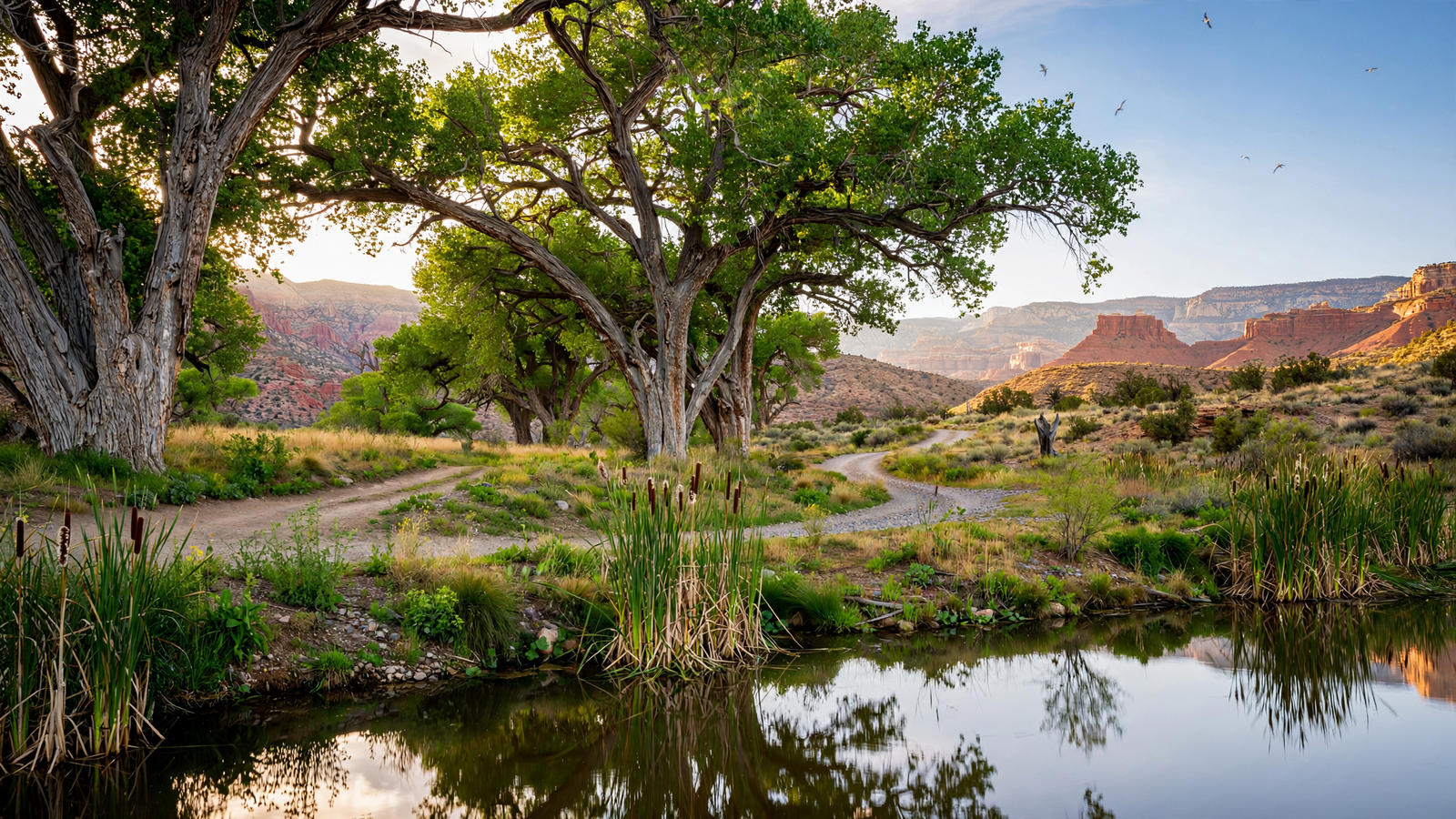
The Verde River moves through a landscape better known for red rock, juniper hills and broad, sunlit stretches of desert. Near Cottonwood, though, the river gathers around a small network of lagoons and green banks. Here, visitors can fish, paddle, walk, camp, watch birds or simply sit beneath trees that would seem unlikely in such a dry country.
This is Dead Horse Ranch State Park, a 423-acre public landscape on the northern edge of the Verde Valley. It is not the largest or most dramatic park in Arizona. Its appeal is more generous than grand. The park offers several ways to experience the same setting, making it one of the most approachable places in central Arizona for a day outdoors.
A ranch becomes a public park
The park’s unusual name comes from its earlier life as a working ranch. According to Arizona State Parks and Trails, the property was once operated as a private ranch, and its name was already attached to the land when the state acquired it. The story associated with the name involves an old horse that was discovered dead in a pasture after the ranch had been viewed from the road for some time.
Rather than replace the name, the new state park kept it. That decision preserved a small piece of local character while changing the purpose of the land. A property that had once served ranching became a place where the public could reach the Verde River and spend time beside water.
The transition reflects a broader story in Arizona: public recreation often depends on landscapes that have already been shaped by agriculture, ranching, transportation or settlement. Dead Horse Ranch does not present an untouched wilderness. It offers something different—a managed, accessible meeting place between a river and a growing community.
The lagoons are the park’s quiet center
Four lagoons form the heart of Dead Horse Ranch State Park. Their calm water creates a different experience from the moving river nearby. Families can walk along the shore, anglers can try their luck, and visitors can pause to watch reflections shift across the surface as the light changes.
The lagoons also make the park approachable for people who may not be looking for a strenuous hike. A visit can be as simple as following the shoreline, finding a shaded bench or eating a picnic near the water. The park’s landscape allows a group to spread out without needing a single shared activity.
Arizona Game and Fish Department works with Arizona State Parks and Trails on fish-stocking and fishing opportunities at designated waters around the state, including Dead Horse Ranch. Anglers should check current regulations, seasons and license requirements before arriving. Conditions can change, and the official park and wildlife-agency websites provide the most reliable information.
The lagoons are also useful as a place to notice small changes in the desert. Dragonflies hover above the water. Birds move between shoreline vegetation and cottonwoods. Ripples reveal movement that might otherwise go unseen. In a region where the landscape can appear still from a distance, the lagoons make close observation rewarding.
Where the Verde River changes the view
Beyond the lagoons, the Verde River gives the park its larger sense of place. The river is one of Arizona’s important perennial waterways, and its presence helps explain why the Verde Valley has supported human communities, farms and wildlife for so long.
At Dead Horse Ranch, visitors encounter the river at a relatively comfortable scale. It is not an abstract line on a map or a distant ribbon seen from a high overlook. It is a living edge: water moving past gravel and roots, trees gathering along the bank, and trails following the contours of the floodplain.
The contrast is central to the park’s character. Dry hills rise beyond the valley, but along the river the colors deepen. Cottonwoods provide seasonal changes that are especially noticeable in autumn, when their leaves brighten against the surrounding brown and red terrain. In summer, the same trees create shade and relief. In winter, their bare branches open the view across the river corridor.
This is one reason the park works well as an introduction to the Verde Valley. A visitor does not need to climb a mountain or travel deep into the backcountry to see how water organizes the region. The river makes the relationship visible at walking distance.
A park built for different kinds of visitors
Dead Horse Ranch State Park supports several forms of recreation, including hiking, fishing, paddling, wildlife watching, picnicking and camping. The combination matters. A place becomes more useful when it can serve the early-morning angler, the family looking for an easy outing, the traveler needing a base near Cottonwood and the photographer waiting for evening light.
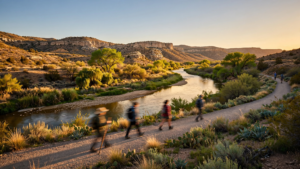
Trails lead through the park and along the river, with routes that vary in length and character. Some sections are close to developed areas and lagoons; others feel more secluded as they follow the water. Visitors should consider heat, sun exposure and seasonal conditions before choosing a route. Even an easy desert walk can become demanding during the hottest part of the day.
The park’s campground extends the experience beyond a short visit. Camping beside a river corridor changes the rhythm of a trip. Morning begins with cooler air and bird activity; evening brings softer light and a quieter sense of the surrounding landscape. Reservations, campground details and current operating information should be checked through Arizona State Parks and Trails before planning an overnight stay.
For visitors using the park as part of a larger Verde Valley trip, Dead Horse Ranch can provide a slower counterpoint to more heavily photographed destinations. It is close to Cottonwood and within reach of other Yavapai County attractions, but its purpose is not to compete with them. The park’s value lies in giving people time beside water.
Why this place matters in a dry region
Public landscapes are often judged by spectacular scenery: a canyon wall, a famous ruin or a distant summit. Dead Horse Ranch suggests another measure. A good public place can also be one that makes nature easy to enter.
The park does not require specialized equipment or a particular kind of expertise. Visitors can arrive with a fishing rod, a pair of binoculars, a picnic or nothing more than comfortable shoes. The same setting can support activity and rest. Children can focus on the water while adults watch the trees. A birdwatcher can move quietly along the shore while another visitor enjoys a broad trail at an unhurried pace.
That flexibility is especially valuable in a county with many celebrated outdoor destinations. Yavapai County contains rugged backcountry and popular recreation areas, but not every outing needs to be ambitious. Some of the most durable connections to a landscape begin with a place that is easy to reach, easy to understand and welcoming to different levels of ability.
Dead Horse Ranch also shows how conservation and recreation can overlap. Protecting access to a river corridor is not only about preserving a view. It keeps open space available for education, observation, fishing, walking and quiet. It gives a community a place to experience the processes that shape the valley—water moving through a dry region, trees gathering along its path and wildlife using the margins.
Planning a thoughtful visit
Because the park combines water and desert, preparation is simple but important. Bring more water than you expect to need, use sun protection and wear shoes suited to uneven ground. Check weather conditions, especially during periods of extreme heat, monsoon storms or winter cold.
Rules differ between lagoons, river areas, trails and camping facilities. Fishing licenses, watercraft requirements, fire restrictions, pets and overnight reservations are all subject to current regulations. The official Arizona State Parks and Trails website should be the starting point for hours, fees, closures and reservations.
A respectful visit also means keeping the riverbank quiet, staying on established paths where requested, carrying out trash and avoiding disturbance of wildlife. The park’s appeal depends on the continued presence of its water, vegetation and sense of openness.
Dead Horse Ranch State Park is not a place that asks visitors to conquer the landscape. It asks them to notice it. Along its lagoons and river trails, the Verde Valley becomes legible in a different way: not as a distant panorama, but as a living arrangement of water, shade, movement and shared public space.
That may be the park’s most lasting gift. In a county filled with memorable destinations, it offers an everyday kind of wonder—the chance to sit beside a river and see how much life can gather there.