In Phoenix, summer heat is not a seasonal inconvenience. It shapes where people can walk, wait for a bus, work outdoors, exercise, and even seek medical care. As hotter conditions become a more persistent public-health challenge, the city is treating heat less like a weather problem and more like an urban safety mission.
That change is visible in the creation of Phoenix’s Office of Heat Response and Mitigation, a city program focused specifically on reducing heat-related illness and making the built environment safer. The office works across departments and with outside partners on public education, cooling resources, shade, tree planting, data collection, and long-term planning.
The approach matters because extreme heat does not affect every resident in the same way. A person with reliable air conditioning, a shaded yard, and a private vehicle faces a different risk from someone who works outside, waits for transit in direct sun, lives in a poorly cooled building, or is experiencing homelessness. A citywide heat strategy has to account for those differences.
Heat became a city responsibility
Phoenix’s decision to create a dedicated heat office reflected a growing recognition that heat can be as disruptive and dangerous as other major hazards. The city appointed a chief heat officer in 2021, making Phoenix one of the first cities in the United States to give extreme heat a dedicated senior official.
The office does not replace the work of emergency managers, public-health agencies, fire departments, or weather forecasters. Instead, it connects those efforts. Its work includes helping residents understand heat risk, coordinating services during dangerous conditions, and identifying changes that can make neighborhoods cooler over time.
That coordination is important because heat exposure is cumulative. A person may spend the night in a hot home, walk along an unshaded street in the morning, work outdoors during the afternoon, and then wait for transportation in another exposed location. Each individual exposure may appear manageable, but together they can place significant strain on the body.
Public-health officials in Maricopa County track heat-associated illness and deaths because the effects are not always immediately visible. Heat can worsen cardiovascular and respiratory conditions, contribute to dehydration, and interfere with the body’s ability to regulate temperature. Older adults, young children, people with chronic illnesses, outdoor workers, and residents without dependable cooling are among those who may face higher risks.
The first line of defense is still practical
Phoenix’s heat strategy includes measures that sound simple because they are designed to be used quickly: drink water, seek air conditioning, avoid strenuous activity during the hottest part of the day, wear light clothing, and check on people who may be vulnerable.
During periods of extreme heat, the city and its partners provide information about cooling centers and other places where people can escape dangerous temperatures. Libraries, community centers, senior facilities, and other public buildings can become essential pieces of the heat-response network, particularly for residents who do not have access to a cool private space.
Those services are most effective when residents know where to find them before an emergency begins. Phoenix’s heat planning therefore combines immediate response with outreach. The goal is not only to announce a warning, but also to make the next action clear: where to go, how to get there, what services are available, and how to help someone else.
Transportation is part of that equation. A cooling center may be useful on a map but difficult to reach for someone without a car. Heat planning must therefore consider bus stops, walking routes, mobility limitations, operating hours, and the distance between a person’s home and a safe indoor space.
Shade is infrastructure
One of the most important ideas in Phoenix’s heat work is that shade is not merely an aesthetic feature. It is infrastructure.
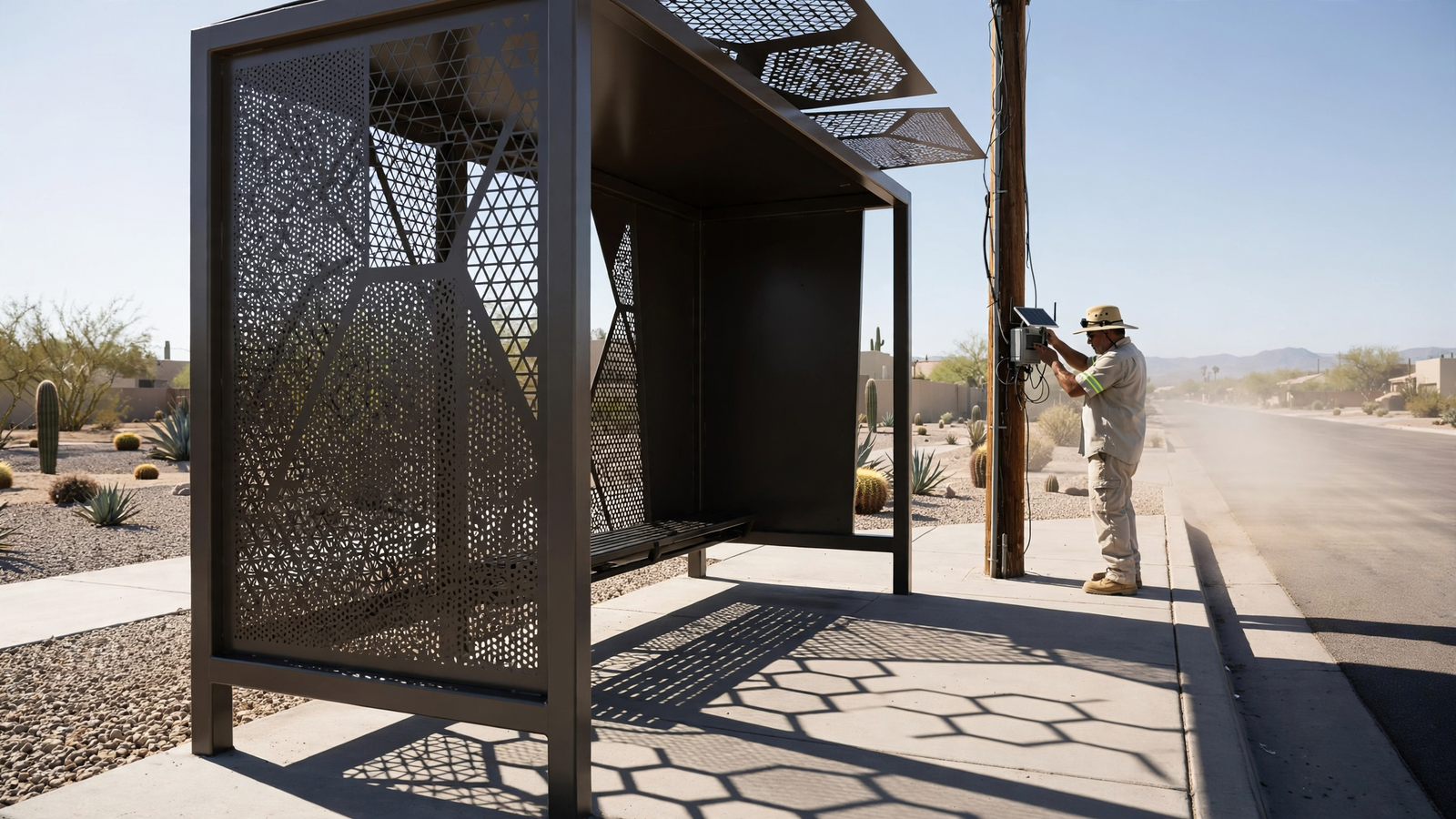
A shaded sidewalk can reduce direct exposure for pedestrians. A tree near a bus stop can make waiting more tolerable. A canopy over a playground can allow children to use a public space for more of the year. Trees and other vegetation can also cool nearby surfaces, although their benefits depend on species, irrigation, maintenance, and the surrounding design.
The city’s heat plans place shade, trees, cool corridors, and reflective or heat-reducing materials within a broader effort to change the physical environment. These projects take longer than opening a cooling center, but they can reduce exposure every day rather than only during a formal heat emergency.
That long-term work also raises questions about equity. Neighborhoods with fewer trees, less shade, more pavement, and fewer nearby public services can become hotter and harder to navigate. Mapping heat and identifying gaps in shade or cooling access helps local officials direct limited resources toward places where they may have the greatest effect.
Why the city needs better data
Heat can vary dramatically across a metropolitan area. Two neighborhoods only a few miles apart may have different amounts of vegetation, pavement, building density, and nighttime cooling. A regional temperature reading cannot capture all of those differences.
For that reason, Phoenix and its partners use a combination of public-health records, weather information, resident feedback, and heat-mapping efforts. The information can help officials understand not only how hot an area becomes, but also who lives there, how people move through it, and which resources are nearby.
Data can also improve the timing of public communication. Heat warnings are more useful when they reach people in languages they understand and through channels they actually use. Outreach may involve city websites, social media, local organizations, schools, employers, health providers, and community groups.
The challenge is that no single measurement tells the whole story. Air temperature matters, but so do humidity, nighttime temperatures, direct sun, wind, physical exertion, housing conditions, and access to water or air conditioning. A strong heat-response system has to combine these factors instead of relying on one number.
A model other cities are watching
Phoenix’s experience has attracted attention because many American cities are confronting hotter summers without having long-established heat departments. The city’s work demonstrates that heat adaptation is not limited to emergency alerts or individual behavior. It can involve transportation, housing, parks, public works, workforce protections, public health, and neighborhood design at the same time.
That does not mean Phoenix has solved extreme heat. The city remains one of the hottest major metropolitan areas in the country, and many residents still face serious exposure. Cooling centers cannot replace affordable, reliable housing with functioning air conditioning. Tree planting cannot immediately shade a long street. Public information cannot eliminate the risks faced by people whose work requires them to be outdoors.
But a dedicated heat office creates a place where those problems can be assembled into one agenda. It gives the city a way to measure progress, coordinate agencies, and treat heat protection as an ongoing civic responsibility rather than a short-lived response to a forecast.
What a cooler Phoenix could look like
The most meaningful changes may be ordinary ones: a bus stop with dependable shade, a tree-lined route to a school, a library that stays open as a cooling refuge, a worker who receives a timely heat warning, or a neighbor who knows how to recognize the signs of heat illness.
Individually, those improvements may not look like a dramatic transformation. Together, they can change how people experience the city during its most dangerous months.
Phoenix’s heat strategy offers a broader lesson for Arizona and other fast-growing communities in hot climates. Preparation is not only about surviving the next record temperature. It is about designing streets, buildings, public services, and neighborhoods so that people have more ways to remain safe when the heat arrives.